It is said that a poor carpenter always blames his tools.
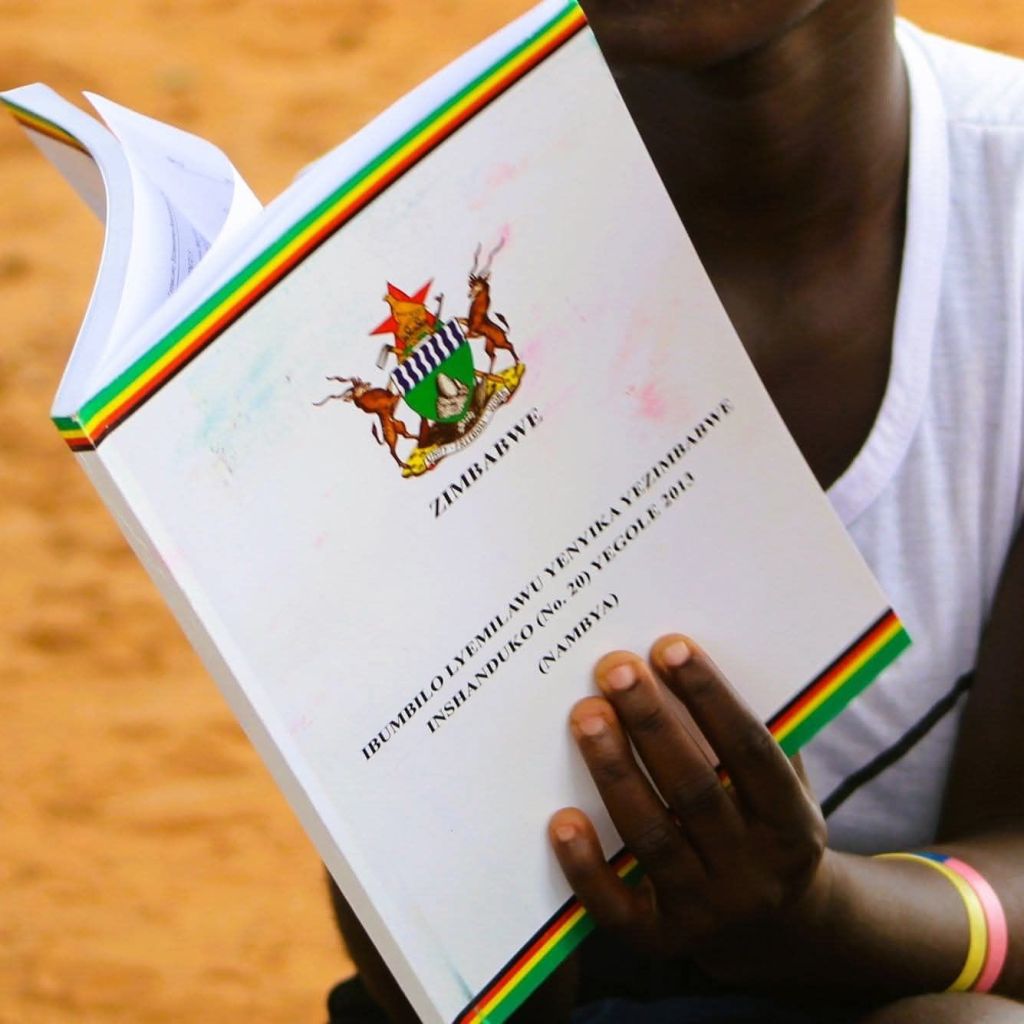
The ink on the 2013 Constitution was barely dry before the surgeons of the state began their work, scalpel in hand, ready to “realign” the supreme law with the appetites of the incumbent.
If you value my social justice advocacy and writing, please consider a financial contribution to keep it going. Contact me on WhatsApp: +263 715 667 700 or Email: mbofana.tendairuben73@gmail.com
Today, as the administration advances the Constitution Amendment Bill No. 3, we are told that the current five-year term is a luxury the nation cannot afford.
We are told that elections are “disruptive” and “expensive,” and that for the sake of “continuity” and the elusive “Vision 2030,” we must extend the terms of the president and parliament to seven years.
It is a narrative of convenience, framed in the language of development, but it carries the unmistakable stench of a power grab.
The uncomfortable truth that the ruling elite refuses to acknowledge is that the constitution is not the source of our national instability.
The document is sound; it is the character and conduct of those who swear to uphold it that are fundamentally broken.
To characterize elections as “disruptive” is a staggering admission of failure.
In a healthy democracy, an election is a renewal—a moment of national reflection and a peaceful transfer of mandate.
If elections in Zimbabwe are disruptive, it is not because of the act of voting; it is because the state has weaponized the environment surrounding the vote.
The SADC Election Observer Mission (SEOM) report on the 2023 harmonized elections made this painfully clear.
For the first time, a regional body—usually known for its quiet diplomacy—shouted from the rooftops that our electoral process failed to meet regional and international standards.
The disruption was found in the conduct of the Zimbabwe Electoral Commission (ZEC), the partisan nature of law enforcement, and the blatant bias of the state broadcaster, ZBC.
The chaos wasn’t caused by the people standing in line; it was caused by the late delivery of ballot papers to urban strongholds, the intimidation of voters by shadowy organizations like FAZ, and a judiciary that appears increasingly hostile to electoral justice.
The administration’s claim that we need to move to a seven-year term to avoid this “disruption” is like a man setting his house on fire and then asking for a longer lease so he can find time to put it out.
Since the 2023 elections, Zimbabwe has been in a state of permanent, manufactured disruption.
We have watched in disbelief as a self-appointed “interim secretary general” of the opposition, Sengezo Tshabangu, decimated the parliamentary representation of the Citizens Coalition for Change (CCC) through a series of legally dubious recalls.
This maneuver effectively handed ZANU-PF the two-thirds majority it failed to secure at the polls.
While the government complains that elections are a distraction, it has spent the last two years in a feverish, divisive “election mode,” focusing all its energy on consolidating power, crushing dissent, and plotting to extend President Mnangagwa’s term rather than governing.
If the ruling party truly wanted stability, it would stop cannibalizing the opposition and start respecting the institutional guardrails of the state.
Then there is the myth of “continuity.”
This argument posits that the survival of the nation—and the realization of “Vision 2030”—is tethered to the longevity of one man.
This is not just a political fallacy; it is the definition of a failed state.
A robust nation is built on institutions that outlast individuals.
To suggest that Zimbabwe, a country teeming with brilliance, professional capacity, and a vibrant youth, cannot achieve its goals without an octogenarian leader staying past his constitutional limit is an insult to the entire population.
If the “Vision” dies when the leader steps down, then it was never a national vision; it was a personal project.
What happens if, by the stroke of biological fate, the president is unable to serve?
Does the country dissolve?
Does development cease?
What is to happen when our next president wants to see through a national vision that will take 30 years to fulfill?
Will he also amend the constitution to enable him to remain in power for 30 years?
If we are forced to take drastic measures such as amending a sacrosanct document for the sake of two extra years, then what we have in Zimbabwe is much deeper than a simple constitutional crisis; it is a banana republic on the brink of collapse.
By making the presidency a cult of personality rather than an office of service, the administration is admitting it has no faith in the very state it claims to be building.
We are frequently told to look at our neighbors, and we should.
Consider Botswana.
Since its independence, Botswana has held frequent, regular elections and has overseen multiple peaceful changes of leadership, including a historic change of the ruling party.
It has grown into one of Africa’s most stable and prosperous economies not by amending its constitution to suit an incumbent, but by respecting the law.
To borrow the infamous question posed by Information Ministry Permanent Secretary Nick Mangwana: “If Botswana does it, why can’t we do it?”
The answer is simple: Botswana’s leaders respect their constitution; Zimbabwe’s leaders treat theirs as a rough draft to be edited whenever their term limits loom too close.
The argument that elections are “expensive” is perhaps the most cynical of all.
We are told the nation cannot afford a few million dollars every five years to let the people choose their leaders.
This is the same government that oversees a country where billions are lost annually to gold smuggling and corruption, as documented by international investigations and local auditors.
Suddenly, the price of democracy is too high?
This right to vote was not a gift from the administration; it was bought with the blood of thousands who died during a 15-year liberation struggle.
Our fathers and mothers did not fight a bush war against a minority regime just so their children could be told that exercising their democratic rights is an “inconvenience” or a “budgetary burden.”
To use cost as a reason to delay the will of the people is a betrayal of the very liberation legacy ZANU-PF claims to protect.
Even if these amendments pass, the legal reality is that a president cannot benefit from an amendment to a term-limit provision while in office.
This means that President Mnangagwa would still be required to step down in 2028 or 2030, depending on how the legal gymnastics are performed.
So why the push?
The answer lies in the psychological subjugation of the populace—the desire to project an image of “forever power.”
It is an attempt to create a legal environment where the ruling elite is never truly accountable to the voter.
Zimbabwe does not need a new constitution.
We do not need seven-year terms.
We do not need a parliament that chooses the president instead of the people.
What we need is a change of heart among those in power.
We need a ZEC that is truly independent and professional, whose outcomes are accepted not because they were enforced by the military, but because they were earned through transparency.
We need a police force that protects all citizens, not just those wearing a particular scarf.
We need a judiciary that serves as a bulwark against executive overreach, not as its rubber stamp.
The constitution is a sacred covenant between the state and its citizens.
When you tinker with it to solve problems of your own making, you are not fixing the law; you are breaking the country.
The “brokenness” in Zimbabwe is not found in the pages of our 2013 charter.
It is found in the greed of an elite that fears the judgment of the ballot box.
It is found in a leadership that views the people’s right to choose as an obstacle to be bypassed.
If we want to fix Zimbabwe, we must stop messing with the supreme law and start demanding that those in power live up to it.
● Tendai Ruben Mbofana is a social justice advocate and writer. To directly receive his articles please join his WhatsApp Channel on: https://whatsapp.com/channel/0029VaqprWCIyPtRnKpkHe08
 TENDAI RUBEN MBOFANA - THE UN-OPPRESSED MIND!