Fear is often the silent architect of the most outrageous political maneuvers.
The ink on the 2013 Constitution, once hailed as a triumph of Zimbabwean self-determination, is being dissolved by a series of surgical strikes aimed at its very heart.
If you value my social justice advocacy and writing, please consider a financial contribution to keep it going. Contact me on WhatsApp: +263 715 667 700 or Email: mbofana.tendairuben73@gmail.com
On 10 February 2026, the Cabinet’s approval of Constitutional Amendment Bill No. 3 has signaled more than just a legislative shift; it is the final shuttering of the window through which the Zimbabwean people could directly glimpse their executive power.
By proposing to move the election of the President from a direct popular vote to a selection by Parliament, the ZANU-PF establishment is not merely “streamlining” governance for the sake of “stability.”
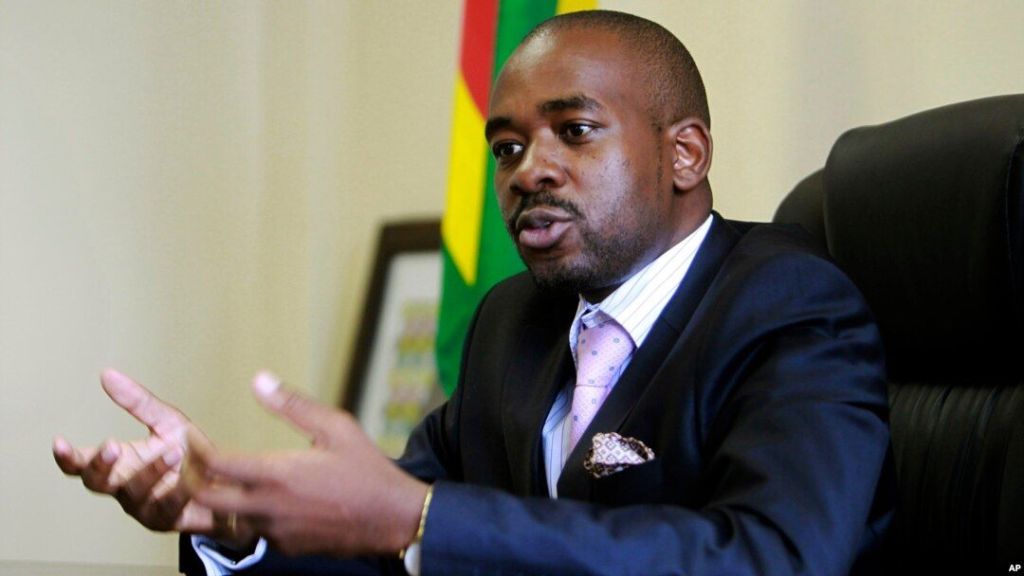
It is constructing a political bunker, designed specifically to entomb the aspirations of the country’s most popular opposition figure, Nelson Chamisa, while paving a smooth, gilded path for a successor who lacks the common touch but possesses the treasury.
To understand why this amendment is an existential threat to the opposition, one must look at the cold, hard numbers of Zimbabwe’s recent electoral history.
The direct popular vote has always been the Achilles’ heel of the ruling party.
In the 2018 general election, while ZANU-PF cruised to a comfortable two-thirds majority in the National Assembly with 145 out of 210 seats, Emmerson Mnangagwa himself barely scraped by.
He officially garnered 50.6% of the vote—just a whisker above the threshold required to avoid a runoff—against Nelson Chamisa’s 44.3%.
Fast forward to 2023, and the pattern repeated with even more clarity.
ZANU-PF secured 177 of the 280 seats in the National Assembly (roughly 63%), yet Mnangagwa’s personal victory remained a thin and hotly disputed 52.6%, while Chamisa, despite running a campaign under the most repressive conditions, pulled 44.03%.
The disparity is glaring.
Chamisa consistently out performs his party, whether it was the MDC-Alliance or the Citizens Coalition for Change (CCC).
Conversely, the ZANU-PF brand, anchored in rural patronage and historical entitlement, is stronger than the individual man at its helm.
Under the current direct-election system, Mnangagwa feels a perpetual, shivering threat from Chamisa’s grassroots magnetism.
If the President were chosen by Parliament today, Mnangagwa would enjoy the luxury of a massive, manufactured majority.
But under the current system of the people’s will, he must fight for every percentage point in a contest he nearly loses every time.
By moving the goalposts to Parliament, the ruling party effectively deletes the “Chamisa Factor” from the equation.
In a parliamentary-chosen presidency, Chamisa’s chances aren’t just slim—they are mathematically impossible.
His parties have never come close to a parliamentary majority, and with the systemic gerrymandering and rural “command voting” that defines Zimbabwe’s constituencies, they likely never will.
This is a significant departure from the era of Morgan Tsvangirai, who in 2008 managed to lead the MDC to a historic parliamentary majority—securing 99 seats to ZANU-PF’s 97 in the House of Assembly—even as he was systematically denied a clear path to the presidency through a violent and disputed runoff.
However, the 2026 amendments are not just about protecting the incumbent; they are about protecting the “Project.”
While Mnangagwa himself is set to benefit from the proposed extension of terms from five to seven years—the “2030 Agenda” finally made flesh—the shift to an indirect election is a safety net for his rumored successor, the tycoon Kudakwashe Tagwirei.
In the whispers of the Harare corridors, Tagwirei is the man being groomed for the throne.
Yet, the “tenderpreneur” is a man of the boardroom, not the borehole.
Save for throwing around cash and cars, he has no grassroots support, no liberation credentials to speak of, and zero charisma to sway a rally in Epworth or Gutu.
In a direct popular vote, even in 2030, Tagwirei would be devoured by Chamisa.
But in a system where the President is chosen by a Parliament already dominated by ZANU-PF, Tagwirei wouldn’t need a single vote from a grandmother in a rural village.
He would only need the loyalty of a few hundred parliamentarians, many of whom are already beneficiaries of the very patronage system he helps fund.
This amendment is Tagwirei’s insurance policy against the terrifying unpredictability of the masses.
The strategy to isolate Chamisa is further bolstered by the proposed removal of the constitutional provision that forbids traditional leaders from participating in partisan politics.
For years, the 2013 Constitution acted as a thin legal shield for rural voters, nominally prohibiting chiefs and village heads from acting as ZANU-PF enforcers.
Despite this, we have seen the brazen threats of violence, the dispossession of land, and the weaponization of food aid against those suspected of supporting the opposition.
By legalizing the partisanship of traditional leaders, the state is giving a “license to intimidate.”
Chiefs, once the custodians of culture, are being formally transformed into the wardens of a political prison.
This is a direct hit on Chamisa’s base.
Unless he can find a way to penetrate this rural wall, his “citizens’ movement” will remain an urban phenomenon, shouting into a void while the rural vote is harvested under the watchful, now-legalized eye of the local headman.
For Chamisa, the “Citizens’ Movement” approach—his refusal to form a traditional party structure following the hijacking of the CCC by Sengezo Tshabangu—is now under the microscope.
While his hesitation to build a formal party was a defense mechanism against state-sponsored infiltration, it becomes a liability under a parliamentary-selection model.
To become President in this new Zimbabwe, one must win the House, not just the hearts.
If he remains a leader without a robust, disciplined parliamentary machine, he is essentially disqualifying himself from the highest office.
The opposition’s only path forward may lie in the history of the country itself.
During the liberation struggle, the pungwes and the work of the mujibhas and chimbwidos were successful because they didn’t just fight the system—they converted its foundation.
They won over the traditional leaders and the rural populace through a mixture of ideology, shared struggle, and underground persuasion.
If the 2026 amendments allow chiefs to be partisan, the opposition must stop lamenting and start competing.
They must develop “clever strategies” to gain the trust of those same traditional leaders, offering them a vision of a future that isn’t built on the fear of losing their land or their food.
They must make the chiefs realize that being a “partisan leader” can also mean being a leader for change.
Ultimately, the fight to defend the 2013 Constitution is no longer a legalistic luxury for academics and NGOs.
It is an imperative for Nelson Chamisa’s very survival.
The proposed amendments are a clear message from the ZANU-PF establishment: “We can no longer beat you at the ballot box, so we are taking the ballot box away.”
If these changes see the light of day, the presidency will become a gift exchanged in the halls of Parliament, far removed from the dust and the hopes of the Zimbabwean people.
Chamisa must now transition from a popular orator to a constitutional crusader.
If he does not lead the charge to stop these amendments, he won’t just be losing an election; he will be watching the door to the presidency be welded shut, with him on the outside.
● To directly receive his articles please join his WhatsApp Channel on: https://whatsapp.com/channel/0029VaqprWCIyPtRnKpkHe08
 TENDAI RUBEN MBOFANA - THE UN-OPPRESSED MIND!