It is remarkable the lengths to which a desperate hunger for power can drive people.
There is a specific kind of intellectual sleight of hand that occurs when a government official attempts to justify a radical departure from democratic norms by pointing a finger at their neighbors.
If you value my social justice advocacy and writing, please consider a financial contribution to keep it going. Contact me on WhatsApp: +263 715 667 700 or Email: mbofana.tendairuben73@gmail.com
It is a tactic designed to make the extraordinary seem mundane and the controversial seem conventional.
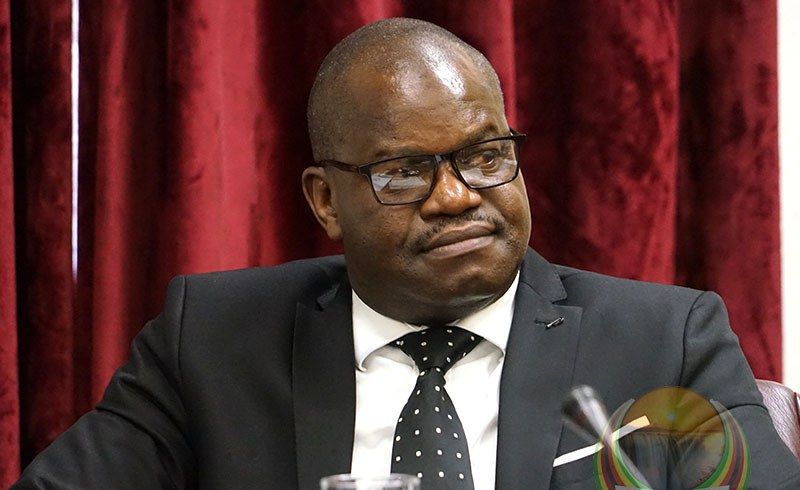
When Zimbabwe’s Permanent Secretary for Information, Nick Mangwana, took to social media to defend the Constitution of Zimbabwe (Amendment) Bill of 2026, he employed this very maneuver.
By asking, “If Botswana does it, why can’t we?” Mangwana attempted to frame the proposed transition from a direct presidential election to a parliamentary selection system as a mere exercise in regional alignment.
However, beneath the surface of this “double standard” defense lies a profound misrepresentation of political reality, institutional integrity, and the very definition of a democratic mandate.
To understand why Mangwana’s comparison to Botswana and South Africa is not just flawed but inherently deceptive, one must first look at the direction of travel.
Democracy is not a static list of checkboxes; it is a trajectory.
When Botswana and South Africa adopted their parliamentary systems, they did so as foundational structures of their modern democratic eras.
For Zimbabwe, however, the 2013 Constitution represented a hard-won, decade-long consensus that the people of Zimbabwe desired—and deserved—the right to directly elect their Head of State.
Moving away from a direct popular vote in 2026 is not an “alignment” with regional standards; it is an active subtraction of a pre-existing right.
It is a democratic backslide masquerading as a regional trend.
When you strip a citizen of a vote they previously held, you are not mimicking a neighbor; you are disenfranchising a population.
To understand the absurdity of this “alignment” logic, imagine a simple family grocery trip.
For years, the rule in your house has been that every Saturday, the whole family goes to the supermarket together.
Each person walks down the aisles and has the direct power to pick one snack for the week and put it in the cart themselves.
Now, imagine the “Head of House” suddenly announces that you are no longer allowed in the store.
You must stay in the car while two “representatives” go inside to pick for you.
When you protest the loss of your choice, the Head of House points to the neighbors and says, “Why the fuss? The family next door is perfectly happy, and only the parents there have ever gone into the shop. I’m just aligning our house with their successful model.”
This is the fundamental deception in the government’s argument.
The neighbors next door didn’t lose anything—that is simply their established tradition.
But in your house, you are being physically barred from the aisle.
You aren’t being “aligned” with a neighbor; you are being demoted to the backseat of the car.
The shift to a parliamentary system is not a harmless administrative tweak; it is the act of locking the citizen in the car while the “representatives” decide what’s for dinner.
And to make the proposed constitutional Bill even more audacious, the Head of House adds one final condition: “And because this new way is so efficient, we’re only going to the shop once every seven months instead of five.”
In plain English, when someone takes away your right to choose and tells you they are doing it to be “modern,” they aren’t looking for efficiency—they are looking for a way to make sure you can’t reach the shelf.
Furthermore, Mangwana’s claim that the systems between Botswana and what is being proposed in Zimbabwe are “identical” conveniently ignores the most radioactive element of the this Bill: the term extension.
While it is true that the Presidents of South Africa and Botswana are selected by their respective parliaments, both nations adhere to a strict five-year electoral cycle.
The Zimbabwean proposal seeks to stretch that term to seven years.
This is where the “identical” argument collapses under its own weight.
A two-year difference per term may seem incremental on paper, but in the context of political power, it is a lifetime.
Over two terms, a Zimbabwean president would serve fourteen years compared to the ten served by their counterparts in Gaborone or Pretoria.
To suggest that a system is the “same” while fundamentally altering the duration of power is like claiming two houses are identical because they both have doors, while ignoring that one has been built as a fortress.
The comparison to South Africa is particularly disingenuous when one considers the institutional safeguards that exist in Pretoria compared to the current climate in Harare.
South Africa’s parliamentary selection of a president works because it is anchored by “Chapter 9” institutions—independent bodies like the Public Protector and a fiercely autonomous Judiciary—that hold the executive to account regardless of how they were selected.
The government’s comparison to South Africa is a mechanical deception that ignores how a single citizen’s vote actually reaches the President.
Nick Mangwana is comparing two engines that look the same on the outside but function completely differently under the hood.
The core difference lies in whether the system is a mirror or a filter of the people’s voice.
In South Africa, the system utilizes Proportional Representation, a “direct link” where every single vote counts toward the final result.
If a party receives 30% of the national vote, they get 30% of the seats in Parliament.
There is a direct, mathematical tether between the individual citizen and the power of the party selecting the leader.
When a South African voter goes to the booth, they aren’t just voting for a local representative; they are casting a “fractional vote” for the Head of State.
No vote is “wasted.”
Even if your party loses in your specific neighborhood, your vote still helps them secure more seats nationally to put their leader in office.
This makes the South African Parliament a mirror that accurately reflects the national political will.
Zimbabwe’s proposed shift, however, occurs within a “First-Past-The-Post” landscape, which functions like 210 isolated, winner-take-all street fights.
This creates a filter that can easily distort the truth.
Under this system, if an opposition candidate wins a constituency with 20,000 votes and the rival gets 19,000, those 19,000 votes effectively vanish—they have zero impact on who becomes President.
This “wasted vote” problem is precisely what allows for the dangerous math of gerrymandering.
By strategically drawing constituency boundaries, a party hierarchy can manufacture a massive Parliamentary majority even if their national popular support is crumbling.
In such a vacuum, a parliamentary selection doesn’t reflect the “will of the people” through their representatives; it reflects the will of a party hierarchy that has successfully cleared the field of competition.
The President is no longer accountable to 15 million citizens; they are only accountable to the inner circle that controls the candidate list.
This isn’t a regional “alignment”; it is a system where the “field of competition” has been fenced off, leaving the citizen outside, watching their “representatives” select a leader they never actually chose.
Mangwana’s “double standard” rhetoric is a classic “red herring” fallacy.
By accusing critics of bias, he shifts the conversation away from the substance of the Bill and onto the motives of the commentators.
It is a defensive crouch that seeks to invalidate legitimate constitutional concerns by framing them as an “anti-Zimbabwe” narrative.
However, the standard being applied by critics is not a “different set of rules for different players,” but rather a consistent rule for all: constitutional changes should expand the franchise, not contract it.
If South Africa were to suddenly announce they were moving from a five-year term to a seven-year term while simultaneously removing the party-list system, the outcry would be just as deafening.
The criticism is not about who is doing it, but what is being done.
We must also address the “2030” context that permeates the current political discourse in Zimbabwe.
The timing of this Bill—coming as it does during a period of intense speculation regarding the extension of the incumbent’s tenure—cannot be ignored.
When a government changes the rules of the game in the middle of the match to ensure the current captain stays on the field longer, it is not “constitutional evolution.”
It is “rule by law”—using the legislative machinery to serve the interests of the elite rather than the “rule of law,” where the law serves as a check on power.
Botswana and South Africa have never sought to amend their constitutions mid-stream to allow an incumbent to bypass established term limits or extend their stay via a new selection method.
In fact, Botswana has seen peaceful, institutionalized transitions of power for decades.
Using Botswana’s stability to justify a maneuver that arguably creates instability is the height of irony.
The Permanent Secretary’s conclusion—that the disparity in public discourse suggests a “different set of rules”—is a masterful piece of projection.
The “different rules” are, in fact, being written by the Zimbabwean government itself.
By bundling the parliamentary selection method with a term extension, the proposed Bill creates a unique, hybridized system that has no equivalent in the Southern African Development Community (SADC).
It is a system that seeks the “convenience” of an indirect vote (avoiding the volatility and accountability of a national campaign) with the “longevity” of an extended term.
It is a cherry-picking exercise where the government selects the most restrictive elements of other systems and discards the democratic safeguards that make those systems functional.
Ultimately, the defense of the 2026 Amendment Bill relies on the hope that the public will not look too closely at the details.
It relies on the hope that “If Botswana does it” is a sufficient shield against the reality that Zimbabwe is being asked to trade a direct voice for a distant one, and a five-year accountability check for a seven-year wait.
True regional alignment would mean adopting the transparency, the judicial independence, and the respect for term limits that characterize our neighbors.
It would mean strengthening the 2013 Constitution, not dismantling it.
Until the Zimbabwean government can justify why a seven-year term and an indirect vote are better for the citizen—not just the incumbent—the comparisons to Botswana and South Africa will remain what they are: a hollow defense of an indefensible retreat from democracy.
● To directly receive his articles please join his WhatsApp Channel on: https://whatsapp.com/channel/0029VaqprWCIyPtRnKpkHe08
 TENDAI RUBEN MBOFANA - THE UN-OPPRESSED MIND!