There is no greater heartbreak than watching the dream you risked your life for be stolen.
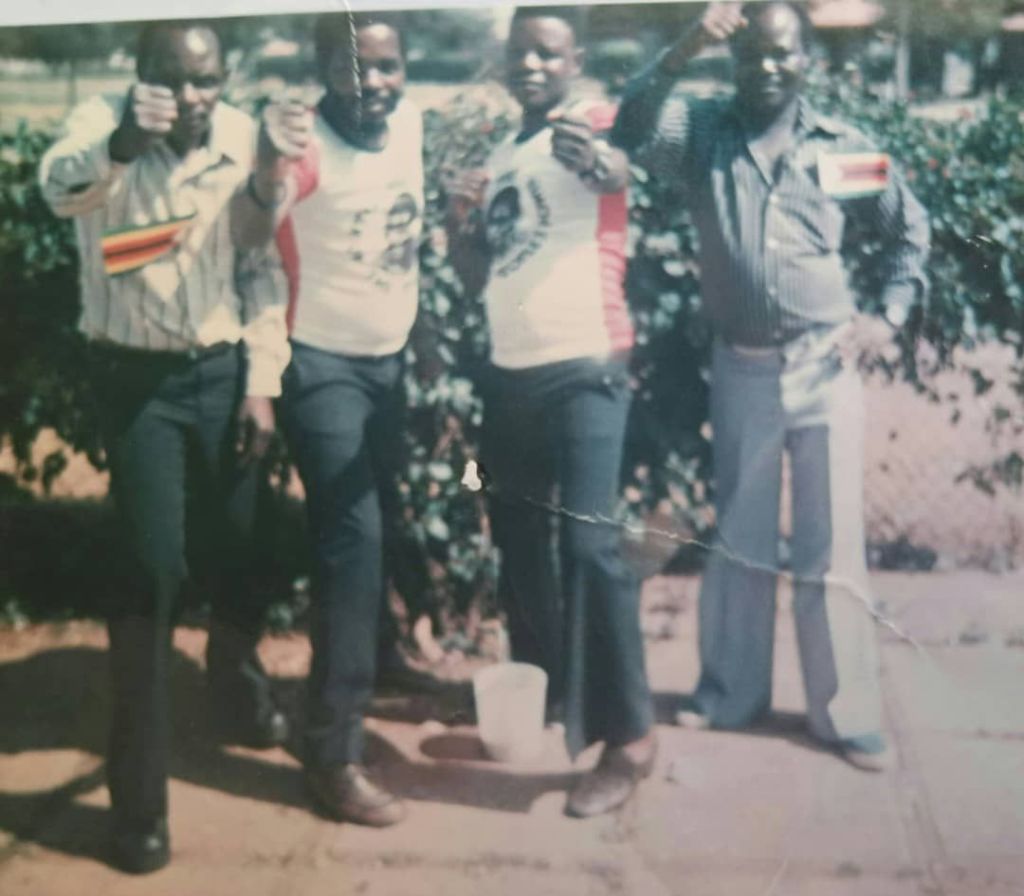
The nights of my childhood in Redcliff were often draped in a heavy, expectant silence, broken only by the low, rhythmic crackle of a radio.
If you value my social justice advocacy and writing, please consider a financial contribution to keep it going. Contact me on WhatsApp: +263 715 667 700 or Email: mbofana.tendairuben73@gmail.com
It was the late 1970s, and my father, Elias Japhet George Mbofana, alongside my mother and me, would huddle close to that small device, our breath held as the airwaves carried the defiant transmissions of Radio Maputo.
The Voice of Zimbabwe was more than just a broadcast; it was the heartbeat of a dream.
In those stolen hours, my father wasn’t just a parent; he was a mentor, teaching me that the quest for justice, democracy, and human dignity was the highest calling a man could answer.
He believed, with a fervor that radiated through those dark rooms, that we were on the cusp of a New Jerusalem where every Zimbabwean, regardless of their tribe or station, would finally walk tall and free.
Yet, his contribution to the struggle went far beyond those quiet nights of listening.
My father was a man who lived his convictions.
Throughout the liberation struggle, he was actively involved in the dangerous work of mobilizing the masses, moving through communities to fan the flames of resistance and campaign for a free Zimbabwe.
This was not a task for the faint-hearted; it meant operating under the constant, suffocating shadow of the colonial regime’s security apparatus.
Every meeting organized and every soul mobilized placed his own life at immense risk.
He knew the consequences of being caught—the likelihood of detention, torture, or worse—but that never deterred him.
His courage was fueled by a vision of a nation where freedom was not a privilege for the few, but a birthright for all.
As the sun rose on an independent Zimbabwe in 1980, that dream seemed to manifest in flesh and blood.
My father did not just watch from the sidelines; he was a man of action who rose through the local ranks of ZANU-PF during the 1980s and 90s, driven by a conviction that the party was the legitimate vessel for our collective liberation.
He carried into those early years of independence the same fire that had driven him during the struggle, believing that the party would remain the faithful guardian of the justice he had risked his life to achieve.
Our home in Redcliff became a sanctuary for the revolution’s cultural soul.
I remember with vivid pride when Cde Chinx and the ZANU Choir stayed under our roof during their tours to perform in the Midlands.
The house was alive with the songs of the struggle, and for a young boy, it felt as though the very heroes of our freedom were an extension of our family.
My father served the party because he believed the party served the people.
He was a man of the establishment, yes, but he was first and foremost a man of conscience.
However, the true measure of Elias Japhet George Mbofana was not found in the positions he held, but in the moments when he stood against the very machine he helped build.
The 1980s brought a dark, suffocating fog over Redcliff—a reign of terror where Ndebele speakers were suddenly viewed not as fellow citizens, but as targets.
The air turned cold with suspicion as anyone suspected of being a ZAPU supporter was marked for the unthinkable.
It was during this Gukurahundi era that my father’s liberation values were put to the ultimate test.
While the party he loved unleashed its fury, he chose the path of the righteous.
He began to see the rot beginning to fester at the core of ZANU-PF, a departure from the democratic ideals we had listened to on Radio Maputo.
At great personal risk, he became a shadow in the night, secretly warning his Ndebele neighbors when the party militia were coming for them.
He chose their lives over party loyalty, and their safety over his own comfort.
He knew that a liberation movement that turns on its own people has already lost its soul.
Tragically, my father’s journey on this earth ended in August 2000.
He drowned while enjoying his favorite pastime of fishing at the local Cactus Dam—a sudden, jarring conclusion to a life spent braving the relentless storms of political struggle.
Yet, even then, as we entered the dawn of the new millennium, the air was thick with a different kind of foreboding.
It was becoming increasingly impossible for him to ignore the bitter reality that ZANU-PF had woefully betrayed and turned against the very people it once claimed to have liberated.
The signs were no longer whispers; they were glaring, inescapable sirens of a nation in distress.
He lived just long enough to see the first cracks of the total collapse: a freefalling local currency, inflation beginning its ascent through the roof, and the agonizing queues for fuel and essential commodities that would soon define Zimbabwean life.
He saw the shuttering of factories and the massive unemployment that followed, as once-vibrant companies became hollowed-out shells.
Most galling for a man of his integrity was witnessing the stinking corruption by those in authority, who shamelessly enriched those in proximity to power while the very lifeblood of the nation was drained away.
He watched in agony as thousands were retrenched from their jobs—most notably at state-owned giants like Ziscosteel, which had been run down largely as a result of gross mismanagement and blatant incompetence.
To a man who had campaigned for a prosperous, self-reliant Zimbabwe, seeing the industrial pride of Redcliff reduced to a crumbling monument of greed was a betrayal beyond words.
In those final months, the man who had mobilized the masses for a prosperous Zimbabwe was forced to witness the systematic dismantling of that prosperity by the very hands he had once trusted to build it.
Today, as I look at the wreckage of the nation he so dearly loved, I am certain of one agonizing truth: my father is turning in his grave.
The principles he cherished—the ones he taught me while the radio hissed in the dark—have been torn apart, shredded, and discarded by the very regime that now occupies the seats of power.
The ZANU-PF of 2026 is a grotesque mutation of the movement my father served.
It has become a predatory machine, characterized by a level of rampant corruption that would have been unthinkable to the men and women who bled for this soil.
We see a tiny, entitled handful of the political elite basking in obscene wealth, their pockets lined with the proceeds of our national resources, while the rest of the nation is left to scavenge for the crumbs of their own inheritance.
The statistics are not just numbers; they are a crushing indictment of a failed leadership.
When we speak of nearly 80% of our population languishing in poverty, we are talking about millions of souls who wake up every day with the singular, exhausting goal of surviving until sunset.
Even more harrowing is the fact that 50% of our people now live in extreme poverty.
To understand the gravity of this is to understand what it means to be “food poor”—to live in a state where an individual cannot afford the minimum daily energy intake of 2,100 calories required for basic human survival.
It means a father watching his children’s ribs begin to show, or a mother choosing which child gets to eat today and which must wait until tomorrow.
This is the “independence” that the current regime has delivered: a nation where the majority are effectively being starved by the greed of their “liberators.”
The physical landscape of Zimbabwe mirrors this internal decay.
The infrastructure that was once the envy of the region—the beaming schools, the world-class hospitals, the robust power grids—now lies in literal and metaphorical ruins.
Redcliff, the very town where my father stood as a pillar of the community, has become a ghost of its former prosperity.
The steel works that were once the heartbeat of the nation are silent, stripped of their dignity and their machinery by vultures in expensive suits.
Our social services are in a state of terminal decay; our taps are dry, our roads are death traps, and our clinics have become mere waiting rooms for the grave because they lack the most basic medicines.
This is not the Zimbabwe my father and his contemporaries fought for.
They did not face the gallows and the bush so that a new elite could replace the old one, only to be more efficient at the art of oppression and theft.
The betrayal is total.
The regime has shredded the social contract, replacing the promise of democracy with a system of patronage and fear.
They have turned our liberation history into a weapon to silence dissent, forgetting that the true essence of that history was about the empowerment of the common man, not the enrichment of the few.
My father’s life was a testament to the belief that the state should be a shield for the vulnerable, not a hammer to crush them.
He stood for a Zimbabwe where merit mattered more than loyalty, and where a man’s word was his bond.
As I sit here today, writing these words, I feel the weight of his legacy pressing against my chest.
I see the contrast between the man who warned his neighbors of the coming storm and the men who now create the storms for their own profit.
The regime has failed the ancestors.
They have failed the martyrs.
And most poignantly for me, they have failed Elias Japhet George Mbofana.
They have taken the dream of 1980 and turned it into a nightmare of 2026.
But the fire my father lit in me—the one fueled by those nights with Radio Maputo—cannot be extinguished.
He taught me that justice is worth the risk, and democracy is worth the fight.
Even as he turns in his grave at the sight of this ruin, his spirit demands that we do not go quietly.
We owe it to his generation, and to the generations yet unborn, to reclaim the values that were so heartlessly shredded.
We must rebuild the Zimbabwe they envisioned: a home of dignity, a land of plenty for all, and a nation that finally honors the true spirit of its liberation.
● Tendai Ruben Mbofana is a social justice advocate and writer. To directly receive his articles please join his WhatsApp Channel on: https://whatsapp.com/channel/0029VaqprWCIyPtRnKpkHe08
 TENDAI RUBEN MBOFANA - THE UN-OPPRESSED MIND!