There are times when the prosperity of the few is masqueraded as the progress of the many.
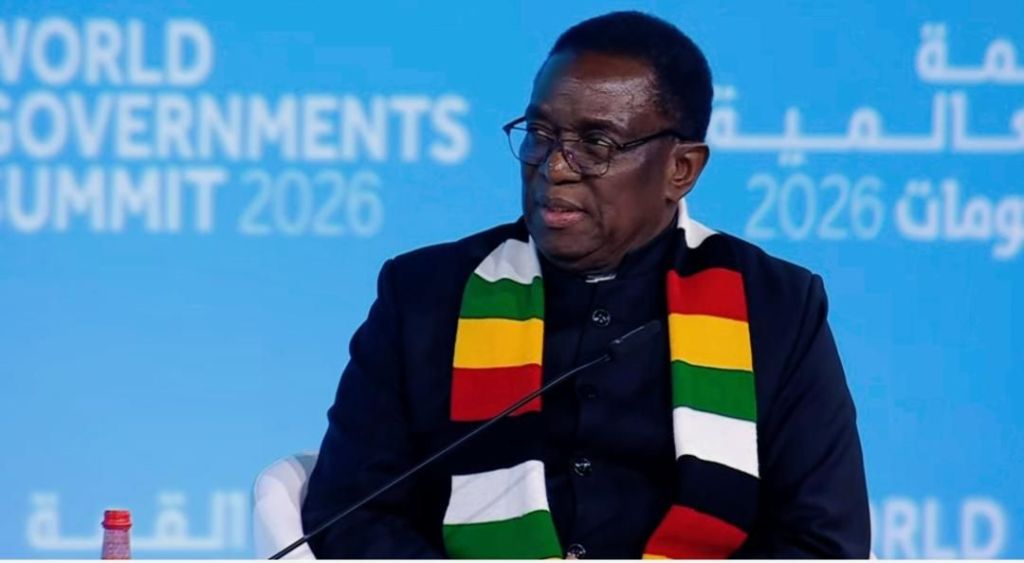
In the air-conditioned opulence of the World Government Summit in Dubai on February 4, 2026, President Emmerson Mnangagwa sat across from Tucker Carlson and performed a masterclass in diplomatic deflection.
If you value my social justice advocacy and writing, please consider a financial contribution to keep it going. Contact me on WhatsApp: +263 715 667 700 or Email: mbofana.tendairuben73@gmail.com
When pressed on the predatory nature of “East vs. West” investment, the President leaned back with the practiced ease of a man who has weathered many storms, coolly asserting that Zimbabwe is a sovereign state that makes decisions to “please ourselves.”
It was a line designed to elicit cheers from Pan-Africanists and anti-imperialists alike.
It spoke of agency, of a nation no longer a footstool for Western dictates.
But as the applause fades, we are left with a chilling, singular question that the President avoided: Who, exactly, is this “ourselves” that is being pleased?
Because if we look at the scarred landscape of Zimbabwe today—from the dusty, diamond-rich fields of Marange to the decimated mountains of Mutoko—it is abundantly clear that “the people” are not the ones smiling.
Let us be clear: no one is pining for the return of colonial repression.
The Western companies that came before 1980 were part of a system of conquest.
Yet, even through that dark lens, one cannot ignore a physical reality that stares us in the face.
The towns of Redcliff, Kwekwe, Zvishavane, Bindura, and Shurugwi were not accidents of nature.
They were birthed by mining and manufacturing investments that, despite their flaws, understood a basic tenet of long-term presence: you build where you harvest.
In my hometown of Redcliff, once the “Steel City,” the investment meant more than just a furnace.
It meant modern housing, functioning hospitals, schools that produced the country’s elite, and recreational facilities that made a community feel like a community.
There was a sense of permanence.
Today, these towns are crumbling shadows of their former selves, but they stand as a testament to a time when “investment” meant building a town, not just an airstrip.
Contrast this with the “Look East” era.
For over two decades, Chinese investment has been the cornerstone of Zimbabwe’s economic strategy.
But where is the “New Redcliff”?
Where is the city birthed by the billions of dollars in diamonds extracted from Marange?
The people of Marange do not live in modern houses; many still wallow in subhuman conditions, having been forcibly evicted from their ancestral lands to make way for companies like Anjin and others.
They have no tarred roads, only the clouds of dust raised by trucks hauling their heritage away.
Instead of hospitals, they have silted rivers.
Instead of schools, they have deep, open pits that remain long after the “investors” have moved on.
This is not investment; it is extractive nomadism.
It is a model where the “partner” builds only what is necessary to get the resource out of the ground and onto a ship.
If the people of Dinde, Chilonga, or Mutoko—where mountains are being sliced away for black granite—are “pleased” by this, they have a very strange way of showing it.
President Mnangagwa’s talk of sovereignty rings hollow when one considers that Chinese-owned firms now control an estimated 90% of Zimbabwe’s mining sector.
We have traded a diverse, albeit complicated, portfolio of Western interests for a near-monopoly by a single Eastern power.
Is it truly “sovereign” to allow foreign nationals to shoot local workers, as has happened in Gweru and Limpopo, with what often looks like state-sanctioned impunity?
Is it “sovereign” to allow the Kwekwe River to be poisoned by mining waste, or to permit the desecration of sacred burial sites and ancestral graves for the sake of a lithium contract?
Even as recently as December 2025, reports surfaced of female workers at the Chinese-owned Famona gold mine being subjected to mandatory HIV testing and summary dismissal—a flagrant violation of every labor and privacy law on our books.
Does this “please” the Zimbabwean worker?
If the ordinary citizen is being displaced, the worker is being abused, and the environment is being murdered, then the “ourselves” the President spoke of in Dubai must be a very small, very specific group.
It is the ruling elite and the politically exposed persons (PEPs) who sit on the boards of these opaque joint ventures.
It is the officials who sign off on Environmental Impact Assessments that no local community has ever seen.
It is the “owners” of the state who benefit from the “facilitation fees” and the luxury SUVs that arrive in exchange for the nation’s subsoil wealth.
To these men in their high offices in Harare, the Chinese “Look East” policy has been a resounding success.
It has provided them with the financial oxygen to bypass targeted Western sanctions and maintain their grip on power without the “nuisance” of human rights conditions or transparency.
In this narrow, selfish sense, they are indeed “pleasing themselves.”
The tragedy of the Tucker Carlson interview was not Carlson’s questioning; it was the President’s refusal to acknowledge that Zimbabwe is currently being re-colonized, this time with the consent of its own leaders.
We have become a “resource colony.”
We export raw lithium, raw gold, and raw diamonds, and we import finished goods and debt.
We brag about “sovereignty” while we cannot even protect a villager in Uzumba from having his home demolished by a granite miner.
True sovereignty is not the ability to choose your master; it is the power to ensure that no one—East or West—is your master.
It is the ability to say: “You may mine our ore, but you will build a city for our people, you will pay a living wage, and you will respect the graves of our ancestors.”
President Mnangagwa, your performance in Dubai may appear well-articulated, but it was not honest.
The “sovereignty” you boasted about is a shield for elite enrichment.
Until the people of Marange can walk on tarred roads built by diamond wealth, and until the workers at the lithium mines are treated with the dignity they deserve, your “pleasure” is our pain.
Zimbabwe has not been “freed” from Western influence; it has been sold to the highest bidder in the East.
And as any resident of the ghost towns like Redcliff will tell you: it is better to be a citizen of a country that builds, than a subject of a regime that only knows how to strip-mine.
● To directly receive his articles please join his WhatsApp Channel on: https://whatsapp.com/channel/0029VaqprWCIyPtRnKpkHe08
 TENDAI RUBEN MBOFANA - THE UN-OPPRESSED MIND!