It is often said that trying to please everyone is not a strength, but a weakness.
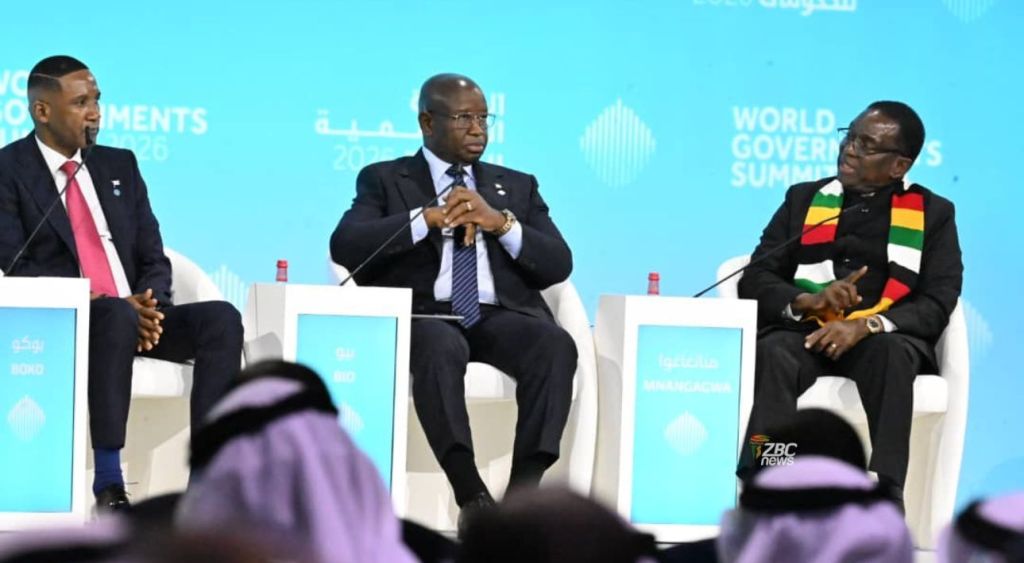
At the ongoing World Governments Summit in Dubai, American commentator Tucker Carlson asked President Emmerson Mnangagwa what he made of the recent dramatic events in Venezuela.
If you value independent, public-interest reporting and want to help keep it alive, please consider supporting my work financially — contact me via WhatsApp at +263 715 667 700 or email mbofana.tendairuben73@gmail.com
The question referred to the military operation carried out by U.S. forces that resulted in the capture and detention of Venezuelan President Nicolás Maduro and his wife.
The incident raised urgent questions about sovereignty, international law, and global norms.
It was a live test of how nations position themselves in response to blatant violations of a fellow sovereign state’s autonomy.
To the bemusement of all, Mnangagwa, instead of articulating Zimbabwe’s position, described Venezuela as ‘very far away from Zimbabwe’ and spoke in vague terms about what he had heard.
He admitted uncertainty rather than taking a clear, principled stance.
He elaborated, “But I don’t know whether what we really read in Zimbabwe actually happens in Venezuela. From what we read, we are interested to know why it is happening.”
In doing so, he opted for uncertainty instead of offering a firm, articulated stance on a major geopolitical crisis.
For a country seeking a non‑permanent seat on the United Nations Security Council, this was a glaring display of diplomatic timidity.
How can Zimbabwe claim to represent Africa, uphold international norms, or contribute meaningfully to global governance if its leader cannot clearly express a position when confronted with a crisis of international significance?
Mnangagwa’s response reflects a foreign policy cloaked in the familiar phrase: “a friend to all and an enemy to none.”
On paper, it sounds appealing: Zimbabwe avoids conflict and seeks cooperation with all nations.
In practice, however, it substitutes strategic clarity with bland neutrality, moral courage with caution, and principle with indecision.
Real foreign policy is not about popularity.
It is about having a clear stance and defending it confidently on the international stage.
The irony of Mnangagwa’s Dubai answer is stark.
In global forums where Zimbabwe seeks influence, including the Security Council, ambiguity signals hesitation, not strength.
At a time when global power struggles increasingly play out in Africa, and the continent faces direct threats to sovereignty and stability, a foreign policy of neutral ambiguity amounts to self‑marginalization.
Nations that cannot articulate firm positions risk being ignored, sidelined, or manipulated in the very forums where they aspire to lead.
A useful point of contrast is South Africa’s recent diplomatic conduct.
When the military operation in Venezuela unfolded, South Africa did not shy away from expressing a clear position.
At the United Nations, South Africa’s representatives characterised the episode as a violation of Venezuela’s sovereignty and territorial integrity, and called for urgent action from the Security Council to address the crisis.
South Africa’s statement at the world body did not merely restate general principles; it explicitly demanded attention and accountability for actions it saw as undermining international law.
Similarly, on the issue of Palestine, South Africa has been unambiguous in its condemnation of attacks affecting Palestinian civilians, and has taken legal action — including filing cases at the International Court of Justice — to uphold what it considers to be breaches of international humanitarian law.
These positions are not popular everywhere; they have drawn international criticism and provoked animosity from the U.S. administration, yet South Africa’s stance remains clear and resolute.
South Africa’s foreign policy articulates what it stands for, even in deeply contentious global issues, and is prepared to defend that position in the world’s most senior international forums.
That clarity — even if contested by others — is precisely what Zimbabwe lacks.
By contrast, at the Security Council horseshoe table, Zimbabwe risks remaining silent or merely abstaining when confronted with similarly contentious issues.
Its Dubai response suggests a pattern of ambiguity that could see it consistently avoiding firm positions, even when global norms and sovereignty are at stake.
Zimbabwe often proclaims itself a defender of African sovereignty and a champion of multilateralism, yet when confronted with a live test like the Venezuela crisis, the leadership retreats into platitudes.
This is not strategic restraint.
It is cowardice masquerading as diplomacy.
By failing to engage substantively, Zimbabwe relinquishes both moral and political authority, leaving its place in global governance hollow.
This episode is emblematic of Zimbabwe’s pattern of reactive, rather than proactive, diplomacy.
The country avoids taking positions unless consensus already exists or silence is politically expedient.
When crises arise, Zimbabwe cannot credibly claim leadership, influence outcomes, or defend African interests effectively.
The “friend to all and enemy to none” approach is convenient only when there is nothing at stake.
In moments of genuine global tension, it collapses, exposing the country’s inability to act with clarity, courage, or principle.
If Zimbabwe genuinely seeks a Security Council seat, it must demonstrate the capacity for principled decision‑making on global crises.
Ambiguity and abstention cannot substitute for a coherent foreign policy.
Global leaders judge credibility not by slogans, but by the ability to assert positions with clarity and confidence.
Mnangagwa’s Dubai response demonstrated the opposite: hesitation, avoidance, and indecision.
Ultimately, the issue is substance versus optics.
A nation can claim neutrality, but without a clear, articulate foreign policy, such claims are meaningless.
Zimbabwe risks being perceived not as a capable leader, but as a timid actor relying on platitudes while others shape the world.
International forums, crises of sovereignty, and moments requiring moral clarity will continue to test the country.
If Zimbabwe does not reform its foreign policy to combine principle with strategy, its global aspirations will remain unfulfilled.
Mnangagwa’s exchange in Dubai should serve as a wake‑up call.
Being a friend to all and an enemy to none is not a foreign policy — it is a shield for indecision.
True diplomacy requires courage, conviction, and the ability to articulate positions confidently on the international stage. Anything less exposes Zimbabwe to irrelevance.
Until Zimbabwe abandons platitudes and embraces a foreign policy grounded in clarity, principle, and assertiveness, the world will continue to see it as a hesitant actor — a nation that prefers the comfort of neutrality over the responsibility of leadership.
● Tendai Ruben Mbofana is a social justice advocate and writer. To directly receive his articles please join his WhatsApp Channel on: https://whatsapp.com/channel/0029VaqprWCIyPtRnKpkHe08
 TENDAI RUBEN MBOFANA - THE UN-OPPRESSED MIND!