Losing a parent is one of life’s deepest pains.
It is a loss that reshapes your world and leaves a silence that never quite goes away.
If you value independent, public-interest reporting and want to help keep it alive, please consider supporting my work financially — contact me via WhatsApp at +263 715 667 700 or email mbofana.tendairuben73@gmail.com
Yet there is a particular kind of grief that is even harder to carry—the grief of unanswered questions.
It is the grief that comes when a loved one dies under circumstances that do not fully make sense, when official explanations do not align with lived experience, and when the search for clarity becomes a struggle of its own.
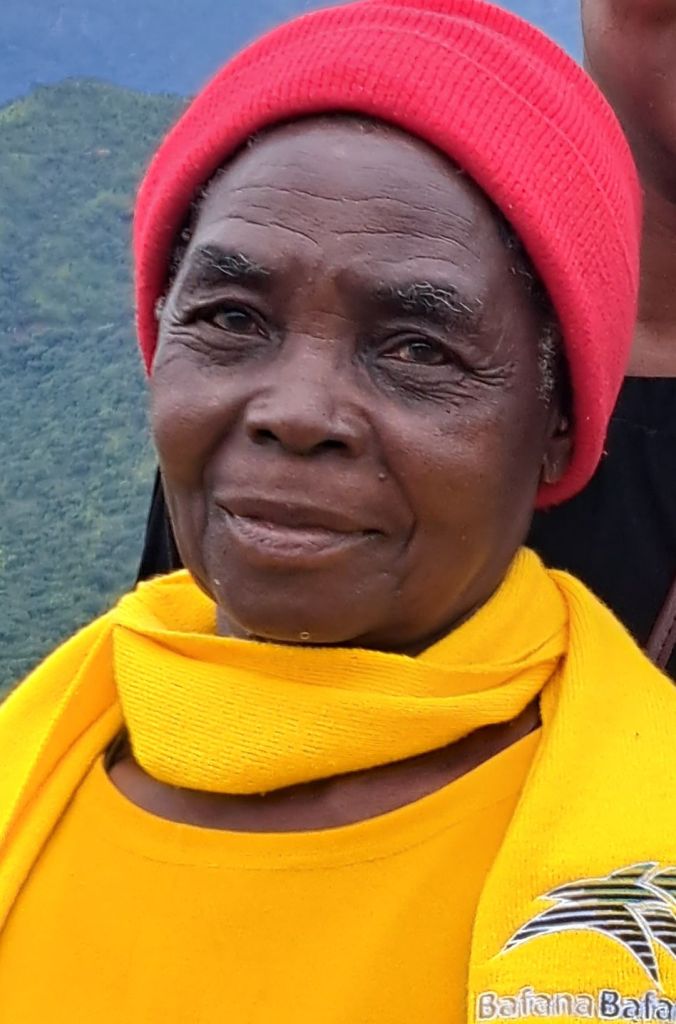
My late mother, Anastasia Takazvida Mbofana, was not only my parent; she was a nurse for 61 years.
She spent more than six decades caring for the sick, comforting families, and helping save lives.
Even after retirement, she continued to work because nursing, to her, was not just a job but a calling.
She believed deeply in the dignity of patients and in the ethical duty of healthcare workers to provide attentive and humane care.
It is precisely because of her lifelong devotion to the medical profession, and my deep love for her, that the circumstances surrounding her death are so difficult for me to accept without clear and transparent answers.
After her death, I followed formal procedure.
I wrote to the Provincial Medical Director for Midlands Province requesting an independent inquiry.
I was advised to first allow the hospital to conduct its own internal investigation.
I respected that guidance and submitted my complaint to Gweru Provincial Hospital.
The hospital did respond, and I acknowledge that.
However, after reviewing their findings, I remained dissatisfied.
Some explanations did not align with what I and others directly experienced, and some conclusions appeared to settle serious questions without, in my view, fully addressing the discrepancies.
I have since escalated the matter back to the Provincial Medical Director and requested an independent review, as originally advised.
In October 2025, my mother was admitted to Gweru Provincial Hospital for specialist assessment related to a bowel obstruction.
She was not taken there for end-of-life care.
She was referred for evaluation and possible surgical attention.
Like many Zimbabwean families, we trusted the institution and the professionals within it.
Less than 24 hours after her admission, she was gone.
After her passing, the attending doctor who spoke to my cousin and me explained that she had suffered respiratory complications linked to pleural effusion, which then led to organ failure.
That explanation immediately raised serious questions for me.
If her death was respiratory in nature, and if she had a known recent history of pleural effusion and compromised lung function, as indicated in her medical records, then careful respiratory monitoring and timely supportive care would have been especially important.
My concerns are therefore not abstract; they arise from this very explanation and from what we observed during her admission.
In its written response, the hospital indicated that an oxygen saturation test had been conducted and showed a normal reading.
However, this reading was recorded only once at admission.
What remains unclear is how her respiratory status was monitored thereafter, particularly overnight, and whether oxygen support was considered as her condition changed.
For a patient whose reported cause of death was respiratory-related, this is not a minor question.
An X-ray was ordered on admission, yet the radiographer could not be located that evening despite repeated efforts by staff.
I personally accompanied a trainee nurse to the X-ray department where we waited while attempts were made to find the radiographer.
The imaging was eventually deferred to the next day.
For a provincial referral hospital, this raised understandable concerns about the availability of essential diagnostic services.
Yet, shockingly, the hospital’s report insisted that the radiographer was on duty and that X-ray services were fully operational.
Pain management is perhaps the most distressing aspect for me.
The hospital’s report stated that Pethidine was administered at regular intervals.
Yet relatives who saw my mother in the early hours found her crying in pain and were told she had been in discomfort for much of the night.
Instead of receiving relief from the hospital’s supplies, family members were asked to purchase medication externally.
In fact, I had been given a prescription for IV paracetamol the previous evening and instructed to bring it the following day during the 1 pm visiting hour—an hour she never lived to see.
So, if the hospital supposedly had Pethidine, why were my relatives and I told to buy paracetamol ourselves?
The contrast between the written record and the family’s experience is difficult to ignore.
Another point of concern has been the hospital’s characterization of my mother’s condition as palliative, linked to what was described as a malignant pleural effusion.
To my knowledge, having been by her side throughout her illness, previous cytology tests following her diagnosis of pleural effusion had noted atypical cells but had not definitively confirmed malignancy.
At the time, we were told this required a CT scan, which we never had the chance to perform, as she passed away two weeks later.
The introduction of a firm malignant label and a palliative framing after her passing has therefore raised understandable questions for me about how that conclusion was reached.
Granted, my mother had been diagnosed with colon cancer ten years earlier, in 2015, and had undergone surgery followed by six months of chemotherapy.
Yet, during her admission at Gweru Provincial Hospital, there was absolutely no evidence that the cancer had re-emerged or metastasized.
So how did the hospital arrive at the conclusion that she was in palliative care due to metastasized cancer without conducting any tests?
Or is this merely an attempt to conceal the inadequacies and mismanagement in her treatment?
This is not about attacking doctors or nurses.
Zimbabwe’s healthcare workers operate under immense strain and limited resources.
Many remain dedicated and compassionate despite these challenges.
My own mother was one of those professionals for most of her life.
But acknowledging systemic challenges cannot mean abandoning accountability.
Resource limitations do not remove the need for transparency, proper documentation, and honest review when concerns arise.
When families raise specific and reasonable questions, they deserve clear and evidence-based answers.
Seeking accountability is not hostility toward the health system; it is part of strengthening it.
Public trust grows when institutions show they are willing to listen and to examine themselves openly.
My mother gave 61 years of her life to nursing.
She comforted patients and reassured families.
She believed in the ideals of care and professional responsibility.
It is painful to think that someone who gave so much to the system could leave this world with her own family left searching for clarity about her care.
I am prepared to exhaust all lawful and appropriate channels in pursuit of answers.
Not out of anger, but out of principle.
If everything was done correctly, an independent inquiry can confirm that.
If there were gaps, acknowledging them can help prevent similar situations in the future.
Every patient in a hospital is someone’s loved one.
Every patient matters deeply to someone.
Addressing concerns openly is a sign of respect not only to families, but to the public.
My case is personal, but the principle is universal.
A health system grows stronger when it listens, reflects, and improves.
Silence and defensiveness weaken trust; transparency strengthens it.
I am simply a son seeking understanding.
A citizen using formal channels.
A voice asking that due process be meaningful.
If this process leads to greater accountability and patient-centered care, then some good may yet come from personal loss.
That would be a legacy consistent with how my mother lived—serving others and believing in the dignity of care.
This is why I am seriously considering establishing the ‘Anastasia Takazvida Mbofana Foundation’—a tribute to my late mother—that aims to improve conditions in our healthcare system.
Ultimately, this is about the kind of healthcare system we want for ourselves and for future generations.
It is about ensuring that when Zimbabweans entrust their lives to public institutions, that trust is met with seriousness, professionalism, and honesty.
That is all I am seeking.
And I believe that is not too much to ask.
● To directly receive his articles please join his WhatsApp Channel on: https://whatsapp.com/channel/0029VaqprWCIyPtRnKpkHe08
 TENDAI RUBEN MBOFANA - THE UN-OPPRESSED MIND!