Life keeps asking me questions I struggle to answer.
A troubling question increasingly forces itself into our national conversation: do people who have failed to build dignified lives through honest work seek refuge in public office?
To directly receive articles from Tendai Ruben Mbofana, please join his WhatsApp Channel on: https://whatsapp.com/channel/0029VaqprWCIyPtRnKpkHe08
It is a painful question to ask, but it becomes unavoidable when one reads reports such as that of Chitungwiza residents fuming over their mayor’s acquisition of a luxury vehicle valued at over US$100,000, at a time when service delivery has collapsed, workers go unpaid, roads are impassable, clinics lack basics, and families struggle simply to survive.
This is not an isolated incident, nor is it an aberration.
It is emblematic of a deeper moral and psychological crisis that has come to define Zimbabwean politics at both central and local government levels.
Across the country, public office has been reduced from a position of service to a pathway for personal enrichment and lifestyle upgrading.
Those entrusted with authority routinely prioritise their own comfort and convenience while presiding over communities drowning in poverty, dysfunction, and despair.
Luxury vehicles glide past pothole-ridden roads that destroy ordinary people’s cars.
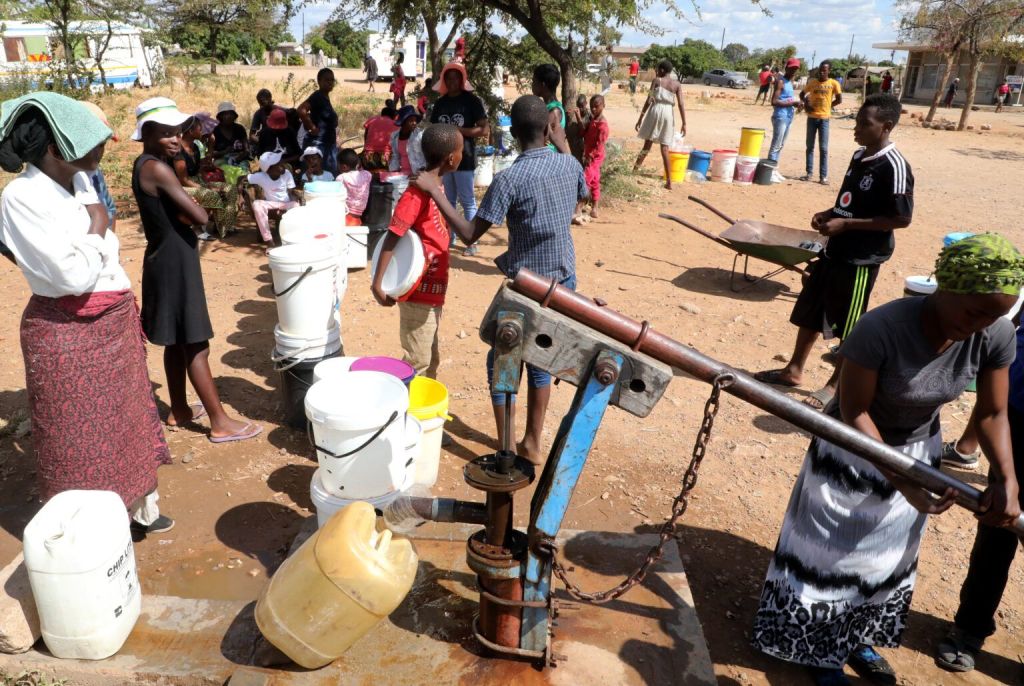
Officials enjoy allowances and perks in offices supplied with water and electricity while residents go years without either.
Public hospitals have become death traps, not because Zimbabwe lacks professionals or resources, but because leadership has normalised neglect.
This contrast is not merely offensive; it is morally obscene.
One cannot help but ask what drives such behaviour.
How do people live with themselves while extracting obscene benefits from institutions that are failing the very citizens who fund them?
How do they look at struggling workers, unemployed youths, and desperate families and still justify awarding themselves luxury cars and inflated salaries?
Do they not have families, spouses, children, or friends who caution them against this reckless selfishness?
Or has the rot become so deep that even shame has been privatised and silenced?
At the heart of this problem is a distorted understanding of power and success.
In Zimbabwe, public office has become a substitute for personal achievement rather than a platform for public service.
Many who seek office do not do so because they possess exceptional ideas, skills, or a calling to serve.
They do so because public office offers what they could not achieve on their own: status without merit, wealth without productivity, and power without accountability.
When public office becomes the primary ladder for social mobility, corruption becomes inevitable, not accidental.
This phenomenon also reveals a deeper insecurity and dissatisfaction.
There is a persistent hunger among many leaders, not just for comfort, but for excess.
It is not enough to live decently; one must live extravagantly, visibly, and competitively.
Modesty is mistaken for weakness, restraint for failure.
The result is a political culture where leaders measure success not by improved service delivery or social progress, but by the size of their houses, the cost of their vehicles, and the weight of their allowances.
In such a culture, public resources are viewed not as a sacred trust but as spoils to be consumed.
Yet this obsession with excess is neither natural nor inevitable.
Maybe it is because I am just a small town man, but my dreams, ambitions, and prayers all my life have been to have the middle-class life I grew up experiencing with my parents.
That modest but stable upbringing has always been enough for me.
Even today, I have never fancied or seen anything attractive about the so-called high life of expensive mansions, luxury vehicles, or excessive extravagance.
I do not envy it, nor have I ever desired it.
All I have ever wanted is a decent, middle-class life — one where I do not struggle to get what I need and want, where dignity is preserved, and where what I have is earned honestly.
This is not just my perspective.
Many Zimbabweans share the same aspiration: a stable, dignified life where school fees, healthcare, food, shelter, and modest comforts are secure without humiliation or desperation.
There is nothing small or unambitious about this dream.
It is honest, grounded, and socially sustainable — the kind of life that builds communities rather than hollowing them out.
It is precisely this perspective that makes what we see in this country so difficult to understand.
If ordinary citizens can find contentment in modest aspirations, why do those entrusted with power appear permanently unsatisfied?
Why is enough never enough?
Why must leadership always be accompanied by excess, even when the institutions being led are collapsing and the people being served are sinking deeper into poverty?
The tragedy is that those who govern seem incapable of contentment.
Even when they already earn far more than the average citizen, it is never enough.
Even when the institutions they lead are collapsing, they still find justification to reward themselves.
This points to a deeper moral failure, one rooted in entitlement rather than service.
Many officials genuinely believe that holding office entitles them to a superior life, regardless of performance.
In their minds, leadership is not responsibility; it is reward.
There is also an element of fear at play.
Some leaders know, consciously or subconsciously, that they lack the skills, discipline, or adaptability to thrive outside public office.
Public service becomes a protective shield against personal inadequacy.
Without it, they would have to compete in an economy that rewards innovation, productivity, and competence.
Abuse of office, therefore, becomes a survival strategy, not merely greed.
This is why corruption persists even in the face of public outrage.
It is not just about money; it is about identity and self-worth.
To relinquish the perks of office would be to confront uncomfortable truths about oneself.
It is easier to loot than to reflect, easier to justify excess than to admit failure, easier to silence critics than to improve oneself.
None of this means that desiring wealth, for those who seek such a life, is wrong.
There is absolutely nothing immoral about wanting a better life.
But there is everything wrong with pursuing that life through the abuse of public trust.
Public office is not the place to fulfil dreams one failed to achieve on their own.
Politics is not a shortcut to personal prosperity.
Those who desire wealth must pursue it through honest work, enterprise, innovation, and self-improvement, not through the plunder of councils, ministries, and public institutions.
Zimbabwe will not move forward under leaders who are perpetually unsatisfied, permanently entitled, and morally detached from the suffering around them.
A nation cannot develop when those in authority view public office as a personal reward rather than a solemn duty.
Until leadership is reclaimed as service, until modesty is restored as a virtue, and until contentment is no longer seen as failure, the cycle of corruption and decay will continue.
Perhaps the most painful realisation is that this crisis is not about resources, laws, or even competence alone.
It is about values.
And until we demand leaders who are secure enough to serve without stealing, satisfied enough to lead without excess, and honest enough to live within the means of the people they govern, Zimbabwe will remain trapped in a tragedy of greed masquerading as leadership.
 TENDAI RUBEN MBOFANA - THE UN-OPPRESSED MIND!