Sometimes, true insight comes from self-reflection, not from shifting the burden of expectation onto others.
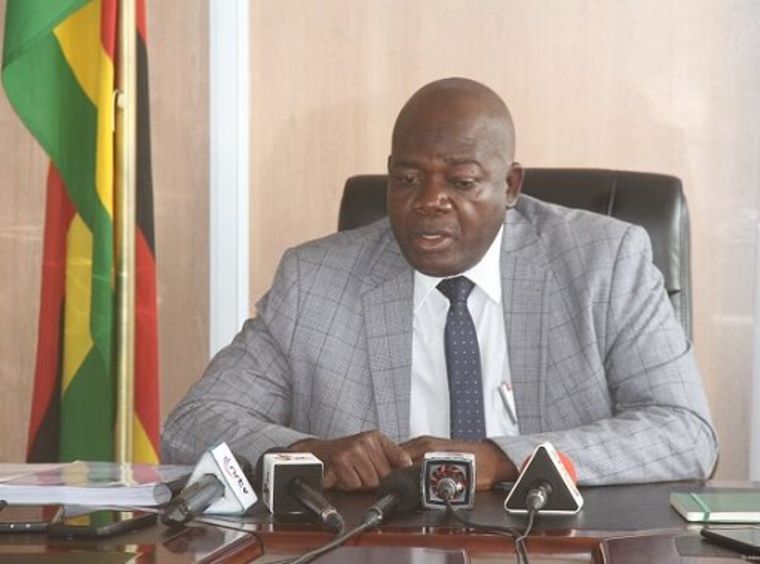
This afternoon, I came across a most disturbing report in the State media announcing Government’s intention to reward what it calls “top-performing schools” across the country, largely on the basis of public examination pass rates.
To directly receive articles from Tendai Ruben Mbofana, please join his WhatsApp Channel on: https://whatsapp.com/channel/0029VaqprWCIyPtRnKpkHe08
While the initiative is presented as a noble effort to promote academic excellence, its underlying logic is deeply flawed, intellectually lazy, and ultimately harmful to the very education system it claims to uplift.
The assumption that high public examination results necessarily reflect superior learning standards at a particular school is not only misleading but dangerously simplistic.
In Zimbabwe, it is common knowledge that a significant number of schools—particularly elite urban schools, former Group A institutions, and well-resourced mission schools—do not simply accept any learner.
They carefully select who they admit.
At Form One, they enrol pupils who already achieved high marks at Grade Seven.
At Form Five, they take only those with strong O-Level results.
These schools therefore begin the race metres ahead of everyone else.
When such schools later produce 100 percent O-Level or A-Level pass rates, this is hardly surprising.
In fact, unless their teaching standards are shockingly poor, high pass rates are almost guaranteed.
The real work—the intellectual transformation, the remediation, the struggle to lift weak learners—is often done elsewhere, in schools that will never be acknowledged under this scheme.
Now consider the opposite scenario.
Take a rural or high-density urban school that enrols pupils who performed poorly at Grade Seven because no one else would take them.
From the very beginning, that school is saddled with learners who are already academically vulnerable, often coming from impoverished backgrounds, food-insecure households, and communities with limited educational support.
When such a school later records average or even below-average O-Level results, the outcome is treated as proof of poor performance.
Yet this judgment ignores the starting point entirely.
By rewarding schools purely on pass rates, the Government is effectively punishing those that accept weaker pupils and incentivising greater academic segregation.
Schools will increasingly fear admitting learners with low grades lest they “spoil” their statistics.
The unspoken message becomes clear: education is for those who are already good at school, while the rest are quietly discarded.
This raises a fundamental and uncomfortable question: what is expected to happen to pupils who do not perform well early in their education?
Are they not entitled to an education?
Are they to be written off at the age of 12 simply because they struggled with Grade Seven examinations?
If this thinking is allowed to prevail, then we are formalising a cruel and exclusionary system where opportunity is rationed, not nurtured.
True educational excellence cannot be measured by output alone without regard to input.
A school that takes high-performing pupils and produces high results may simply be preserving advantage, not creating it.
By contrast, a school that takes struggling learners and manages to improve their performance—even marginally—is doing far more pedagogical heavy lifting, yet is rendered invisible by this reward framework.
My late father, himself a teacher, once taught me a lesson that has stayed with me all my life.
He said a good teacher is not one who merely produces excellent results from pupils who were already excelling, but one who manages to transform a learner whom many had given up on into a better performer who now sees a brighter future ahead.
Those words were not theoretical.
He lived by them.
Even today, more than 25 years after his death and 26 years after his retirement from teaching, I still encounter people who speak with gratitude about how he helped their children—once considered hopeless academically—improve, pass, and believe in themselves.
Those are the teachers who deserve recognition.
Those are the schools that deserve celebration.
Yet under the Government’s current logic, such educators would never qualify as “top-performing.”
There is also a more troubling dimension to this policy: it conveniently shifts blame away from the State itself.
Examination failure is rarely the sole responsibility of schools or teachers.
One of the most glaring contributors to poor performance is chronic underfunding of public schools, particularly in rural and marginalised areas.
Teachers are expected to perform miracles in classrooms without textbooks, laboratories, libraries, or even basic infrastructure.
I would ask the Honourable Minister of Primary and Secondary Education a simple question: how many rural Government schools recorded over a 50 percent O-Level pass rate in the most recently released results?
The answer would reveal an uncomfortable truth—that systemic inequality, not teacher laziness or school incompetence, lies at the heart of the problem.
Former Group A schools, beneficiaries of colonial investment, remain miles ahead in facilities, staffing, and resources.
Church-run mission schools, historically well-funded and well-supported, continue to dominate examination rankings.
It is patently unfair to expect a rural school without a science laboratory, without microscopes, without chemicals, and sometimes without textbooks, to “compete” with institutions that have enjoyed decades of accumulated advantage.
If a teacher manages to guide a pupil to a D in science having never handled a Bunsen burner, test tube, or beaker, and relying purely on theory—sometimes without even a textbook—that achievement is nothing short of extraordinary.
That teacher and that school deserve recognition just as much as, if not more than, those producing straight A students under ideal conditions.
So when the Government chooses to reward performance purely on examination results, one must ask: who is really being favoured?
Whose labour is being acknowledged, and whose struggle is being erased?
If the aim is genuinely to improve education standards, then evaluation criteria must be more nuanced, fair, and creative.
Schools should be assessed on learner progress, improvement over time, and value added—not just raw pass rates.
Incentives should encourage inclusion, not exclusion.
Excellence should be defined not by who crosses the finish line first, but by who helped the most learners move forward.
Above all, the greatest incentive for improved performance is not trophies or ceremonies, but meaningful investment.
Fund underdeveloped schools.
Equip laboratories.
Provide textbooks.
Pay teachers salaries that reflect their importance and motivate excellence.
Until the State confronts its own role in shaping outcomes, awarding “top-performing schools” based on examination results alone will remain a hollow gesture—one that celebrates privilege while masking inequality.
Education is not a competition for the already advantaged.
It is a public good meant to lift everyone, especially those who start with the least.
 TENDAI RUBEN MBOFANA - THE UN-OPPRESSED MIND!