Self-delusion is a very dangerous thing.
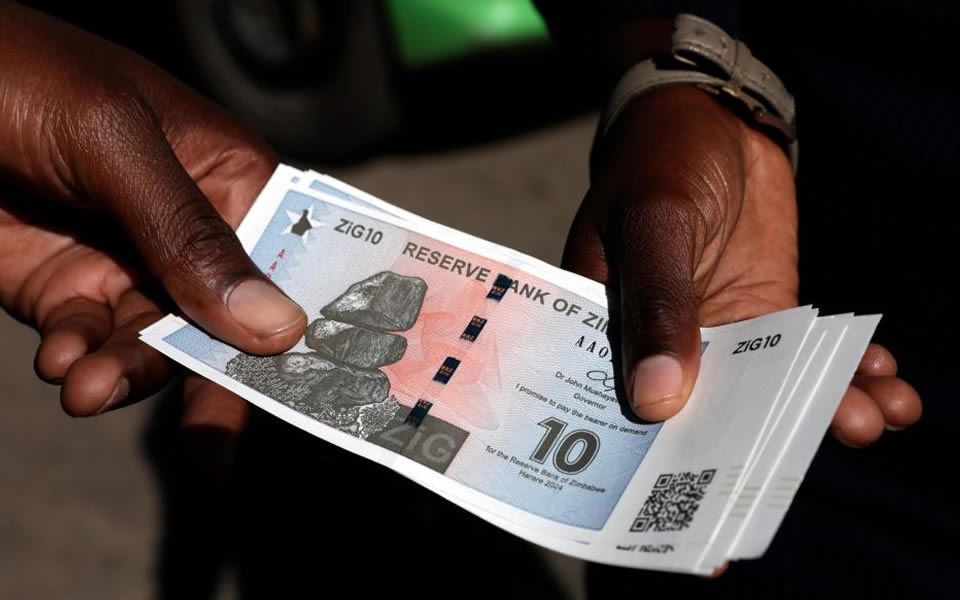
This week, Zimbabwean authorities were visibly elated after announcing that ZiG inflation had fallen to single digits for the first time since the late 1990s.
To directly receive articles from Tendai Ruben Mbofana, please join his WhatsApp Channel on: https://whatsapp.com/channel/0029VaqprWCIyPtRnKpkHe08
State media hailed the development as “historic,” proof that monetary and fiscal reforms were finally bearing fruit, and evidence of growing confidence in the domestic currency.
On the surface, this is indeed welcome news for a population that has endured nearly three decades of monetary trauma.
But before we pop champagne corks and declare victory, we must ask a harder, more uncomfortable question: is this stability real, or is it merely the illusion of stability created by a currency that is scarcely used, scarcely available, and scarcely tested?
Zimbabweans have every reason to yearn for a stable local currency.
Hyperinflation did not merely raise prices; it erased lives’ work.
Savings vanished overnight.
Insurance policies became worthless pieces of paper.
Salaries lost value before they could even be withdrawn from banks.
Planning for the future became impossible because tomorrow was always more expensive than today.
In that context, the idea of a currency that can hold value long enough for ordinary people to budget, save, and transact without fear is profoundly appealing.
Most workers are still paid in ZiG, wholly or partially, and even those earning in US dollars often receive a portion of their income in local currency.
A genuinely stable ZiG would therefore be a lifeline for millions.
After just over a year of relative calm since the currency’s introduction in March 2024, it is understandable that people want to believe.
The hope that the ZiG might buy the same goods tomorrow as it does today is not naïve; it is human.
However, hope must be grounded in reality, not in carefully curated statistics.
Stability that exists only on paper, or only because a currency is withheld from circulation, is not stability at all.
It is a mirage.
Imagine someone proudly telling friends and family that they own an exceptionally reliable car.
It has never broken down.
It has never been involved in an accident.
On the face of it, that sounds impressive.
But then you discover that the car is almost never driven.
It stays locked up in a carport most days, barely exposed to traffic, bad roads, reckless drivers, or even the owner’s own driving habits.
Under those circumstances, does the absence of accidents prove reliability, or does it simply prove inactivity?
That is precisely the situation with the ZiG.
Since its launch, the ZiG has been remarkably difficult to find in physical form.
Most bank ATMs do not dispense ZiG notes.
Many retailers struggle to provide change in local currency.
For the majority of Zimbabweans, the ZiG exists primarily as electronic figures in bank accounts or mobile money wallets, not as cash that can be easily used in everyday transactions.
In practice, daily commerce continues to rely heavily on the US dollar and the South African rand.
A simple, recent experience illustrates this point vividly.
I bought a crate of eggs at a local cash shop for US$4.50 and handed the cashier a five-dollar note.
Finding the 50-cent change became a problem.
Ordinarily, that change would be given in ZiG, since US cents are not in circulation.
At the prevailing rate, the change should have been ZiG20.
But there was no ZiG available.
Eventually, the cashier gave me R10, equivalent to 50 US cents.
This is not an isolated incident; it is an everyday reality across the country.
Under such conditions, can we honestly claim that the ZiG is stable?
Or is it stable only because it is scarce by design?
A currency that people cannot easily access, hold, or use for routine transactions is shielded from the very market forces that would test its strength.
Its apparent stability is therefore not the result of confidence and widespread use, but of deliberate restriction.
The uncomfortable truth is that the ZiG is, for many Zimbabweans, a phantom currency.
We hear about it in official pronouncements and see it in bank balances, yet struggle to find it in our pockets.
For those without ZiG balances in banks or mobile wallets, transacting without US dollars or rand is almost impossible.
This raises a fundamental question: what would happen if the US dollar and the rand were not widely accepted in Zimbabwe?
How would ordinary people survive with a local currency that is effectively invisible?
In reality, these foreign currencies are cushioning the ZiG from real-world exposure.
They are doing the heavy lifting in everyday commerce, allowing authorities to claim success while the local currency remains largely untested.
This is why officials can speak confidently about “discipline in liquidity management.”
In plain terms, this discipline means keeping the ZiG scarce.
While this may prevent reckless money printing—a mistake Zimbabweans know all too well—it also means that stability is being achieved through absence rather than resilience.
This is not an argument for a return to irresponsible monetary policy.
Zimbabwe has already cycled through six local currencies in just 25 years, each collapsing under the weight of excessive printing and poor governance.
No sane citizen wants a repeat of that chaos.
However, there is a wide and crucial difference between avoiding recklessness and starving an economy of its own currency.
A functional local currency must be available enough to serve its basic purpose.
Retailers should have sufficient ZiG to give change.
Commuters should be able to pay a ZiG20 or ZiG40 kombi fare without resorting to foreign coins or awkward currency substitutions.
Ordinary people should be able to handle and use their own money daily, not merely see it as digits on a screen.
As long as the ZiG’s “stability” depends on its scarcity, the foundation is dangerously weak.
This is the equivalent of building a house on sand.
The moment liquidity constraints are relaxed, or the moment confidence is truly tested, the currency risks rapid erosion.
Real confidence is not restored by hiding a currency away like a fragile egg; it is restored when that currency can openly compete with others, circulate freely, and still hold its value.
Until the ZiG is widely available, widely used, and trusted enough to stand on its own without the crutch of the US dollar and the rand, celebrations of single-digit inflation remain premature.
Zimbabweans have been here before, misled by encouraging numbers that collapsed at the first gust of economic reality.
True stability will only be proven when the ZiG is everywhere—in wallets, tills, and pockets—and still holds firm.
Until then, boasting about its performance is like praising a car that has never crashed simply because it has never left the garage.
 TENDAI RUBEN MBOFANA - THE UN-OPPRESSED MIND!