This was one of those most difficult situations.
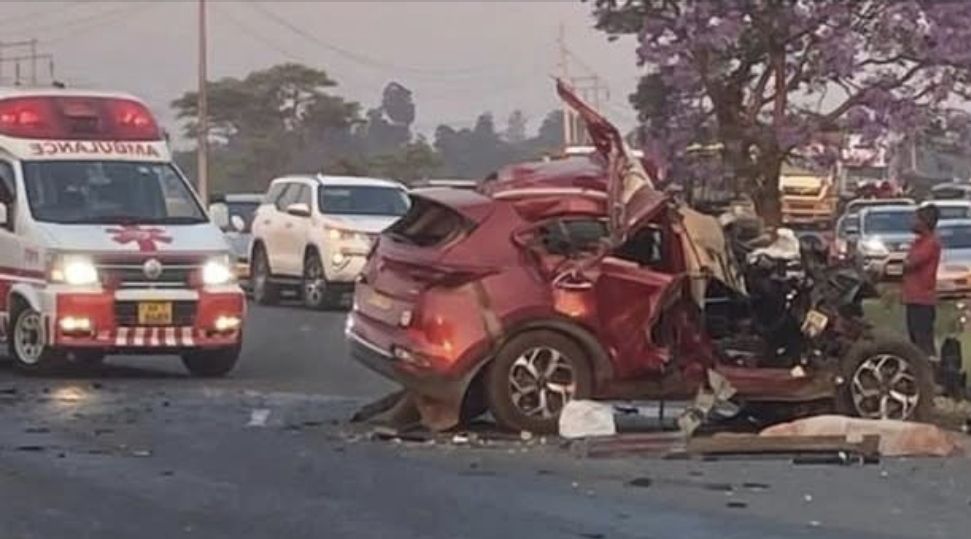
This morning, a reader shared with me a disturbing account of what he witnessed last night at the intersection of Lomagundi Road and Suffolk in Harare.
To directly receive articles from Tendai Ruben Mbofana, please join his WhatsApp Channel on: https://whatsapp.com/channel/0029VaqprWCIyPtRnKpkHe08
It is not the kind of story one easily forgets, because it strips away rhetoric and lays bare the lived reality of Zimbabwe today—where survival increasingly depends not on public institutions, but on chance, courage, and the goodwill of strangers.
According to his account, a pedestrian was struck by a vehicle and left lying motionless in the middle of the road.
The driver panicked and remained frozen inside the car, leaving the injured person exposed to further danger from oncoming traffic.
What followed was not an efficient emergency response, but a frantic, desperate effort by ordinary citizens to do what the state could not.
Motorists stopped.
Emergency numbers were called.
Ambulance services were contacted, only for those on the scene to be told there was no ambulance available.
The police were also alerted.
Their response was chilling in its familiarity: they had no vehicle to attend the scene.
This, in an area where traffic police vehicles are frequently seen enforcing minor road offences.
When a human life was at stake, the state was conspicuously absent.
What prevented tragedy from becoming fatality was not institutional preparedness, but human intervention.
A passerby trained in first aid arrived and began administering CPR.
Chest compressions were performed repeatedly.
Against all odds, the victim began to breathe again.
Only after this extraordinary civilian effort did an ambulance eventually arrive and transport the injured person to Parirenyatwa Hospital.
Yet even at that point, the fear did not subside.
As the reader reflected, there was an unspoken dread shared by many present—that despite being rescued, the victim might still die in hospital.
Not because the injuries were necessarily unsurvivable, but because Zimbabwe’s public hospitals are themselves in a state of collapse.
That fear did not come from imagination; it came from experience.
This single incident captures a much larger national crisis.
Zimbabwe’s public institutions, particularly emergency services and hospitals, are no longer reliably functional.
They exist in name, but too often fail in practice.
Ambulances without fuel, police without vehicles, hospitals without equipment—these are no longer exceptions.
They are the norm.
People are not dying only because of accidents or illness.
They are dying because the systems designed to save them have been hollowed out.
Major public hospitals lack working scanners, essential drugs, and life-support equipment.
Medical professionals are overstretched and under-resourced, forced to work in conditions that would be considered unacceptable anywhere else.
In such an environment, survival becomes uncertain even after reaching a hospital bed.
This is not the result of poverty alone.
It is the direct consequence of corruption and the looting of state resources.
Billions have vanished into private hands while institutions that serve the public are left to decay.
Money meant for hospitals, ambulances, and emergency services has been diverted to fund luxury, patronage, and impunity.
The cost of that theft is paid in human lives.
We often discuss corruption in abstract terms—percentages, scandals, and reports.
But corruption is not abstract.
It is violent.
It manifests as an unavailable ambulance, a police unit that cannot respond, a hospital that cannot perform a basic scan.
It turns injuries into deaths and emergencies into funerals.
What is perhaps most striking in this story is the personal journey of the reader himself.
He confessed that before witnessing this scene, he had dismissed my work as possibly biased or anti-government.
But after seeing, firsthand through his own eyes, how ordinary people had to step in where institutions failed, he realized and admitted that this was exactly the kind of social advocacy I have always championed—a genuine effort to spotlight systemic injustice and demand accountability.
His recognition underscores a vital truth: social justice is not an ideology; it is about confronting the realities that ordinary citizens face every day.
The tragedy is compounded by the fact that ordinary citizens are now expected to fill the gap.
Civilians become first responders.
Passersby become medics.
Strangers make life-and-death decisions while institutions look on helplessly—or not at all.
While there is something profoundly human and admirable in this solidarity, it is also a damning indictment of the state.
A society cannot survive on heroism alone.
Good Samaritans cannot replace a functioning healthcare system.
First aid on the roadside cannot substitute for equipped hospitals.
Compassion cannot compensate for systemic failure.
Yet those responsible for this decay continue to speak of sovereignty, patriotism, and national pride.
But sovereignty is meaningless if a state cannot protect the lives of its people.
Patriotism rings hollow when hospitals cannot heal and emergency services cannot respond.
A government’s legitimacy is ultimately measured not by slogans, but by whether its citizens can survive accidents, illness, and crises.
The story shared by my reader is not unique.
It is representative.
It mirrors countless untold experiences across the country where people are left vulnerable, helpless, and exposed.
Some survive by chance.
Many do not.
What happened at Lomagundi and Suffolk should unsettle us.
It should anger us.
And it should force us to confront uncomfortable truths about what corruption has done to our institutions.
This is not merely a governance issue; it is a life-and-death crisis.
If there is any lesson in this reader’s account, it is that the collapse of public institutions is no longer a future threat.
It is here.
It is present.
And it is costing lives.
It also reminds us why social justice advocacy matters—not as an abstract pursuit, but as a lifeline for the voiceless, the vulnerable, and the citizens left to fend for themselves.
Until corruption is confronted honestly and decisively, Zimbabwe will remain a country where survival depends less on systems and more on strangers—and where too many lives are lost needlessly along the way.
 TENDAI RUBEN MBOFANA - THE UN-OPPRESSED MIND!