Some things are so absurd that one is tempted to dismiss them as a joke.
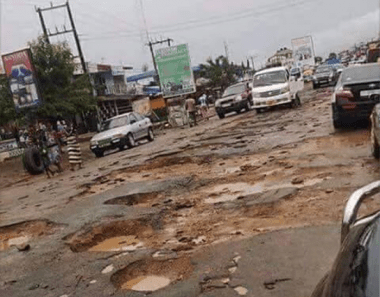
This morning, I came across a public notice issued by the Government of Zimbabwe inviting citizens to report urgent road defects through newly established provincial hotlines.
To directly receive articles from Tendai Ruben Mbofana, please join his WhatsApp Channel on: https://whatsapp.com/channel/0029VaqprWCIyPtRnKpkHe08
At first glance, the notice reads like a responsible act of governance—an administration attentive to public safety and eager to act swiftly on infrastructure challenges.
Yet, upon even minimal reflection, the announcement borders on the absurd, even insulting, when set against the lived reality of Zimbabwe’s roads.
In a country where road decay is not the exception but the norm, where deterioration spans from residential streets to city centres and major national highways, one is left wondering: how exactly does the government expect this reporting mechanism to work?
Zimbabwe’s road crisis is not localized, sporadic, or sudden.
It is systemic, national, and the result of decades of neglect.
From the streets outside our homes, to the central business districts of our towns and cities, to the highways that connect the country’s major economic hubs, the story is depressingly consistent—crumbling tar, cavernous potholes, dust roads where tar once existed, and roads rendered barely navigable, especially during the rainy season.
These are not isolated “defects” requiring urgent intervention; they are symptoms of a comprehensive collapse.
In the small low-density suburb of Redcliff where I live—once proudly nicknamed “Little London”—visitors are often shocked to find that the street leading to my house is now a dust road.
Their disbelief deepens when I explain that this very street was fully tarred when my family moved there in 1982.
To convince them, I sometimes have to point out remnants of tar still visible beneath grass and soil, like archaeological evidence of a forgotten civilization.
The rest of the suburb tells a similar story, with streets so badly damaged that driving requires the caution one would normally reserve for rural tracks.
This decay is not confined to Redcliff.
Nearby Kwekwe presents an equally grim picture.
Even in the city centre itself, massive potholes dot the streets, turning routine drives into obstacle courses.
A few days ago, I was forced to make a U-turn in the CBD out of genuine fear that proceeding would damage my car.
Last month, I had to abandon a planned drive to Mbizo, a high-density suburb, simply because the road had become dangerous.
These are not complaints from an overly sensitive motorist; they are daily calculations Zimbabweans make to protect their vehicles—and themselves—from infrastructure failure.
The situation on major highways is, if anything, even more alarming.
Last week, while driving from Kwekwe to Harare for a meeting, I hit a massive pothole just outside Kwekwe, concealed by rainwater.
For a moment, I was convinced I had damaged my car.
Fortunately, I was spared that fate, but the incident was deeply unsettling.
This is the highway linking Zimbabwe’s two largest cities, Harare and Bulawayo—arguably the country’s most important road artery.
Yet it is littered with potholes so numerous and dangerous that one must drive in a constant state of vigilance, especially during the rainy season.
Arriving in Harare did little to restore confidence.
Even in the so-called “MaDale Dale,” the leafy low-density suburbs often associated with privilege and influence, the roads were in a shocking state.
Since it was my first time travelling to the meeting venue, I relied on GPS directions.
When the device instructed me to turn left onto a particular street, I genuinely thought there must be an error.
The road looked like a muddy village path, not something one would expect to find mapped and named in the capital city.
The disbelief only deepened when I saw the street name: Sam Nujoma.
It seemed almost sacrilegious that a road named after such a towering liberation figure could be left in such a deplorable condition.
Yet, this was indeed the road to my destination.
These experiences are not unique.
They merely mirror countless testimonies and viral images circulating on social media from every corner of the country.
Zimbabwe’s road crisis is now a shared national trauma, documented daily by frustrated citizens who have long lost faith in official assurances.
What makes this situation particularly disturbing is not just the scale of the decay, but the context in which it occurs.
Zimbabwe is a country richly endowed with mineral wealth, vast agricultural potential, and significant tourism assets.
There is no credible argument that we lack the resources to maintain basic infrastructure.
The problem is not scarcity; it is governance.
National resources are systematically looted for the enrichment of a few, while public infrastructure is left to rot.
Besides, do we not already pay through our noses in toll fees—among the highest in the southern African region—on top of vehicle licence levies and other road-related charges?
One is compelled to ask where these billions are going, and who is truly benefiting from them.
It is certainly not the ordinary motorists who fund this system yet drive on roads that resemble disaster zones.
To make matters worse, those in power, who make these decisions, contribute nothing themselves, as they neither pay toll fees nor vehicle licence levies.
Once again, the burden is placed on citizens, while accountability remains conspicuously absent.
Some of the very roads now in an appalling state were “rehabilitated” only recently by companies owned by politically connected individuals, projects often accompanied by fanfare and propaganda.
The results speak for themselves.
Shoddy workmanship, inflated contracts, and zero accountability have become hallmarks of infrastructure development in Zimbabwe.
This brings us back to the government’s public notice.
In a context like this, the call for citizens to report road defects feels almost cynical.
Where exactly are we supposed to begin?
In my own case, am I expected to pick up my phone and report the street I live on, every other street in my suburb, the roads in Kwekwe’s CBD, the route to Mbizo, the highway from Kwekwe to Harare, and even the streets of Harare itself?
Should I submit dozens, perhaps hundreds, of reports for what is clearly one continuous, nationwide failure?
More fundamentally, this notice raises uncomfortable questions about leadership and accountability.
How do those in power—many of whom drive the latest luxury SUVs—feel navigating roads that resemble war zones?
Do they experience even a flicker of shame when their convoys glide over crumbling infrastructure?
Does it trouble them that these roads are a direct indictment of their stewardship?
For any leader with a conscience, such conditions would be unbearable.
Personally, I know that had I been in a position of authority, whether in central government or local government, I would have resigned in shame.
Hotlines cannot fix a problem of this magnitude.
Reporting mechanisms are meaningless when the crisis is already well known, visible, and undeniable.
Zimbabwe does not suffer from a lack of information about the state of its roads; it suffers from a lack of political will, integrity, and accountability.
Until those issues are addressed, asking citizens to report potholes in a country that has effectively become one giant pothole is not governance—it is an admission of failure dressed up as action.
 TENDAI RUBEN MBOFANA - THE UN-OPPRESSED MIND!