Not every argument is worth entering; some are traps dressed as debates.
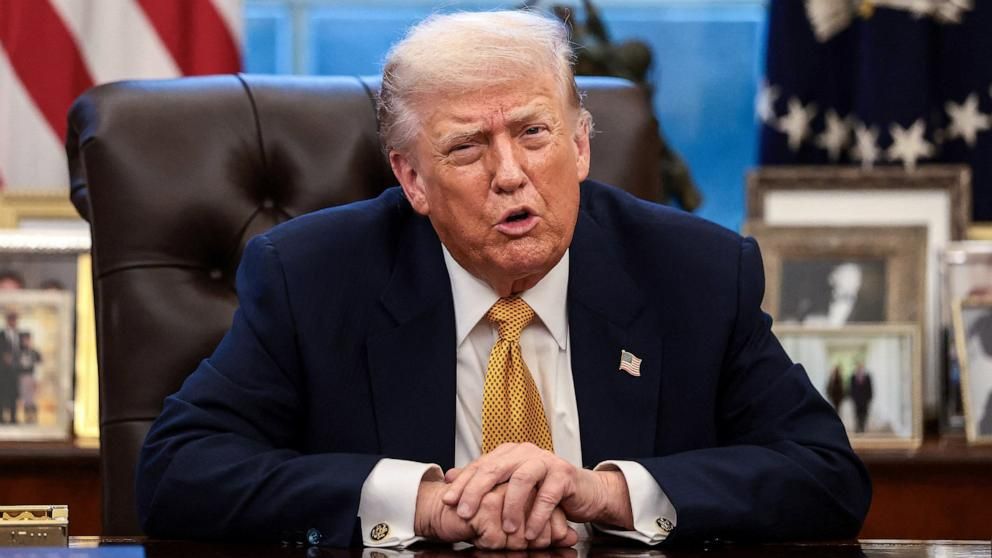
In the early weeks of 2026, a series of dramatic global developments involving the United States under President Donald Trump has baffled observers and thrust the world into a cycle of intense speculation.
To directly receive articles from Tendai Ruben Mbofana, please join his WhatsApp Channel on: https://whatsapp.com/channel/0029VaqprWCIyPtRnKpkHe08
A sudden U.S. military operation seized Venezuelan President Nicolás Maduro, taking the world by surprise.
At the same time, Trump publicly pushed for Greenland to become a U.S. territory, even suggesting that military action might be necessary to achieve this goal.
He also threatened tariffs on European allies who refused to support the move.
Meanwhile, renewed threats of military confrontation with Iran added further unpredictability to his global posture.
At first glance, these actions might seem impulsive or erratic, as if they were driven by recklessness or personal whim.
Yet a closer look suggests they are not mere chaos; instead, they fit a pattern of carefully staged unpredictability, where the appearance of extremity and risk is used deliberately to shape the calculations of allies and adversaries alike.
These events, often characterized in the media as symptomatic of chaos or recklessness, can instead be understood as part of what scholars call the “madman strategy” — a deliberate diplomatic posture that uses the appearance of irrationality and extremity to extract leverage in international relations.
The “madman strategy”, most famously associated with President Richard Nixon and his national security adviser Henry Kissinger during the Cold War, rests on a simple but powerful logic: if adversaries believe a leader is capable of extreme responses or erratic behaviour, they will act more cautiously and may be more likely to concede or avoid confrontation.
It relies not on actual irrationality, but on cultivating the perception of it.
The success of the strategy depends on credibility — others must take the threat of extreme action seriously, even if they doubt the leader’s intentions.
Crucially, the madman strategy is about signalling uncertainty.
It does not require chaos; it requires uncertainty about rational calculation.
It is a performance in the realm of perception, not a surrender of strategic discipline.
Adversaries should not be sure where red lines lie, allies should hedge their commitments, and the costs of resistance should appear high and unpredictable.
This theory has long been subject to debate among academics and strategists, but its essential insight remains influential in understanding how power can be conveyed without traditional channels of negotiation.
Trump’s recent global actions illustrate this dynamic.
In January 2026, U.S. forces launched an abrupt operation in Venezuela that resulted in the capture of President Nicolás Maduro and the removal of his leadership from Caracas.
What made this event significant was not simply the act itself, but how it was presented and broadcast.
It was a highly visible, headline‑grabbing event without the usual phased diplomatic signalling that precedes major international military operations.
Foreign capitals were left to interpret the message this action was meant to send about American resolve and the potential unpredictability of U.S. military engagement under Trump.
Soon after, Trump escalated his long‑standing interest in acquiring Greenland — a self‑governing Danish territory with strategic Arctic significance — by tying resistance from European allies to punitive tariffs.
By threatening allies with tariffs unless they acquiesce to negotiations over territory, Trump conveyed a level of willingness to upend diplomatic norms that few modern presidents would entertain.
Adding further complexity, Trump publicly threatened renewed confrontations with Iran, even as parts of the U.S. military posture were repositioned to reduce vulnerability.
These mixed signals — simultaneous threat and partial withdrawal — contributed to uncertainty in Tehran and among U.S. partners about the coherence of American policy.
Each of these actions, taken together, paints a picture of a leadership style that appears willing to break established scripts and project unpredictability.
This pattern aligns with the core mechanism of the “madman strategy” — projecting uncertainty about how far one is willing to go.
Adversaries cannot easily predict the next move, allies must constantly reassess their strategies, and the entire global system becomes sensitive to American signals, no matter how dramatic.
The essence of the strategy is not sheer chaos but calculated perception management.
Yet this is only half the story.
The other half is the role of global media and international commentators — particularly major outlets like CNN, the BBC, and others — in shaping how these actions are interpreted worldwide.
These organisations often cover Trump’s statements and moves with intense scrutiny, framing them as unpredictable, dangerous, or unprecedented.
This is understandable in a media environment where dramatic narratives draw attention and where editorial voices are deeply critical of Trump’s style and rhetoric.
But such coverage, even when critical, has an unintended consequence: it amplifies the perception of unpredictability that the “madman strategy” seeks to cultivate.
When every provocative tweet, tariff threat, or sudden military operation is presented as a potential world‑ending crisis, audiences around the world begin to see the United States as a state whose next move cannot be anticipated.
This perception itself becomes a form of power.
Foreign governments, uncertain of where lines are drawn, may adjust their own behaviour — either through caution, concessions, or hedging strategies — to avoid triggering what they believe could be extreme responses.
In other words, critics and media organisations, in their effort to hold Trump accountable or to highlight the potential risks of his actions, can inadvertently reinforce the very image of unpredictability that Trump’s global posture exploits.
The media’s obsessive focus on every provocative act — often framed through the language of alarm and existential threat — makes the madman spectacle more credible in the perception of international audiences.
Trump’s reality‑show background and mastery of attention economics are not irrelevant here.
In entertainment, dramatic events command attention, and in political theatre, attention becomes a strategic asset.
The more the world focuses on Trump’s theatrics as spectacle, the more the perception of unpredictability is entrenched.
Critical coverage that treats each provocation as proof of instability feeds into a feedback loop: provocative action generates intense media attention; intense media attention reinforces global perceptions of unpredictability; and the perception of unpredictability becomes part of the strategic environment in which other states must operate.
This is not to say that media coverage is supportive of Trump’s policies or that critics are complicit by intent.
Rather, it highlights a structural dynamic in which media obsession with dramatic political figures can magnify the strategic signals that such figures seek to send.
In Trump’s case, his theatrical approach to geopolitics — the mix of threat, spectacle, and attention‑grabbing rhetoric — is magnified by the very outlets that aim to critique it.
Understanding this interaction is crucial because it reframes much of the global debate about Trump’s foreign policy.
Rather than dismissing his actions as merely chaotic or irrational, it is more analytically useful to see them as a packaged performance of unpredictability that leverages media attention as an amplifier.
The “madman strategy” depends not only on the actions themselves but on how they are perceived — and perception today is shaped as much by global media narratives as by the actions of governments.
Ultimately, Trump’s approach illustrates how power in the modern world is as much about controlling narratives and perceptions as it is about conventional diplomacy and force.
Whether this produces strategic advantage, long‑term instability, or something in between is an open question.
What is clear is that in an age of immediate global attention, spectacle and strategy are deeply interconnected — and that obsession with unpredictability can become a tool as potent as any policy directive.
 TENDAI RUBEN MBOFANA - THE UN-OPPRESSED MIND!