The tragedy of Africa continues with no end in sight.
The recent disputed elections in Uganda have once again forced an uncomfortable question onto the African conscience: did independence truly liberate African citizens, or did it merely replace white administrators with black elites who perfected and localised the same machinery of repression?
To directly receive articles from Tendai Ruben Mbofana, please join his WhatsApp Channel on: https://whatsapp.com/channel/0029VaqprWCIyPtRnKpkHe08
When one strips away the rhetoric of sovereignty, nationalism, and liberation credentials, what remains is a troubling continuity of power—unchanged in character, only altered in colour.
Uganda’s elections followed a depressingly familiar script.
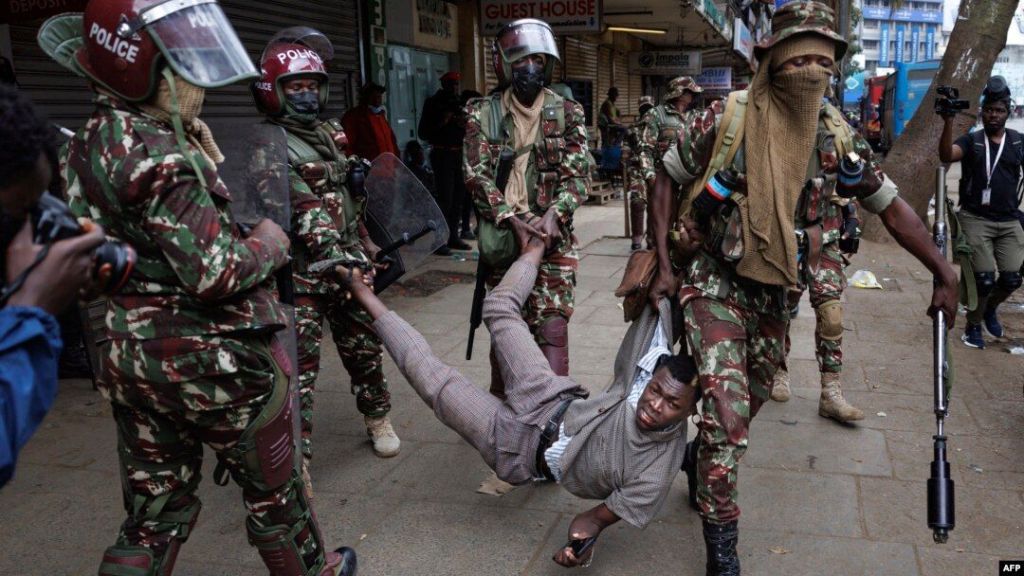
A long-serving incumbent secured an overwhelming victory amid an environment marked by intimidation, arrests of opposition figures, restrictions on media, internet shutdowns, militarised policing, and an electoral commission widely perceived as partisan.
The opposition rejected the outcome, citizens protested cautiously or not at all, and the international community issued carefully worded statements expressing “concern” while urging “stability.”
The process was constitutional in form but authoritarian in substance.
This was not an anomaly; it was a pattern.
Across the continent, from Tanzania to Zimbabwe and beyond, elections have increasingly become rituals of validation rather than instruments of choice.
Ballots are cast, results are announced, courts are invoked, and incumbents remain firmly in place.
The question is no longer whether elections are held, but whether they are ever meant to change power.
In too many African states, the answer is painfully obvious.
But how did we get here?
Colonial rule was never designed to be democratic.
It was built to extract resources, control populations, and suppress dissent.
Law was an instrument of domination, not justice.
Security forces existed to protect the state from the people, not the people from harm.
Participation was limited, dissent criminalised, and power concentrated in the hands of a few.
Independence was supposed to dismantle this architecture.
Instead, in many cases, it was inherited intact.
Post-independence African leaders often justified the retention of coercive systems in the name of unity, development, and stability.
Emergency laws remained.
Security forces stayed politicised.
Executive power expanded.
Over time, liberation movements hardened into ruling parties, and ruling parties fused with the state.
What had once been colonial repression was rebranded as national security, public order, or patriotism.
The logic did not change; only the language did.
The tragedy is that African repression is now enforced in the name of Africans, against Africans, by Africans.
Citizens are told they are free, even as their political space shrinks.
They are reminded of colonial atrocities, even as modern governments deploy similar tactics—arbitrary arrests, surveillance, censorship, torture, and lethal force—against their own people.
Independence flags fly high, but the lived experience of power feels hauntingly familiar.
Tanzania offers another sobering example.
Once praised for relative political openness, it has in recent years witnessed the tightening of civic space, the exclusion or neutralisation of opposition parties, restrictions on media, and elections producing implausibly lopsided results.
When victory margins approach unanimity in any society, democracy has already died—what remains is performance.
The state no longer competes for consent; it demands compliance.
Zimbabwe’s story is equally instructive.
Born from a brutal anti-colonial struggle, the country inherited a highly centralised and securitised state.
Instead of dismantling it, successive governments refined it.
Elections became violent contests, opposition was framed as treasonous, and state institutions were weaponised to preserve incumbency.
The rhetoric of liberation became a shield against accountability, and the colonial playbook was recycled under revolutionary slogans.
Why does this pattern persist?
Because power in many African states is not merely political—it is existential.
Losing office often means exposure to prosecution, loss of wealth, vulnerability to retaliation, and sometimes physical danger.
In such an environment, stepping down peacefully becomes irrational.
Elections become battles for survival, not service.
Repression becomes preventative medicine, not moral failure.
The people, often accused of passivity, are in reality trapped in a cruel calculation.
The cost of resistance is extraordinarily high, while the probability of success is uncertain.
Poverty limits endurance.
Violence is credible and remembered.
Institutions that should protect dissent—courts, unions, churches, media—are weakened or captured.
Fragmented societies are deliberately pitted against themselves.
Fear becomes rational, not cowardly.
Perhaps the most damning indictment is that many of these regimes enjoy external legitimacy.
As long as borders remain stable, minerals flow, and security cooperation is maintained, repression is tolerated.
Elections, no matter how flawed, provide a veneer of legality that allows the international community to move on.
African citizens are left alone with their disillusionment.
Yet to frame this crisis as inevitable would be dishonest.
African societies have resisted before, and they continue to resist in quiet, incremental, and sometimes explosive ways.
The problem is not elections per se, but the concentration of unchecked power.
Where institutions are stronger, term limits respected, security forces professionalised, and economic survival less precarious, repression struggles to survive.
The true unfinished business of African independence is not merely economic development or infrastructure, but the dismantling of the colonial state itself.
This means breaking the fusion between party and state, removing the gun from politics, lowering the stakes of losing power, and restoring citizenship as a right rather than a favour.
It means leaders who fear the constitution more than the crowd, and citizens who trust institutions more than personalities.
Uganda’s elections did not fail because Africans do not understand democracy.
They failed because the system was never designed to allow genuine choice.
Until African leaders confront this truth—until they stop Africanising repression and start dismantling it—elections will remain hollow, freedom will remain conditional, and independence will remain incomplete.
 TENDAI RUBEN MBOFANA - THE UN-OPPRESSED MIND!