At times, a sense of shame should guide our words and actions.
As I watched last evening’s news, I could not help but shake my head in disbelief.
To directly receive articles from Tendai Ruben Mbofana, please join his WhatsApp Channel on: https://whatsapp.com/channel/0029VaqprWCIyPtRnKpkHe08
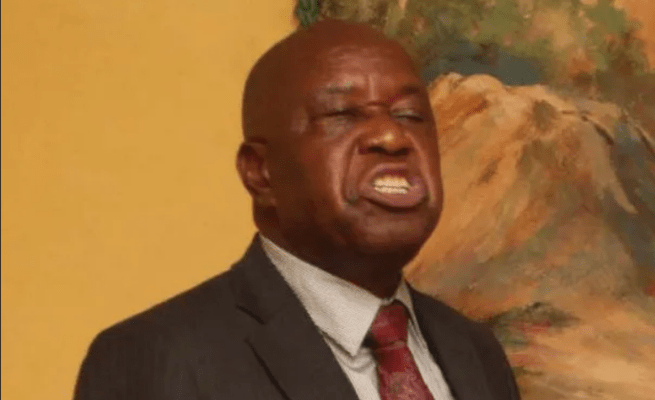
There stood ZANU-PF spokesperson Chris Mutsvangwa, addressing a gathering of villagers in Manicaland Province, confidently declaring that President Emmerson Mnangagwa was doing such a phenomenal job that Zimbabwe’s Gross Domestic Product had grown by six percent in 2025.
He went even further, boldly proclaiming that Zimbabwe now had the best economy in the entire southern African region.
From his tone, his gestures, and the volume of his voice, it was almost as though he himself sensed how absurd his words sounded in that particular setting.
One could almost picture the villagers staring back at him in quiet bewilderment, asking themselves what exactly this man was talking about.
These were not economists gathered at a policy conference.
These were not investors attending a business forum in Harare.
These were impoverished rural people, many of whom had travelled long distances, some standing in the rain, not because they were eager to hear macroeconomic statistics, but because they were desperate.
They had gathered in the hope of receiving food, cash, or so-called “empowerment funds” that might help them feed their families, even if only for a few days.
These empowerment funds, often loudly advertised by politicians, are in reality little more than crumbs.
They are usually paltry sums of money meant to be shared among thousands of people.
Predictably, most of those who are mobilised to attend such gatherings never receive a single cent.
The funds are either too small to make any meaningful impact or are structured as so-called revolving funds, where a few selected beneficiaries receive money, are expected to repay it, and then, in theory, another small group benefits.
In practice, repayment rarely happens, accountability is nonexistent, and the majority of hopeful villagers go home empty-handed.
So, as Mutsvangwa lectured these villagers about Zimbabwe’s “phenomenal” economic performance, he seemed to forget—or chose to ignore—the reality before him.
He was speaking to people trapped in grinding poverty, people for whom the only incentive to endure political rallies and speeches is the faint hope of receiving a few dollars or a bag of mealie-meal.
Who exactly did he imagine was enjoying this celebrated six percent GDP growth?
Who among these villagers was supposed to be feeling the effects of Zimbabwe’s supposedly best-performing economy in southern Africa?
For that matter, how many of them even understood what GDP means?
Gross Domestic Product is an abstract statistical measure, useful to economists and policymakers, but meaningless to a hungry household.
For ordinary people, in rural Manicaland or anywhere else in Zimbabwe, life is not lived in percentages and growth figures.
It is lived in empty granaries, unpaid school fees, broken clinics, long walks to fetch water, and children learning under trees because classrooms are either too far away or falling apart.
What matters to people is not what appears in government reports or is shouted through a loudspeaker at a rally, but whether their lives are improving in tangible ways.
If villagers are forced by sheer desperation to gather, sometimes in harsh weather conditions, to beg for empowerment funds they are unlikely ever to receive, does that reflect a population enjoying robust economic growth?
If Zimbabwe were truly experiencing a meaningful six percent GDP growth that benefited ordinary citizens, surely these people would not need handouts in the first place.
Zimbabweans, rural and urban alike, do not care about fancy figures.
They care about livelihoods.
They care about whether their hard work allows them to live with dignity.
They want to finally partake in the vast natural wealth this country is endowed with—its fertile land, minerals, wildlife, and human capital.
In a country as richly resourced as Zimbabwe, no citizen should be reduced to waiting for handouts or clinging to the so-called benevolence of a presidential fund in order to survive.
In a functional country, citizens should be able to earn a living through productive work.
A farmer should have access to affordable inputs, irrigation, extension services, and reliable markets for their produce.
A parent should be able to send their children to a nearby school that is properly built, staffed with motivated teachers, stocked with books, desks, chairs, and modern learning tools.
A sick person should be able to walk or travel a short distance to a clinic or hospital that has basic medicines, functional equipment, and trained staff, without being asked to bring their own gloves, syringes, or drugs.
In a normal society, people should have access to clean water from functioning boreholes or piped systems, reliable electricity that powers homes and small businesses, passable roads that allow farmers to take their goods to market, and public transport that is affordable and safe.
Workers should earn wages that at least keep pace with the cost of living, and pensioners should not be condemned to starvation after decades of service.
These are the markers of development as experienced in people’s homes and daily lives—not glossy airports, grandiose buildings, or carefully staged political spectacles.
The fact that Mutsvangwa and others like him can only boast about GDP figures when addressing impoverished villagers says everything.
He did not tell them that they no longer needed handouts because they were now economically self-reliant.
He could not tell them that their clinics were well-stocked and affordable, or that maternal deaths had become rare because healthcare was now accessible and functional.
He could not tell them that their children no longer had to walk twenty kilometres to school, or that those schools were now equipped with libraries, laboratories, and digital learning facilities.
He could not tell them these things because they are simply not true.
For millions of Zimbabweans, a decent life remains a distant dream.
Poverty is still entrenched, inequality is widening, and opportunity is reserved for a connected few.
So instead of speaking honestly about these failures, it is easier to hide behind statistics, to shout about GDP growth, and to hope that numbers will somehow silence lived reality.
But numbers do not feed families.
Percentages do not educate children.
Rankings do not heal the sick.
Zimbabweans deserve better than hollow rhetoric and recycled propaganda.
They deserve leadership that measures success not by how impressive figures sound on paper, but by how ordinary people actually live.
We deserve a country that finally lives up to its immense potential, where dignity replaces desperation, and where no one has to stand in the rain listening to empty boasts in the hope of a few dollars to survive.
 TENDAI RUBEN MBOFANA - THE UN-OPPRESSED MIND!