In Shona, there is a saying: kupinda nemwenje mudziva—literally meaning to enter deep water carrying a lit torch, an act of reckless folly that invites disaster.
There are lines that must never be crossed, even in the cynical and morally elastic world of Zimbabwean politics.
To directly receive articles from Tendai Ruben Mbofana, please join his WhatsApp Channel on: https://whatsapp.com/channel/0029VaqprWCIyPtRnKpkHe08
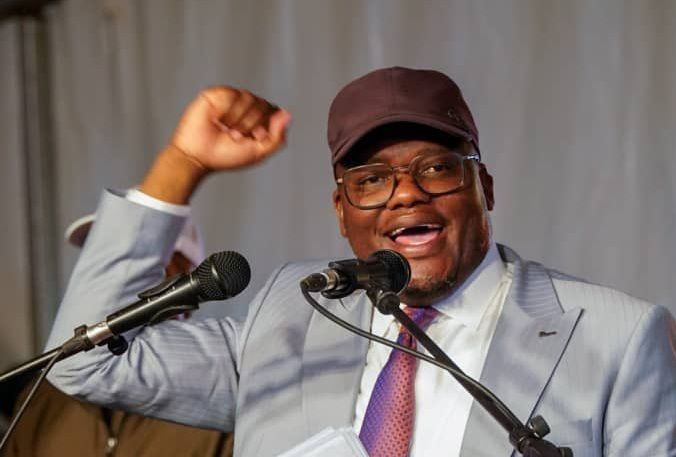
Paul Tungwarara, a tenderpreneur and so-called “Presidential Special Advisor on Investment” to President Emmerson Mnangagwa, has crossed one of the gravest of them.
To invoke the holy name of Jehovah God, to twist Scripture, and to weaponize the Bible in defence of political power and personal ambition is not merely dishonest—it is blasphemous.
As a Christian, I cannot remain silent while God’s name is dragged into partisan propaganda and reduced to a shield for political failure.
Mr. Tungwarara may fabricate economic “successes,” exaggerate “development,” and sing endless praises of President Emmerson Mnangagwa’s so-called visionary leadership.
But he must stay clear of abusing the holy name of our God.
This is not politics anymore; it is sacrilege.
Tungwarara’s assertion that “the governance of a nation is ordained by God” and that President Mnangagwa is “anointed to lead Zimbabwe until 2030” is not merely a misreading of Scripture; it is a fundamental confusion between political authority and divine will.
Zimbabwe is governed by a Constitution, not by prophecy.
Political office in this country is not a spiritual calling bestowed by revelation, but a legal mandate conferred by citizens and constrained by time, law, and performance.
To claim divine ordination for a specific leader and a specific tenure is to elevate personal opinion to the status of God’s voice—an act that is both intellectually dishonest and spiritually reckless.
Even within the Christian tradition Tungwarara claims to invoke, obedience to leaders has never meant immunity from scrutiny.
Scripture does not sanctify power for its own sake, nor does it demand silence in the face of misrule.
Romans 13, so often abused by authoritarians, acknowledges the existence of authority as a social necessity; it does not declare rulers morally infallible, permanently entitled to office, or divinely guaranteed against removal.
Authority is recognised, not worshipped.
It is conditional, not sacred.
Crucially, the Bible’s repeated engagement with political power is not to endorse it uncritically but to restrain it.
Rulers are judged not by claims of anointing but by conduct and consequence.
Kings who governed unjustly were confronted, humbled, or removed—not because prophecy failed, but because power without accountability was treated as an offence against God Himself.
Saul lost his kingship after repeatedly defying instruction and confusing authority with entitlement, demonstrating that leadership was conditional on responsibility, not anointing.
Ahab’s rule became a byword for injustice when state power was used to seize property from the vulnerable, prompting direct confrontation and condemnation.
Nebuchadnezzar, the most dominant ruler of his era, was publicly humiliated until he accepted that power does not belong to rulers by right but is exercised under limits.
These accounts do not glorify kingship; they restrain it.
They exist to warn that no ruler, however powerful, is exempt from judgment when governance degenerates into abuse.
They affirm a principle that remains relevant today: no leader rules by divine entitlement, and no invocation of God can convert failure, repression, or neglect into righteousness.
By presenting President Mnangagwa as divinely appointed until 2030, Tungwarara is not defending faith; he is attempting to place political power beyond public challenge.
That is the real purpose of such language.
It seeks to transform democratic accountability into spiritual rebellion and to portray citizens exercising their constitutional rights as enemies of God.
This is not theology—it is political idolatry, where a mortal leader is clothed in sacred authority to shield him from judgment he can no longer escape on the basis of performance.
Tungwarara’s assertion that President Mnangagwa is “ordained by God” to rule Zimbabwe until 2030 collapses under the weight of its own logic.
Zimbabwe is not governed by divine proclamation but by a Constitution adopted by the people.
Political authority in this country is not mystical; it is legal, time-bound, and conditional.
Presidents do not rule because God has whispered a timeline to their advisers, but because citizens grant them a mandate through elections—and withdraw it when they fail.
To clothe this political arrangement in religious language is not an act of faith but a calculated attempt to place leadership beyond scrutiny.
It seeks to convert a fallible public office into a sacred calling and to recast dissent as rebellion against God rather than a legitimate democratic right.
That move is not only dishonest; it is dangerous.
Once leaders are portrayed as divinely installed and divinely protected, accountability becomes blasphemy and criticism becomes sin.
This is precisely why invoking Scripture in this manner amounts to political idolatry.
It elevates a mortal politician into a sacred object and demands reverence where only performance and accountability are required.
The legitimacy of any leader is measured not by claims of anointing but by tangible outcomes—by whether citizens can live with dignity, access basic services, and plan their futures with hope.
On that standard, no amount of religious language can disguise the reality confronting Zimbabweans today.
Even more disturbing is Tungwarara’s attempt to twist the commandment to “honor your father and mother” into justification for unquestioning obedience to the Head of State.
This is fundamentally flawed because the authority of a father and that of an elected leader are categorically different.
A father’s authority exists naturally by virtue of biological and familial relationships; it is personal, permanent, and unchallengeable within the family structure.
An elected leader’s authority is conditional, temporary, and derived entirely from the consent of the governed.
Citizens can challenge, criticize, and remove leaders through constitutional and legal processes.
To equate these two forms of authority is not just misleading—it is absurd.
Tungwarara’s claim attempts to turn political office into parental authority, suggesting that citizens must obey a leader blindly.
This is impossible: a president is accountable to the people, unlike a father whose authority is absolute within the family.
By conflating these two distinct types of power, Tungwarara seeks to place a mortal, elected official above scrutiny and remove the most basic mechanisms of democratic oversight.
This is not theology—it is political manipulation masquerading as piety.
Christian faith does not require silence in the face of injustice.
On the contrary, it demands courage, discernment, and action when leaders fail the people.
Blind reverence for authority is not obedience—it is complicity.
History shows that power must be held accountable, and moral authority is not guaranteed by office, title, or longevity.
If Christ were walking in Zimbabwe today, He would confront exploitation, corruption, and oppression, exposing hypocrisy wherever it exists, rather than praising leaders for accumulating wealth amid widespread suffering.
Faith calls for justice and accountability, not flattery of rulers or justification of political failure.
What makes Tungwarara’s remarks particularly dangerous is not just their falsity, but their intent.
This is not ignorance; it is strategy.
When leaders fail to deliver materially, they often retreat into the supernatural.
When legitimacy is eroded by unemployment, collapsing public services, corruption, and repression, God is summoned as a last line of defence.
Blasphemy becomes a political tool.
By declaring Mnangagwa “anointed,” Tungwarara is attempting to delegitimize dissent, criminalize criticism, and intimidate citizens into silence.
This is not faith—it is manipulation.
In a constitutional democracy, leaders are not gods, kings by divine right, or fathers to be worshipped.
They are public servants, elected by citizens, accountable to the people, and removable through lawful means.
To suggest otherwise is to reject democracy itself.
Zimbabwe’s Constitution does not derive authority from Tungwarara’s theology, but from the will of the people.
Leaders may pray, but they must also perform.
When they fail, they must be challenged—and, if necessary, voted out.
That is not rebellion; it is citizenship.
It is also troubling how quiet many Christians become when God is abused, yet how furious they are when self-styled “men of God” are questioned, exposed, or held to account.
When pastors build empires, exploit congregants, or live lavishly amid poverty, believers rush to their defence in the name of “touch not the anointed.”
Yet when God’s name is taken in vain to sanctify political failure, there is silence.
Is God less important than a mere man?
Have we inverted our faith so badly that personalities matter more than holiness?
The Bible warns sternly against those who speak falsely in God’s name.
Jeremiah 23 condemns prophets who claim, “The Lord says,” when the Lord has not spoken.
Jesus Himself warns that many will use His name for their own ends, but that does not mean He sent them.
Tungwarara should tremble, not boast.
Playing politics is one thing; dragging God into it is another.
History is littered with leaders who believed God was on their side, only to fall spectacularly.
If Tungwarara genuinely cared about Zimbabwe and about the president he so desperately seeks to please, his counsel would be different.
Instead of theological propaganda, he would urge his principal to govern justly, fight corruption honestly, respect human rights, and restore dignity to citizens.
Love cannot be commanded by Scripture; it is earned through action.
Fear-based reverence collapses when reality intrudes.
Blasphemy will not save a failed leadership—it may well accelerate its downfall.
Zimbabwean Christians of all denominations must speak out.
Silence in the face of blasphemy is complicity.
God does not need politicians to defend Him, but He will not excuse those who abuse His name for power.
Mr. Tungwarara should repent, retract, and reflect.
Jehovah God is not a campaign slogan, a political shield, or a public relations strategy.
He is holy.
And His name should never be used in vain.
 TENDAI RUBEN MBOFANA - THE UN-OPPRESSED MIND!