When hypocrisy rules, legitimacy vanishes.
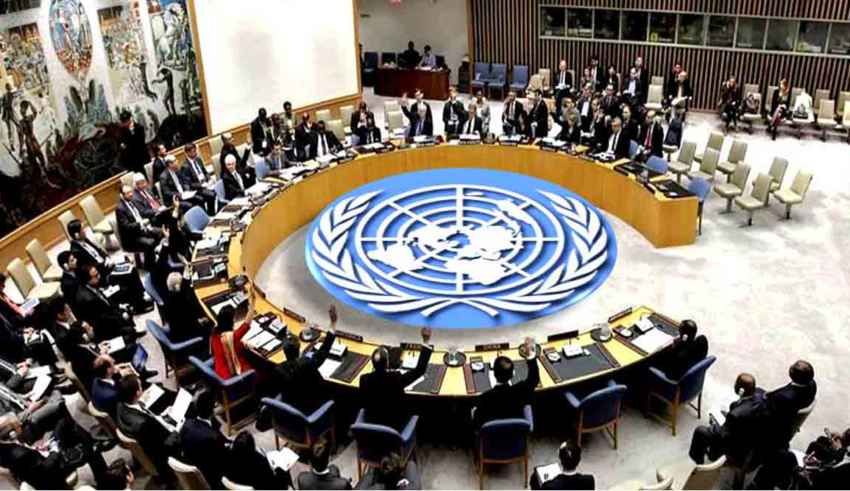
Yesterday, the United Nations Security Council convened an emergency meeting to deliberate on last Saturday’s United States military action in Venezuela and the subsequent capture and incarceration in New York of the country’s president, Nicolás Maduro.
To directly receive articles from Tendai Ruben Mbofana, please join his WhatsApp Channel on: https://whatsapp.com/channel/0029VaqprWCIyPtRnKpkHe08
The meeting was prompted by widespread claims that the US action violated international law and breached the core principles of the UN Charter, particularly those relating to state sovereignty, territorial integrity, and the prohibition of the use of force.
At the heart of these allegations lies Article 2(4) of the UN Charter, which explicitly prohibits the threat or use of force against the territorial integrity or political independence of any state.
Closely linked to this is Article 2(7), which bars the United Nations and its member states from intervening in matters that are essentially within the domestic jurisdiction of any country.
These provisions form the backbone of the post-World War II international order and were designed to prevent precisely the kind of unilateral military interventions that had plunged the world into catastrophic wars in the first half of the twentieth century.
The United States, however, defended its actions at the Security Council by arguing that the operation was not an act of war or invasion but a narrowly targeted “law-enforcement” mission aimed at arresting an individual accused of serious transnational crimes, including narcotics trafficking and crimes against humanity.
Washington insisted that it had no intention of occupying Venezuelan territory or undermining the country’s territorial integrity, portraying its intervention as exceptional, limited, and morally justified by the nature of the Maduro regime itself.
As was entirely predictable, the Security Council failed to reach any resolution.
Deep geopolitical divisions, combined with the veto powers of the permanent members—particularly the United States itself—ensured paralysis.
Once again, the Council demonstrated its chronic inability to act decisively when the interests of powerful states are implicated.
In that sense, the outcome of the meeting was hardly surprising.
I have no fundamental problem with the Security Council meeting to discuss this issue.
On the contrary, matters of sovereignty, territorial integrity, and unilateral military intervention are central to the UN Charter and to the very reason the United Nations exists.
The most destructive wars humanity has ever witnessed were largely driven by blatant violations of national sovereignty and aggressive expansionism.
The UN must therefore be seen to jealously guard these principles and to challenge unilateral uses of force, especially by powerful states.
However, this is where my deep problem with the United Nations begins.
National sovereignty and non-interference are not the only principles enshrined in the UN Charter.
The organization is equally grounded in the promotion and protection of human rights, democracy, and free and fair elections.
Article 1(3) of the Charter commits the UN to promoting and encouraging respect for human rights and fundamental freedoms for all, without distinction.
The Universal Declaration of Human Rights, adopted in 1948, affirms the rights to political participation, freedom of expression, and protection from arbitrary detention.
Article 21 explicitly states that the will of the people shall be the basis of the authority of government, expressed through genuine periodic elections.
These principles are not peripheral or optional.
They are central to the UN’s moral foundation.
The United Nations was born at a moment when the world had just emerged from the horrors of fascism and Nazism, and when colonized peoples across Africa, Asia, and Latin America were demanding independence, dignity, and self-determination.
Democracy, human rights, and popular sovereignty were meant to stand alongside territorial integrity as twin pillars of the international order.
What troubles me, therefore, is quite simple and profoundly disturbing.
Why does the UN appear to scramble into action only when sovereignty is violated by an external actor, yet remain largely inert when sovereignty is systematically abused from within by authoritarian regimes?
Why does the Security Council find its voice when a dictator is removed by foreign force, but lose it entirely when that same dictator has spent decades brutalizing his own people?
We saw this pattern when Russia invaded Ukraine on 24 February 2022, and we see it again in Venezuela today.
There is nothing inherently wrong with condemning invasions or military interventions.
But in the Venezuelan case, while much of the world debates the legality or illegality of the US action, ordinary Venezuelans are celebrating the removal of Nicolás Maduro.
This alone should force the international community to pause and reflect.
Venezuelans have endured more than a quarter-century of repression, economic collapse, and political betrayal.
Since Hugo Chávez came to power in 1999, the country has experienced the steady erosion of democratic institutions, the militarization of politics, the crushing of dissent, and the systematic manipulation of elections.
Under Maduro, this crisis deepened into outright authoritarianism marked by fraudulent elections, mass arrests, torture, and extrajudicial killings.
For 26 years, Venezuelans have lived what can only be described as a slow-burn national catastrophe.
The ousting of Maduro, regardless of how it occurred, came as a profound relief to millions who had long lost hope in internal or international mechanisms to deliver justice.
That relief is itself a damning indictment of the UN.
Where was the United Nations when Venezuelans were being thrown into prisons for their political beliefs?
Where was the Security Council when elections were brazenly stolen, most recently in July 2024?
Where was the urgency when opposition leaders were killed, jailed, or forced into exile, and when economic mismanagement and repression drove an estimated eight million Venezuelans—one of the largest displacement crises outside a war zone—out of their country?
It may surprise many to learn that there is not a single Security Council resolution condemning the Maduro regime for its internal repression.
The UN’s most significant action dates back to September 2019, when the Human Rights Council established an Independent International Fact-Finding Mission to investigate abuses committed since 2014.
While important, this was largely symbolic.
Meanwhile, the General Assembly focused its energy on passing resolutions condemning unilateral sanctions—largely imposed by the United States, the European Union, and their allies—against Venezuela, rather than confronting the regime’s blatant violations of democracy and human rights.
The numbers are chilling.
Human rights group Foro Penal has documented over 17,880 politically motivated arrests since 2014, with around 800 to 900 people still detained for political reasons.
Between 250 and 300 people have been killed during verified anti-government protests.
When extrajudicial executions—described by the UN and the OAS as a calculated strategy to terrorize and silence opposition—are included, the death toll is estimated to exceed 20,000.
Yet none of this was deemed urgent enough to trigger Security Council action.
Is it any wonder, then, that many Venezuelans view yesterday’s Security Council meeting as an exercise in hypocrisy?
Not because they supported Maduro, but because the UN suddenly found its moral outrage only after he was removed by an external force.
The uncomfortable truth is that the UN’s long silence helped create the conditions under which an illegal intervention became, in the eyes of the victims, welcome.
If the UN Security Council truly wants to remain relevant and credible, it must hold itself to account.
Defending sovereignty while ignoring mass repression empties that sovereignty of all moral meaning.
International law cannot be selectively enforced to protect tyrants from foreign intervention while offering no protection to their victims.
Until the UN treats democracy and human rights with the same seriousness it accords borders and flags, it will continue to lose legitimacy—not only in Venezuela, but across the world.
 TENDAI RUBEN MBOFANA - THE UN-OPPRESSED MIND!