The truth sets a people free.
This morning, as news broke across the world of a United States military intervention in Venezuela and the subsequent capture of President Nicolás Maduro, an uncomfortable truth was once again laid bare within Zimbabwe’s opposition circles.
To directly receive articles from Tendai Ruben Mbofana, please join his WhatsApp Channel on: https://whatsapp.com/channel/0029VaqprWCIyPtRnKpkHe08
As expected, reactions were swift and sharply divided.
Some, who are usually vocal critics of the ZANU-PF regime, condemned the US action as imperialistic bullying, an unacceptable violation of Venezuela’s sovereignty, and an attack on a socialist project historically associated with Hugo Chávez and continued by Maduro.
Others applauded the intervention, arguing that it was a necessary, if regrettable, step to remove an oppressive regime that had clung to power for decades through rigged elections, brutal repression, and the crushing of peaceful dissent.
For this latter group, Venezuela’s experience mirrored Zimbabwe’s: a population trapped under authoritarian rule, unable to effect change through democratic means, leaving external force as the only remaining option.
Yet, the US intervention in Venezuela is not the real subject of this article.
My concern, as it almost always is, remains firmly Zimbabwean.
As I read through these contradictory positions expressed by people broadly regarded as “the opposition” in Zimbabwe, one thing became unmistakably clear: Zimbabwe’s opposition suffers from a fundamental flaw that explains many of its failures.
It has no clearly defined ideology.
An ideology is not a slogan, nor is it a shared anger against a common enemy.
An ideology is a coherent set of beliefs and principles that explains how society should be organised, how power should be exercised, how wealth should be produced and distributed, and what role the state should play in the lives of citizens.
It provides a political movement with direction, purpose, and internal discipline.
It is a compass.
Without it, a party is simply wandering, reacting to events rather than shaping them, and vulnerable to fragmentation, infiltration, and opportunism.
The absence of a defined ideology is one of the main reasons—if not the main reason—why Zimbabwe’s opposition has failed, decade after decade, to dislodge ZANU-PF from power.
An opposition without ideology has no anchor.
It becomes a loose gathering of individuals with vastly different worldviews, ambitions, and motivations, united only by a desire to remove the ruling party.
Such a formation inevitably attracts opportunists whose interest lies not in transformation, but in positions, access to financial rewards, and status.
When personal benefit becomes the primary glue, division is inevitable, and “sell-outs” are not an anomaly but a natural outcome.
Loyalty that is not grounded in shared beliefs is cheap and easily purchased.
Of course, it is entirely understandable why Zimbabweans have been fixated on removing ZANU-PF.
The party has presided over decades of economic collapse, political repression, and social decay.
Nearly 80 percent of the population lives in poverty, over 90 percent are locked out of decent employment, public services have all but collapsed, and corruption at the highest levels has become normalised.
In such conditions, it is only natural for politics to be reduced to identifying and removing the source of suffering.
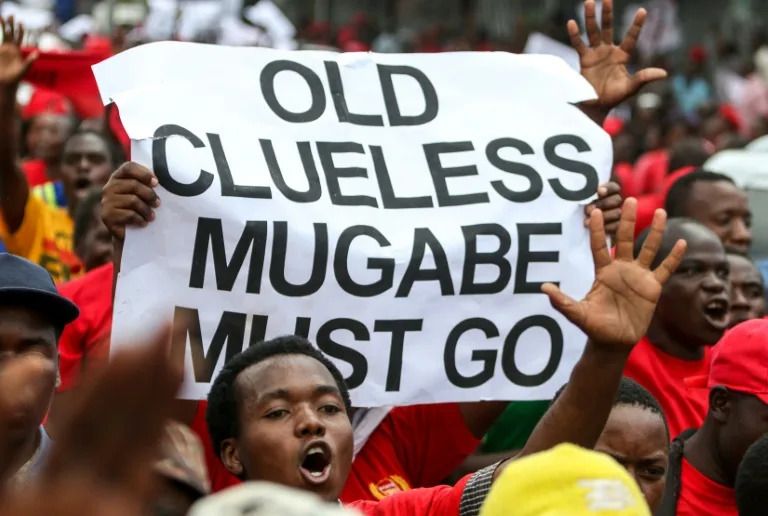
This explains why, over the years, opposition politics has been framed through slogans such as “Mugabe must go” and now “Mnangagwa must go.”
However, the desire to remove ZANU-PF, however justified, is not an ideology.
On its own, it is a myopic objective.
History offers us an instructive contrast.
The liberation struggle had its own weaknesses and contradictions, and it was later hijacked by opportunists who diverted a people’s revolution for their own selfish ends.
Yet, one truth cannot be denied: the liberation movements succeeded in dismantling the colonial regime.
That success was not accidental.
While the goal was certainly to end white minority rule, the struggle was not framed merely as “Smith must go” or “Rhodesia must go.”
For the revolution to be solid and effective, it had to be grounded in an ideology.
This ideological foundation was largely socialist in orientation, shaped and reinforced by support from the Soviet Union and China.
It articulated positions on land, the economy, social services, and the ownership of national resources.
It bound fighters and supporters together, gave meaning to sacrifice, and transformed resistance into a coherent political and military force capable of compelling a negotiated settlement that culminated in independence in 1980.
Whether all those who later assumed power genuinely believed in this ideology is another matter altogether.
Some are widely believed to have been planted or later co-opted to safeguard British and Western interests once independence became inevitable.
Even so, the presence of a clear ideological framework was decisive.
Without it, the liberation struggle would have been fragmented, directionless, and far more vulnerable to defeat.
It is telling that even today, ZANU-PF continues to maintain and venerate its so-called school of ideology, however hollow it may have become in practice.
Whether the party still adheres to any ideology beyond blind loyalty to the leader is highly debatable, but it understands the value of ideological symbolism and cohesion.
The opposition, by contrast, has no equivalent binding force.
So what ideology binds Zimbabwe’s opposition together?
What vision of the economy, land ownership, social justice, and state power makes it a formidable alternative capable not only of removing ZANU-PF but of governing differently?
The history of opposition politics in Zimbabwe offers little inspiration in this regard.
From its emergence in 1999, the Movement for Democratic Change (MDC) sought to unite a broad coalition opposed to ZANU-PF.
This coalition included trade unionists advocating worker rights and higher wages, urban professionals seeking rule-of-law reforms and good governance, and business owners interested primarily in economic liberalization, market stability, and protection of private property.
While this strategy allowed the MDC to quickly amass mass support, it also created inherent ideological contradictions.
Trade unionists often pushed for state intervention in the economy and pro-labour policies, while business leaders preferred deregulation, tax incentives, and minimal state interference.
Urban professionals emphasized transparency, institutional reform, and meritocracy, which sometimes clashed with populist demands from labour movements.
These contradictions meant that policy positions were often vague or deliberately ambiguous.
Decisions on economic strategy, land reform, and resource distribution became points of tension, with different factions interpreting the party’s principles to suit their constituencies.
For example, when the MDC addressed land reform, rural activists prioritized redistribution and social equity, while business-aligned members worried about property rights and investor confidence.
Trade unionists within the party generally focused on workers’ rights and urban economic concerns, which sometimes aligned with, and other times diverged from, these debates.
On taxation, urban professionals advocated efficiency and compliance, whereas trade unions prioritized higher public spending to alleviate poverty.
By trying to accommodate all these competing priorities without an overarching ideology, the MDC created a movement united only by opposition to ZANU-PF, rather than by a coherent vision of Zimbabwe’s political and economic future.
The Citizens Coalition for Change (CCC), which arose from the legacy of these historical splits, took this ambiguity even further.
In its efforts to attract voters disillusioned by factionalism and to maximize short-term popularity, the CCC deliberately avoided articulating a clear ideological framework.
Its focus remained almost entirely on the singular goal of removing ZANU-PF, leaving little guidance on how it would address land redistribution, economic policy, social welfare, or institutional reform.
While this approach generated emotional momentum, it left the movement structurally weak and internally contradictory.
The leadership disputes and resignations of 2023, including that of Nelson Chamisa, exposed just how vulnerable an opposition without a clear ideological foundation can be.
These contradictions—between populist urgency, competing economic visions, and personal ambitions—remain unresolved, leaving Zimbabwe’s opposition a patchwork of agendas rather than a coherent alternative capable of governing.
From all this, it is impossible to deny that Zimbabwe’s opposition stands on very shaky ground.
In many other countries, the social and economic groups bundled together within Zimbabwe’s opposition would have naturally formed four or five separate political parties, each clearly defined by its own ideology.
For example, in the United Kingdom, trade unionists and working-class voters are represented by the Labour Party, which has historically championed workers’ rights, public services, and social equity.
Business-oriented interests gravitate toward the Conservative Party, with its emphasis on private enterprise, market liberalization, and fiscal conservatism.
Urban professionals and liberal-minded voters may align with the Liberal Democrats, advocating democratic reform, individual freedoms, and social liberalism.
Even smaller parties, like the Green Party, focus on environmentalism and sustainable development.
In such a system, each constituency has a party whose ideological framework articulates its priorities, creating clarity and internal cohesion.
Zimbabwe’s opposition, by contrast, attempts to unite all these diverse interests under one banner without ideological clarity, leaving it fractured, internally contradictory, and incapable of presenting a coherent alternative to ZANU-PF.
A political movement cannot succeed by trying to be everything to everyone, as long as the shared objective is simply the removal of ZANU-PF.
That approach has failed repeatedly and will continue to fail.
It explains why opposition parties have become fertile ground for opportunists, why defections are common, and why ZANU-PF finds it so easy to infiltrate, buy, and neutralise its rivals.
It also explains why opposition-run local authorities have often been monumental failures, plagued by corruption, incompetence, and self-serving behaviour indistinguishable from the ruling party they claim to oppose.
Zimbabwe does not necessarily need one large, ideologically empty opposition formation.
I would rather see two or three opposition parties, each grounded in a solid, clearly articulated ideology, than a single amorphous movement defined only by anger toward ZANU-PF.
At present, opposition parties are virtually indistinguishable from one another.
They all promise to end corruption, revive the economy, and reduce poverty.
But what ideological framework governs these goals?
None.
The only real difference between them is the personalities at the top, and even those differences are often reduced to ego clashes rather than principled debate.
Until Zimbabwe’s opposition confronts its ideological emptiness, it will remain weak, fragmented, and easily manipulated.
A politics built on personality worship and reactive outrage cannot defeat a deeply entrenched authoritarian system.
Only an opposition anchored in clear ideas, shared principles, and a coherent vision of a just society can hope to dismantle ZANU-PF’s grip on power and build a Zimbabwe that truly works for all.
 TENDAI RUBEN MBOFANA - THE UN-OPPRESSED MIND!