At times it feels as though Zimbabwe has lost its soul.
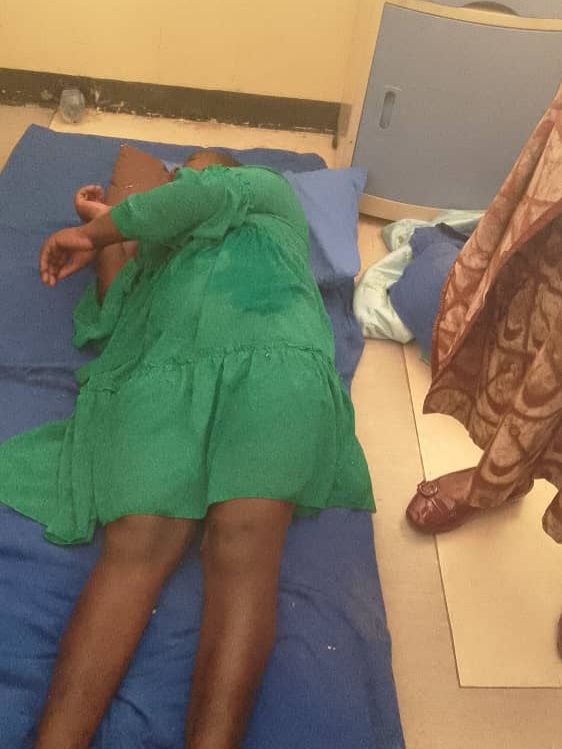
Yesterday, a friend sent me photographs she said were taken at Chitungwiza General Hospital.
To directly receive articles from Tendai Ruben Mbofana, please join his WhatsApp Channel on: https://whatsapp.com/channel/0029VaqprWCIyPtRnKpkHe08
In the images, a female patient lay on the cold hospital floor, using what little she had as bedding.
According to my friend, this indignity was not the result of an isolated emergency, but of a chronic shortage of hospital beds at the public health institution.
As I stared at those images, my heart bled.
I felt anger, sadness, and a deep sense of shame.
How did we get here?
How did a country that, barely four decades ago, boasted one of the finest public health delivery systems on the African continent descend so spectacularly into such cruelty and neglect?
One does not have to search far for the answer.
We now live in a country where the ruling elite have normalised corruption and the looting of national resources.
Worse still, this theft has been repackaged as sophistication, as intelligence, as evidence of being “connected” or “smart.”
The bigger the loot, the louder the applause from fellow looters.
Corruption is no longer whispered about in shame; it is flaunted openly, defended aggressively, and even admired.
But we must pause and ask hard questions.
Is stealing money that could have been used to buy hospital beds, procure life-saving medication, and equip public hospitals—money whose absence leads directly to preventable deaths—really a mark of brilliance?
Can anyone honestly claim moral or intellectual superiority while patients sleep on floors like discarded objects?
Is a person who enriches himself with funds meant to provide clean, running water—leaving entire towns with dry taps for years and exposing millions to deadly diseases—someone to be admired?
Is a leader who cruises in a luxury SUV over pothole-ridden, mud-soaked roads, roads that crumble precisely because their maintenance funds were stolen, a symbol of success?
Should we celebrate politically connected individuals who siphon off millions earmarked for electricity generation, condemning households and businesses to endless darkness, economic paralysis, and despair?
Or is there something far deeper, far more disturbing at work here?
What we are witnessing is not cleverness.
It is moral collapse.
To steal on this scale, and to do so without remorse, requires a frightening level of moral disengagement.
The suffering of others must first be mentally erased.
A patient on a hospital floor is no longer a mother, a sister, or a daughter, but an abstraction.
A child dying from a treatable disease is reduced to a statistic.
Hunger, power cuts, water shortages, and decaying infrastructure become mere inconveniences in policy reports, not human tragedies.
This emotional detachment allows looters to sleep peacefully at night, insulated from the misery their actions create.
Closely tied to this is a grotesque sense of entitlement.
Many within the ruling elite genuinely believe that the country owes them.
Power is seen not as a responsibility, but as a reward; public office not as service, but as access.
National resources are treated as personal property, spoils to be consumed by those who “earned” their place through liberation credentials, political loyalty, or proximity to power.
Ordinary citizens, meanwhile, are expected to survive on crumbs and slogans.
Greed alone, however, does not fully explain the brazenness of the theft we see.
What truly fuels it is impunity.
When people steal and face no consequences—when arrests are selective, prosecutions cosmetic, and accountability nonexistent—corruption becomes rational.
It becomes a calculated risk with guaranteed rewards.
Over time, stealing ceases to feel like a crime at all.
It becomes routine, institutionalised, and self-perpetuating.
In order to maintain this system, victims must be dehumanised.
Zimbabweans become an indistinct mass, useful only during elections or when chanting slogans.
Their suffering is dismissed as unavoidable, exaggerated, or the fault of sanctions, saboteurs, or fate itself.
This deliberate dehumanisation is what makes it possible for leaders to loot health budgets while hospitals collapse, or to steal road funds while accidents claim lives on impassable highways—without ever feeling personally responsible.
This behaviour is also learned.
It is passed down, observed, and internalised.
Young politicians and civil servants grow up watching senior figures loot openly, rewarded with promotions, protection, and prestige.
The lesson is clear: integrity is foolish, honesty is naïve, and patriotism is profitable only when weaponised for personal gain.
In such an environment, corruption is no longer deviant; it is aspirational.
Ironically, much of this looting is driven not by need, but by fear.
Fear of losing power.
Fear of uncertainty.
Fear of the day when accountability might finally arrive.
Wealth is hoarded obsessively, not to improve society, but to build personal fortresses against an unpredictable future.
The result is obscene accumulation at the top, alongside crushing deprivation at the bottom.
At its core, all of this reflects the absence of a moral anchor.
The values that once underpinned our society—ubuntu, unhu, solidarity, collective responsibility—have been hollowed out.
They survive only as rhetoric, recited on national days and forgotten immediately thereafter.
In their place stands naked self-interest, unrestrained by conscience or compassion.
So no, there is nothing admirable, intelligent, or impressive about stealing from a nation and leaving its people to suffer.
There is only something profoundly sick and morally depraved about it.
A society that celebrates such behaviour is not merely poor; it is wounded at its core.
And until we confront this truth honestly—until we stop confusing theft with brilliance and cruelty with strength—more patients will sleep on hospital floors, more taps will remain dry, more lights will stay off, and more lives will be quietly lost to a system that has forgotten what leadership is meant to be.
 TENDAI RUBEN MBOFANA - THE UN-OPPRESSED MIND!