Ignorance usually breeds arrogance.
In my upbringing, I was taught that leadership is about leading from the front, about setting an example that others can follow.
To directly receive articles from Tendai Ruben Mbofana, please join his WhatsApp Channel on: https://whatsapp.com/channel/0029VaqprWCIyPtRnKpkHe08
True leadership is never about commanding obedience while exempting oneself from responsibility.
One cannot claim to be a good leader while preaching “do as I say, not as I do.”
From an early age, I also learned the importance of personal responsibility—of acting with integrity whether or not anyone is watching.
Those who consistently demonstrate responsibility, in word and action, inspire others to do the same.
Another lesson, instilled in me by my mother, was the selflessness inherent in good leadership.
She, like countless mothers, taught by example that leadership is about placing the needs of those you care for above your own.
When food was scarce, she would ensure I had enough before taking a bite herself.
If there was nothing left for her, she went to bed hungry.
That is leadership in its purest form—sacrificing personal comfort for the welfare of others.
But this principle does not end at home; it applies to public life, to those entrusted with the responsibility of leading communities, institutions, and a nation.
Leadership is not about pretence or superficial displays of authority.
It is about internalising responsible behaviour as a constant, whether at home, at work, or in society.
It is about being law-abiding even when no one is watching.
That is why I stop faithfully at red lights or stop signs, even on deserted roads in the dead of night.
Responsible behaviour must be habitual, and it must begin with those in leadership positions.
It is therefore profoundly disturbing to witness, time and again, those in Zimbabwe’s leadership flagrantly flouting the laws they are meant to uphold.
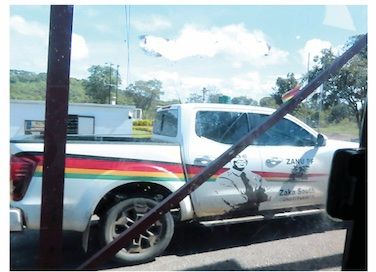
Just recently, a video circulated showing a top ZANU-PF party official, a tenderpreneur masquerading as a businessman, whose motorcade drove through a tollgate without paying.
This is not an isolated case.
I have personally observed numerous ZANU-PF officials driving party vehicles bypass tolls, disregard traffic regulations, and flout the country’s laws without consequence.
These same individuals often neglect to pay vehicle licenses, road levies, or mandatory insurance, all of which are contributions expected of every law-abiding citizen.
For someone like me, with a background rooted in responsibility and accountability, this behaviour is incomprehensible.
Leaders are expected to model law-abiding conduct.
They should be the first to contribute positively to national development by paying taxes, tolls, and levies, setting an example for others to follow.
A responsible leader might even choose to pay vehicle licenses or road levies two years in advance, or voluntarily contribute more than the minimum required, demonstrating commitment to the country’s welfare.
Instead, in Zimbabwe, leadership is often associated with impunity, entitlement, and the ostentatious display of power.
Those in positions of authority believe leadership is about showing the world who “owns” the country while taking nothing of substance from it for the public good.
This warped perception of leadership fuels the very corruption that continues to cripple the country.
Those in power enrich themselves with resources they have not earned and did not contribute toward.
For them, leadership means driving expensive SUV vehicles on roads riddled with massive potholes—as if to say, “it’s your fault not to own a car like mine.”
They see nothing wrong at all in seeking treatment or sending their loved ones abroad, yet leaving our local public healthcare institutions as death traps, without the most basic medications, life-saving equipment, or diagnostic tools, with thousands needlessly losing their lives.
They view it as a sign of power and leadership to send their own children to expensive private schools or overseas, while the children of those they supposedly lead learn under trees or in makeshift classrooms, sitting on the floor and sharing a single book.
For them, it is absolutely normal to fly by private jet or attend a rural rally aboard a helicopter just to give starving Zimbabweans handouts.
This is leadership according to ZANU-PF.
This is not leadership.
This is abuse of power disguised as authority.
Leadership is meant to be a service, a duty, and a responsibility.
It is meant to inspire and to uplift, not intimidate, exploit, or create dependency.
When leaders place themselves above the laws they impose on others, they normalize lawlessness and erode the moral fabric of the society they claim to serve.
Citizens learn from the behaviour of their leaders.
If those at the top act irresponsibly, break laws, and flaunt impunity, the lesson transmitted is that ethics, accountability, and public service are optional.
Let me give a simple example.
I serve on the senior committee of our ward neighbourhood watch committee.
In this role, I am tasked with leading by example, encouraging residents to participate in maintaining community security and contributing to shared responsibilities.
So, if I were to follow the example set by these ZANU-PF officials, I should display my authority or seniority by not paying the monthly subscriptions required from every resident.
This is not how leadership operates.
If anything, that would be the height of irresponsibility, unworthy of anyone in a leadership position.
In fact, as a demonstration of good leadership, I should voluntarily pay a little more than the stipulated monthly contribution.
Leadership at any level is about accountability and service.
It is about demonstrating commitment through action, not seeking personal gain under the guise of authority.
A true leader inspires others to do what is right, even when it is inconvenient or unrewarded.
The tragedy is that Zimbabwe has too few leaders who understand this.
Instead, power and authority are too often treated as privileges to be exploited, symbols of status to be flaunted, and avenues for self-enrichment.
The culture of entitlement and impunity begins at the top and cascades downward, creating systemic corruption, widespread lawlessness, and underdevelopment.
Ordinary citizens, who live under these conditions, pay the price—through poor roads, collapsing infrastructure, inadequate public services, and the erosion of trust in the state.
It is deeply disturbing that this culture of lawlessness is poised to continue when someone who sees himself as a future president of Zimbabwe is already openly flouting something as basic and mandatory as the payment of toll fees.
For Zimbabwe to change, the nation must demand leaders who embody the principles of responsibility, selflessness, and accountability.
Leaders must place the interests of the people above their own and act as role models in every aspect of governance.
Leadership must be about creating a system where laws are respected, resources are properly allocated, and public service is genuinely valued.
Only when those in power internalize the ethics of true leadership can Zimbabwe begin to repair the damage inflicted by decades of mismanagement and abuse of authority.
The country deserves leaders who understand that leadership is a duty, not a privilege; a responsibility, not a reward; a service, not a spectacle.
Zimbabwe deserves leaders who inspire trust, embody integrity, and uphold the law in word and deed.
Until then, the cycle of corruption, entitlement, and underdevelopment will continue.
Leadership must once again mean service to the people, as it ought to, if Zimbabwe is ever to realise its potential.
The urgent task before the nation is clear: elect, support, and hold accountable those who lead by example, who respect the law, and who place the welfare of citizens above their own comfort or gain.
Only such leadership can restore hope, rebuild institutions, and set Zimbabwe on a path toward genuine development and social justice.
Anything less is simply a perpetuation of the very mess that has brought the nation to its current state.
 TENDAI RUBEN MBOFANA - THE UN-OPPRESSED MIND!