Nothing is more dangerous than an oppressed person who doesn’t even realize they are oppressed.
This morning, I received a message from a reader responding to one of my articles on poverty in Zimbabwe.
To directly receive articles from Tendai Ruben Mbofana, please join his WhatsApp Channel on: https://whatsapp.com/channel/0029VaqprWCIyPtRnKpkHe08
He argued that claims of extreme poverty often ignore “salient facts” about rural households.
According to him, a family living in a simple rural homestead — owning five acres of arable land, five cattle, nine goats, eleven sheep, four donkeys, twenty chickens, and six guinea fowl, while producing enough food for consumption and some for sale — should not be considered extremely poor.
He added that while urban poverty is visible and deserving of sympathy, urbanites make up less than 25 percent of the population, and the poverty of most rural families should, in his view, be “taken with a pinch of salt.”
On the surface, this may seem reasonable.
But it is misleading.
To begin with, Zimbabwe’s urban population is actually estimated at about 39 percent, meaning roughly two in five Zimbabweans live in cities and towns, according to ZimStat’s 2022 Population and Housing Census preliminary results.
While urban poverty is easier to observe, the rural population — which still constitutes the majority — is not automatically exempt from poverty simply because they own land or livestock.
Poverty is not defined by the absence of land, animals, or a city address; it is about whether households can reliably meet the basic standards of life.
It is also crucial to distinguish between poverty and extreme poverty.
Poverty refers to households that cannot consistently meet essential needs — food, education, transport, healthcare, and other necessities.
Extreme poverty, on the other hand, is when households fall far below these basic thresholds, struggling even to meet minimal nutritional and caloric requirements.
Both are serious, and neither should ever be dismissed.
Owning land, livestock, or earning some money does not make a household immune from either.
According to ZimStat, the World Bank, and the United Nations Development Programme, close to 80 percent of Zimbabweans live in poverty, with roughly half in extreme poverty.
These figures are derived from consumption-based poverty lines that measure whether households can consistently access minimum standards for food, essential non-food items, and services such as healthcare, education, water, sanitation, and energy.
For lower middle‑income countries, as is the case with Zimbabwe, the World Bank uses a threshold of $5.50 per person per day to define poverty.
In practical terms, this is the minimum a person needs to reliably cover food, school fees, transport, clothing, and other necessities.
Anyone living below this threshold is considered poor — regardless of whether they own land, livestock, a house, or take home some income from vending, backyard businesses, or civil service work.
Take a rural family of six with a small piece of land and a few cattle, goats, or chickens.
They may grow enough food to eat, but life requires cash for school fees, uniforms, transport, soap, medicine, and other essentials.
Even if the family produces vegetables or maize for sale, these assets do not guarantee that they consistently reach the $5.50 per person per day threshold – for a family of six, this amounts to $33 per day.
Their survival depends on the season, the market, and whether crops and livestock generate extra income for emergencies.
In other words, they may appear self-sufficient but are structurally poor, vulnerable to shocks, and unable to achieve economic security.
The same applies in urban settings.
A family living in a modest house, furnished over years, may seem financially comfortable.
Yet if household income is irregular — from vending, backyard income-generating projects, or casual employment — they may barely cover rent, food, and transport, let alone medical emergencies or school fees.
Even civil servants, earning fixed salaries, may struggle to make ends meet due to rising prices.
They may “take home money,” yet still fall below the consumption threshold that defines poverty.
Ownership of property or earning some income does not automatically prevent poverty.
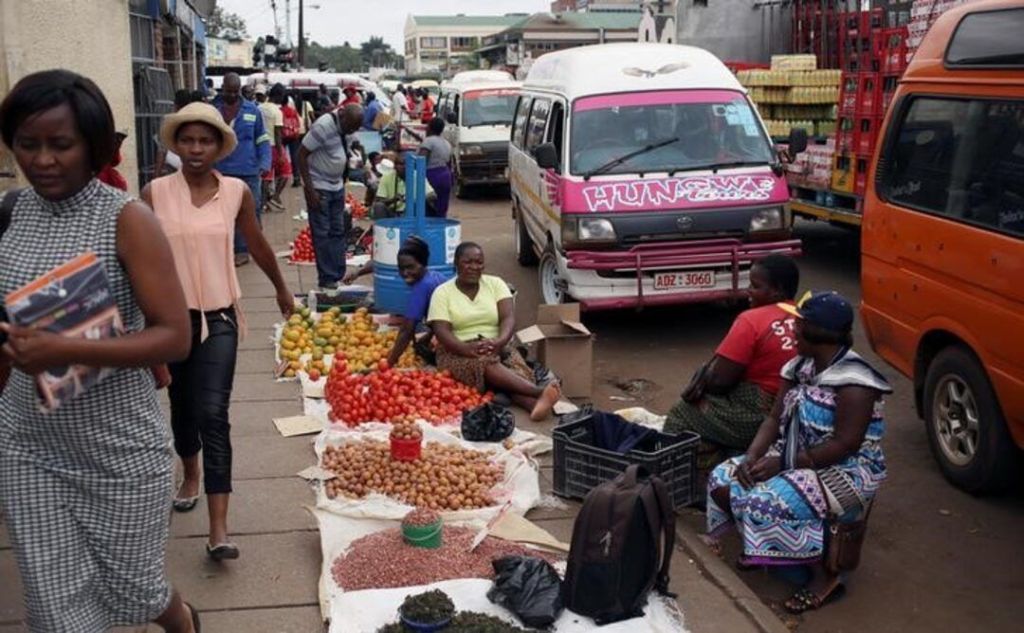
Zimbabwe’s informal economy further highlights this illusion of wellbeing.
Vendors, cross-border traders, hairdressers, and small-scale entrepreneurs may earn money daily and feel they are “managing.”
But their earnings are fragile.
A single illness, school examination fees, funeral costs, or an accident can wipe out weeks or months of income.
When a child falls sick and hospital charges hundreds of dollars for tests or treatment, or when exam fees exceed a month’s income, the household’s poverty becomes painfully clear.
This is precisely why poverty is measured not by what people own, but by whether they can reliably meet their basic needs.
Millions of Zimbabweans who do not perceive themselves as poor are, in fact, living below the poverty line.
They are economically insecure, vulnerable, and dependent on circumstances remaining favorable to survive.
Poverty in Zimbabwe is often invisible, but it is real and pervasive.
The danger of this widespread misperception cannot be overstated.
People who do not recognise their own poverty are unlikely to challenge the systems that produce it.
They become easy targets for political manipulation, soothed by handouts, food aid, or short-term relief that offers temporary comfort but no structural change.
When citizens believe that poverty happens only to “others” — the homeless, the visibly destitute, the unemployed — they fail to see how deeply it has penetrated their own lives.
This confusion also explains why claims that nearly 80 percent of Zimbabweans are poor are often dismissed as exaggerations or propaganda.
The figures seem unbelievable only because deprivation has become normalized.
Surviving without healthcare, without savings, without social protection, and without dignity feels ordinary.
Many Zimbabweans may pay school fees and buy groceries, yet cannot afford emergency medical care, decent transport, or electricity for their household.
Poverty is pervasive, invisible, and yet very real.
No society can meaningfully fight injustice when its people do not recognise their own dispossession.
Poverty is not merely an economic condition; it is a political one.
It strips citizens of bargaining power, weakens collective action, and fosters gratitude for crumbs where rights should be demanded.
Understanding poverty, therefore, is not an academic exercise.
It is an act of political awakening.
Until Zimbabweans confront the uncomfortable truth that survival is not the same as wellbeing, and that asset ownership does not guarantee economic security, the cycle will continue.
The system thrives on this confusion, depending on people mistaking endurance for success and resilience for prosperity.
The tragedy is not only that so many Zimbabweans live in poverty, but that so many do so unknowingly.
A people who do not know they are being impoverished cannot be expected to rise up against the forces impoverishing them.
 TENDAI RUBEN MBOFANA - THE UN-OPPRESSED MIND!