What is left unsaid often speaks louder than what is spoken.
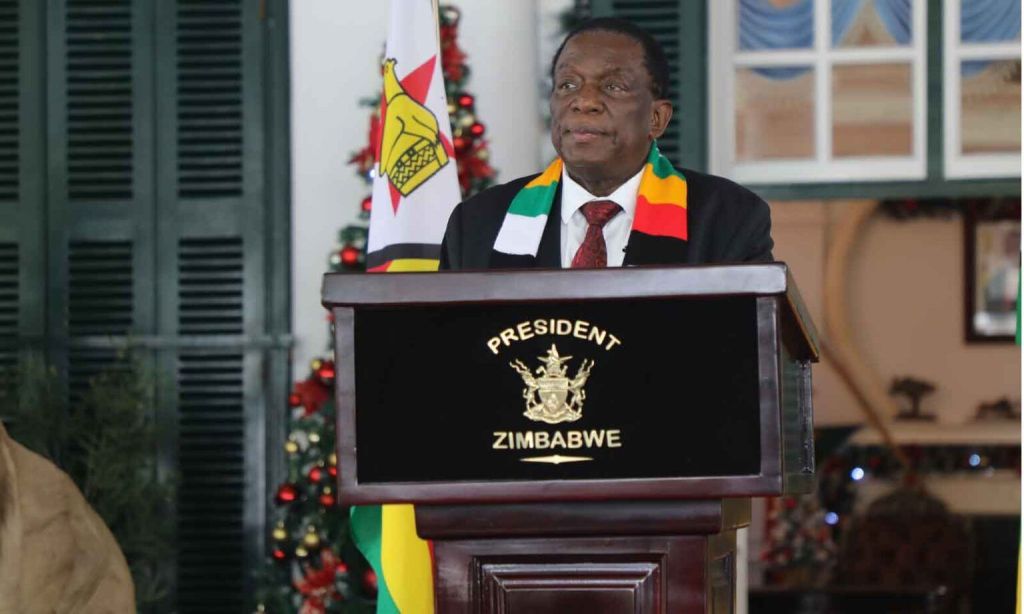
When a head of state addresses the nation on a symbolic day meant to celebrate unity, progress, and shared national purpose, one would reasonably expect clear evidence that ordinary people’s lives are improving.
To directly receive articles from Tendai Ruben Mbofana, please join his WhatsApp Channel on: https://whatsapp.com/channel/0029VaqprWCIyPtRnKpkHe08
Yet, in President Emmerson Mnangagwa’s 2025 Unity Day speech, there was a conspicuous and telling omission: not once did he say that poverty in Zimbabwe has been reduced.
This silence is not accidental.
It is revealing.
It speaks volumes about the gulf between official rhetoric and the lived reality of millions of Zimbabweans.
The President spoke at length about unity, peace, stability, and development.
He cited sectoral “successes” in agriculture, mining, manufacturing, tourism, and infrastructure.
He praised the performance of the National Development Strategy 1 and expressed optimism about NDS2.
But for all these claims, there was no assertion—let alone evidence—that these developments have translated into improved living standards for the majority of citizens.
In a country where nearly 80 percent of the population lives in poverty, such an omission is not a minor oversight; it is an indictment of the entire development narrative being sold to the nation.
Poverty is not an abstract concept.
It is measured in empty stomachs, unpaid school fees, avoidable deaths in under-equipped hospitals, and the daily humiliation of survival without dignity.
If Zimbabwe were truly making meaningful progress, poverty reduction would be the single most powerful achievement the President would want to highlight.
He could have proudly proclaimed, for example, that in the past year poverty levels had fallen from 80 percent to 68 percent—but no such proclamation was made.
Perhaps because the data simply does not allow it.
Various assessments consistently show that around four out of every five Zimbabweans live below the poverty line, with a significant proportion trapped in extreme poverty.
This is not the profile of a country experiencing inclusive growth; it is the portrait of a nation in prolonged socio-economic distress.
Unemployment offers another stark contradiction to the celebratory tone of the speech.
Estimates place unemployment and underemployment at well over 90 percent, particularly when one considers the collapse of formal jobs and the dominance of precarious informal survivalism.
Millions of Zimbabweans are not employed in any meaningful or secure sense; they are hustling to survive, selling airtime, vegetables, or second-hand clothes, often earning less than what is needed for basic subsistence.
To present industrialisation and economic expansion without addressing this structural jobs crisis is to speak in abstractions divorced from reality.
Growth that does not create decent jobs is not development; it is statistical window dressing.
Food insecurity further exposes the hollowness of official claims.
About 7.6 million Zimbabweans currently face food insecurity, including approximately 3.5 million children.
This means nearly half the population does not have reliable access to sufficient and nutritious food.
For children, this is not just about hunger today but about stunting, impaired cognitive development, poor educational outcomes, and a lifetime of diminished potential.
Against this backdrop, claims of record-breaking agricultural production ring painfully hollow.
If harvests are truly bountiful, why are millions still hungry?
Who benefits from this production, and who is left out?
These are the questions the President’s speech carefully avoided.
The crisis in public services is perhaps the most visceral evidence that poverty is deepening rather than receding.
Zimbabwe’s public hospitals are in a dire state, characterised by chronic drug shortages, broken equipment, demoralised staff, and patients forced to buy everything from syringes to painkillers.
Maternal and child health outcomes continue to deteriorate, not because solutions are unknown, but because the system is starved of resources and plagued by mismanagement.
Similarly, the education sector—once a point of national pride—is buckling under the weight of underfunding, poorly paid teachers, dilapidated infrastructure, and the exclusion of children whose families cannot afford fees.
A nation serious about poverty reduction would put health and education at the centre of its Unity Day narrative.
Their absence tells its own story.
What makes the President’s silence on poverty even more striking is the emphasis he placed on unity as the foundation of development.
Unity is indeed important, but unity without justice, accountability, and tangible socio-economic progress becomes an empty slogan.
Citizens cannot eat unity.
They cannot pay school fees with unity.
They cannot buy medicines or transport to work using unity.
When unity is invoked repeatedly in the absence of measurable improvements in people’s lives, it begins to sound less like a shared national project and more like a tool to discourage legitimate questioning and dissent.
Equally troubling is the reliance on macro-level or sectoral indicators to imply progress while avoiding human-centred outcomes.
Development is not about how many tonnes of minerals are extracted or how many kilometres of road are built; it is about whether people are less poor, healthier, better educated, and more secure.
By that standard, Zimbabwe is clearly moving in the wrong direction.
Inflation continues to erode incomes, the cost of living remains unbearable, and social protection systems are grossly inadequate.
None of this featured in the President’s address, because confronting it would require acknowledging policy failure.
The absence of any identifiable reduction in poverty also underscores a critical truth: handouts and temporary relief do not equate to real empowerment or sustainable development.
The omission of poverty reduction from the Unity Day speech is therefore not just rhetorical; it is political.
It reflects an unwillingness to be judged by outcomes that matter most to citizens.
It is far easier to speak of plans, strategies, and potential than to account for why, after decades in power, the ruling elite cannot credibly claim that the majority of Zimbabweans are better off.
In that sense, the speech unintentionally delivered a moment of honesty: even the President could not identify any reduction of poverty in Zimbabwe.
Unity Day should be a moment of national reflection, not self-congratulation.
True unity cannot be built on denial.
It requires truth-telling, including the uncomfortable truth that poverty remains widespread, unemployment crushing, hunger pervasive, and public services in collapse.
Until the leadership can stand before the nation and credibly say that poverty has fallen—backed by evidence, not slogans—calls for unity will continue to ring hollow.
Zimbabweans do not need speeches that describe an imagined country.
They need policies and governance that transform the one they are painfully living in every day.
 TENDAI RUBEN MBOFANA - THE UN-OPPRESSED MIND!