In Shona we have a saying, kufa nenyota makimbo ari mumvura—to die of thirst while standing in water.
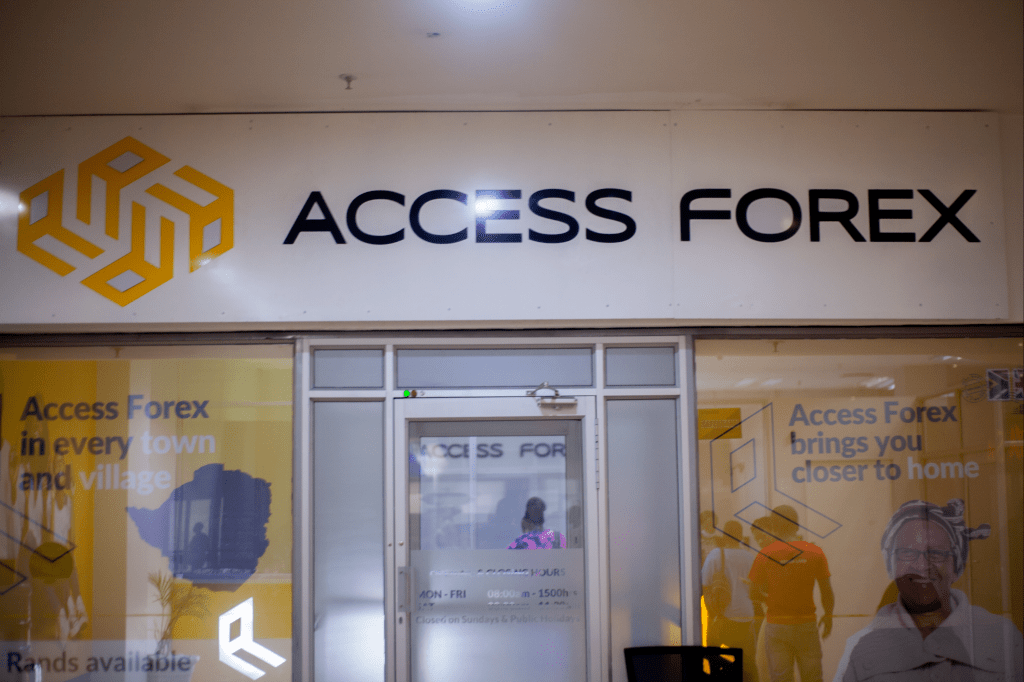
It is both disappointing and alarming that in a country where millions depend on money sent by relatives and friends for survival, one can fail to access urgently needed cash simply because a money transfer agent does not have the most basic operational capacity: float.
To directly receive articles from Tendai Ruben Mbofana, please join his WhatsApp Channel on: https://whatsapp.com/channel/0029VaqprWCIyPtRnKpkHe08
I recently found myself unable to cash out money sent to me via Access Forex because most of its outlets were closed on a Sunday.
The few that were open, such as the branch at Spar, had no money.
The attendant explained—quite candidly—that unlike reputable money transfer agents, Access Forex does not provide outlets with float.
Instead, the outlet relies entirely on money brought in by people sending funds.
If no one happens to be sending money at that branch on a given day, then there is nothing to pay out to recipients.
In simple terms, if you are unlucky enough to need your money on a quiet day, you are stranded.
This is unacceptable and wholly unbecoming of an entity that claims to be a serious player in the money transfer market.
One is forced to ask: what exactly is the service being provided here?
What are clients supposed to do when they urgently need to access money sent to them?
Wait patiently until someone else walks in to send money?
Hope that tomorrow might be better?
Emergencies do not operate on such conveniences.
Money transfer agents are not banks.
People do not use them to park funds for future use, receive salaries, or collect pensions.
They are used precisely because there is urgency.
Someone is sick.
School fees are due.
Food has run out.
Transport is needed immediately.
In Zimbabwe’s harsh economic reality, these transactions are often a matter of survival.
So what happens when a sick woman’s relatives send money for medication, only for that money to be inaccessible because the outlet has no float?
What are families supposed to do when critical tests and procedures—unavailable at public hospitals—must be paid for privately and immediately?
Sit by helplessly and watch a loved one deteriorate because the money is “there” but not accessible?
This is not a theoretical inconvenience.
In a country where poverty is widespread and the public healthcare system is on its knees, delayed access to cash can quite literally cost lives.
To then discover that this is not a one-off logistical failure, but a built-in operational model, is deeply troubling.
It is also deeply ironic that a company operating in this manner would brand itself “Access.”
Access to what, exactly?
Certainly not to money when it is most needed.
A name like that raises expectations of reliability, availability, and responsiveness.
What clients are experiencing instead is the opposite.
The rapid proliferation of money transfer agents in Zimbabwe is itself a symptom of economic decay.
As formal employment collapses and local incomes become inadequate, millions now survive on remittances from the diaspora.
This has created a booming market for money transfer services—but also a dangerous space where under-capitalised, poorly regulated operators can thrive at the expense of vulnerable people.
That is why government regulation is not optional; it is essential.
Authorities must introduce and enforce strict licensing and monitoring requirements for money transfer agents.
Any entity permitted to operate in this sector should be required, at all times, to maintain sufficient float to meet reasonable demand.
Operating without float should not be treated as an inconvenience—it should be grounds for suspension or deregistration.
Zimbabwe already has bona fide money transfer agents that understand the seriousness of this responsibility. WorldRemit, Western Union, Mukuru, EcoCash, and MoneyGram, among others, rarely subject clients to such indignities.
Their business models recognise that access to cash is the core service, not an optional extra dependent on chance foot traffic.
Those who lack the capacity to guarantee this access should not be allowed anywhere near a sector so critical to people’s lives.
The cost of failure is simply too high.
The public, too, must be vigilant.
We must be wary of these two-bit money transfer agents who promise convenience but deliver uncertainty and distress.
Choosing the wrong agent could mean more than inconvenience—it could mean losing a sick relative who needed immediate treatment, simply because the money for life-saving medication was effectively trapped behind an empty counter.
In a country already burdened by hardship, no one should have to gamble with their survival on whether a money transfer outlet happens to have float that day.
 TENDAI RUBEN MBOFANA - THE UN-OPPRESSED MIND!