At times, I genuinely wonder whether we live in the same Zimbabwe as those in power.
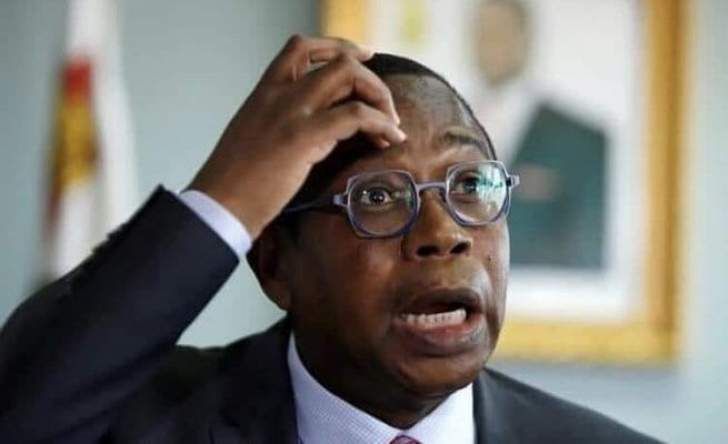
Finance Minister Mthuli Ncube’s stubborn refusal to revisit the Value Added Tax (VAT) increase and the 2% US-dollar IMTT tells us something deeper than Treasury would ever admit.
To directly receive articles from Tendai Ruben Mbofana, please join his WhatsApp Channel on: https://whatsapp.com/channel/0029VaqprWCIyPtRnKpkHe08
It exposes a government that has grown increasingly comfortable taxing the poor while pretending that it is merely keeping pace with “regional standards”.
In Parliament this week, Ncube pushed back against MPs who raised legitimate concerns about the burden these taxes place on ordinary Zimbabweans.
Instead of addressing the reality of falling incomes, collapsing formal employment and widespread poverty, he chose to compare Zimbabwe’s tax system to that of Zambia, Mozambique and Tanzania — countries where people earn far more, where economies function, and where public services actually work.
The comparison is not only misleading.
It is disingenuous.
The Minister’s defence rests on two pillars: first, that the VAT hike from 15% to 15.5% is “small”; and second, that neighbouring countries already charge 16% or 18%, so Zimbabwe remains “within the regional range”.
This reasoning deliberately ignores the most important variable in any conversation about consumption taxes — people’s incomes.
A 15.5% VAT in a country where the average person earns US$1,000 a month is not the same as a 15.5% VAT in a country where many survive on US$100 or less.
Zimbabwean households already spend a disproportionate amount of their earnings on food, rent, transport, and electricity.
Even a half-percentage-point increase pushes basic goods just a little further beyond reach.
That tiny nudge matters when families are already living on the edge.
To say the increase is “small” is to reveal how out of touch government has become.
There is nothing small about paying more tax when your income has been eroded by inflation and the collapsing value of the local currency.
There is nothing small about adding another layer of tax when salaries remain frozen, when teachers take home the equivalent of groceries for two weeks, and when pensioners cannot afford medication.
For many Zimbabweans, the difference between survival and hunger is measured in cents, not dollars.
The Minister may shrug at 0.5%, but the poor do not have the luxury of dismissing price increases as insignificant.
Ncube tries to soften the blow by reminding Parliament that 14 “core commodities” for low-income groups are zero-rated.
This too sounds reasonable until you start looking at how people actually spend their money.
Zero-rating a narrow basket of basic items does not protect families from rising costs in transport, rentals, medical bills, school supplies, and household essentials that fall outside the protected list.
Even worse, we have seen countless times that zero-rating does not stop retailers from increasing prices anyway.
The idea that the poor are protected is comforting for policymakers — but it is rarely true in practice.
On the IMTT, the Minister’s position is even more worrying.
He insists he cannot lower the 2% tax on US-dollar electronic transfers because doing so would “remove the advantage” of using the ZiG.
In other words, the government’s strategy to support the local currency is not to build confidence, strengthen productivity, or stabilise the macro-economy — but to punish people for using the more reliable currency.
This is economic coercion, not policy.
Government has created a tax-based penalty system to force citizens into the ZiG, even though they know very well that businesses, consumers and employers overwhelmingly prefer the US dollar because it protects the value of their income.
But beyond currency politics, the IMTT has more serious consequences.
It is pushing Zimbabweans away from formal banking systems.
Every percentage point of IMTT is a shove back into the cash economy.
Ordinary people now avoid electronic payments because they cannot keep losing money to a tax that punishes every transaction.
Businesses complain that it distorts pricing, discourages digital payments, and erodes planning.
Banks have warned repeatedly that the IMTT shrinks financial inclusion and reduces formal economic activity — the very foundation of sustainable revenue collection.
Zimbabwe already has a huge informal sector that contributes almost nothing in taxes.
The IMTT is making that worse.
Parliament is right to worry.
A tax that forces people out of the banking system eventually becomes self-defeating.
Government ends up collecting less, not more.
And yet the Minister insists that lowering the IMTT on US-dollar transfers is “exactly” what he does not want.
Zimbabwe’s tax regime should not exist to wage a currency war against its own citizens.
The bigger issue, however, is the government’s chronic addiction to taxing consumption rather than fixing the underlying economy.
Zimbabweans are now paying more in indirect taxes than at any time in recent memory — IMTT, VAT, fuel levies, passport fees, tollgates, electricity tariffs, import duties, excise duties, and endless statutory charges.
Instead of broadening the tax base through job creation, industrial revival, increased exports, and a stable currency, Treasury has taken the easy route: squeeze more out of the same shrinking pool of taxpayers.
It is the path of least imagination.
Regional comparisons are convenient, but they collapse under basic scrutiny.
Yes, Zambia may have a 16% VAT.
But Zambians enjoy far higher incomes, cheaper transport, a functioning local currency, and a more predictable economic environment.
Tanzania may charge 18%, but Tanzanians earn more, have thriving agriculture, and enjoy stable service provision.
Comparing Zimbabwe to these countries on VAT is like comparing a man running on two legs to a man running with one.
The context matters.
If the Zimbabwean government wants to reference regional peers, then let it compare wages too.
Let it compare teacher salaries, nurse salaries, factory worker salaries, or civil service pensions.
Let it compare unemployment rates, informal sector dependence, and public infrastructure.
Let it compare the quality of water, electricity stability, or the cost of transport.
Benchmarking only the tax while ignoring the economic realities that surround it is a deliberate act of policy dishonesty.
Zimbabweans are not refusing to pay tax.
They are simply demanding fairness.
A tax system must be anchored in the principle of ability to pay.
It must be designed to raise revenue without destroying the very economic activity it depends on.
It must not punish formalisation, nor should it drive people into cash transactions, and it must not place the heaviest burden on the poorest households.
These simple principles are being violated.
In the end, this standoff between Parliament and the Minister is not just about VAT or IMTT.
It is about the widening gap between those who craft policy and those who live with its consequences.
It is about a government that has become too comfortable taxing its way out of failure instead of reforming its way into progress.
No country has ever taxed itself into prosperity.
And certainly not by imposing levies that choke the poor and suffocate the formal economy.
Zimbabwe does not need higher consumption taxes.
It needs leadership bold enough to prioritise production, investment, stability, and public confidence.
Until then, VAT hikes and punitive transaction taxes will do nothing except deepen suffering — and reveal how far removed government has become from the everyday struggles of its people.
 TENDAI RUBEN MBOFANA - THE UN-OPPRESSED MIND!