Self-delusion is a very dangerous thing.
The government of Zimbabwe, through statements by Minister of Primary and Secondary Education Torerayi Moyo, has claimed that the country now boasts the “highest number of schools per capita in Southern Africa.”
To directly receive articles from Tendai Ruben Mbofana, please join his WhatsApp Channel on: https://whatsapp.com/channel/0029VaqprWCIyPtRnKpkHe08
According to these assertions, the expansion of schools has drastically reduced the distances children must walk to reach education, particularly in rural areas like Muzarabani.
On the surface, this sounds like progress.
But a closer look reveals that these claims are largely unverified, exaggerated, and misleading.
More importantly, they obscure a deeper crisis: while Zimbabwe may be building more classrooms, the quality of education remains dangerously inadequate.
Government data shows that between 2020 and 2024 roughly 2,873 new schools were reportedly built, raising the total number of operational schools to over 11,000.
Access to a primary school within a five-kilometre radius has improved in some regions, particularly in previously underserved rural districts.
These developments suggest some effort to expand infrastructure, but claiming that Zimbabwe leads Southern Africa in school density is highly dubious.
No independent data from SADC, UNESCO, UNICEF, or any other credible regional body supports this claim.
While the country may have built more schools in absolute terms, its much larger population means per-capita calculations are far from clear-cut.
Available regional data suggest that smaller nations such as Botswana, Lesotho, Eswatini, Namibia, and Mozambique may well have higher per-capita access to schools, especially when considering geographic coverage.
Furthermore, no publicly available dataset calculates functional schools per 100,000 population across the region, meaning Zimbabwe’s ranking cannot be verified.
Without such evidence, the claim reads less like a factual statement and more like political rhetoric designed to create an impression of regional leadership where none can be substantiated.
Whether these numbers are accurate or no, the critical question remains: what is counted as a “school”?
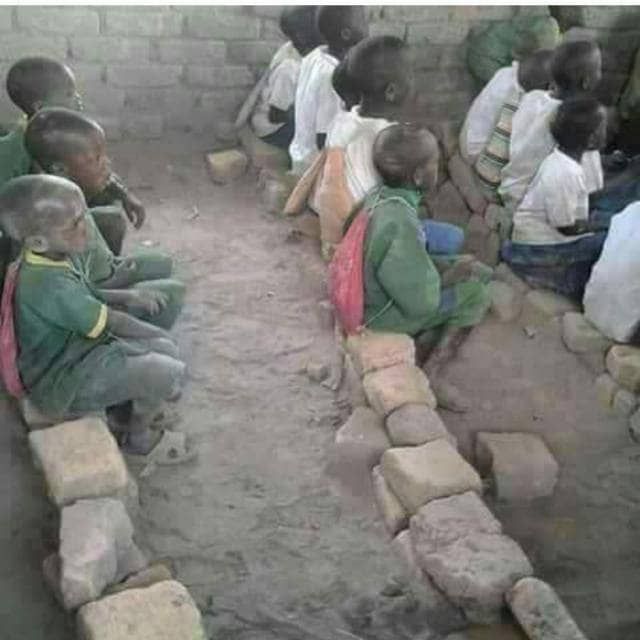
In rural areas, many of these so-called schools are little more than pole-and-dagga structures or at best one or two brick-and-mortar classroom blocks.
Pupils are often forced to sit on the bare floor because there are no proper desks or chairs.
Textbooks and learning materials are scarce, sometimes shared by dozens of children or completely unavailable.
Classrooms provide little more than a roof over their heads, leaving students to struggle in environments that are wholly inadequate for learning.
Science laboratories, technology tools, and digital classrooms — essential for preparing children for a competitive future — exist only in a handful of elite or donor-supported schools.
In such conditions, even the brightest children are held back, and the promise of education becomes little more than an empty hope.
Celebrating the number of schools built while ignoring the conditions inside classrooms is misleading and disingenuous.
The situation is compounded by demoralised teachers.
Many educators are severely underpaid, overworked, and lack access to adequate teaching materials.
In such conditions, even the most committed teacher cannot deliver quality education.
This contributes to poor student performance.
Despite spending more hours in the classroom than previous generations, Zimbabwean children today are learning far less than students did in the 1980s and early 1990s.
Recent national examination results underscore this failure.
The 2025 Grade 7 results released by ZIMSEC show a pass rate of just 48.49%, meaning more than half of primary-level learners failed.
For secondary education, the 2025 Ordinary Level results reveal that only 34.7% of candidates achieved five or more passes.
Two-thirds of students thus failed to meet the minimum standard.
These figures are not just statistics — they reflect wasted years of schooling, dashed hopes, and a generation denied real learning.
Comparing today’s system with the post-independence period highlights the magnitude of decline.
Back then, schools — though fewer — were generally better equipped.
Classrooms were comfortable, textbooks were abundant, and teachers were motivated by fair salaries and professional pride.
Students more often emerged from households where basic needs were met, enabling more effective learning.
Even in half-day sessions, children left school with a solid foundation in literacy, numeracy, and critical thinking.
Our generation in the 1980s and early 1990s knew far more than today’s children, even though we spent only half a day in class while they now spend the whole day in school.
Today, longer hours in poorly resourced classrooms fail to yield comparable outcomes.
Occasional examples of improved schools, such as Sanya Primary School in Muzarabani, supported by corporate social responsibility from firms like Delta Corporation Zimbabwe, are often presented as proof of progress.
While commendable, such partnerships are exceptions rather than the rule.
They do not reflect systemic improvement.
Most rural schools continue to struggle with inadequate facilities, limited learning materials, and poorly motivated teachers.
Highlighting isolated successes while ignoring widespread shortcomings gives a false impression of national achievement.
The core problem is not simply physical access to classrooms but the quality of education.
Students may attend school regularly, but without qualified teachers, textbooks, laboratories, or technology, the hours spent in class have limited value.
Zimbabwean children are being churned out of schools with minimal understanding of core subjects and limited readiness for higher education or the workforce.
This reality renders claims about the “highest number of schools per capita in Southern Africa” hollow and deceptive at best.
Regional comparisons further challenge the veracity of the government’s claims.
While Zimbabwe may have increased its total number of schools, other countries maintain better ratios of functional infrastructure and learning outcomes relative to population.
Zimbabwe still faces a deficit of approximately 3,000 schools needed to adequately serve all learners aged 3–18.
These gaps, coupled with weak learning outcomes, demonstrate that quantity alone does not translate into meaningful education.
The consequences of this education crisis are profound.
Without genuine investment in learning quality — from teacher training and remuneration to modern facilities and sufficient textbooks — the country cannot equip its children with the skills and knowledge required to succeed in a competitive, technology-driven world.
Boasting about the number of schools while ignoring the lack of teaching resources, underpaid and demotivated teachers, and poor learning outcomes is not progress; it is political theatre.
Zimbabwe’s education system requires urgent, honest attention.
The government must move beyond counting classrooms and focus on ensuring each school provides an environment conducive to meaningful learning.
Teachers must be adequately compensated and supported.
Classrooms must be equipped with basic and modern resources.
Students must be given the opportunity to gain real skills and knowledge, not merely occupy a physical space for hours.
Until the quality of education improves, the country’s children will continue to suffer.
Statements about being the regional leader in school provision remain hollow and misleading.
The measure of progress is not the number of buildings on paper but the competence, confidence, and potential of the children who walk through their doors.
Zimbabweans deserve an education system that delivers both access and quality — anything less is a betrayal of their future.
 TENDAI RUBEN MBOFANA - THE UN-OPPRESSED MIND!