It’s easy to dazzle the public with impressive figures, but the real question is whether any of them improve people’s daily lives.
After recently writing about what I termed Zimbabwe’s feja-feja economy, I received a sharp criticism from a reader who could not understand why I allegedly chose to ignore what he described as our nation’s “positives.”
To directly receive articles from Tendai Ruben Mbofana, please join his WhatsApp Channel on: https://whatsapp.com/channel/0029VaqprWCIyPtRnKpkHe08
He pointed to the World Bank’s confirmation that Zimbabwe is the fastest-growing economy in Southern Africa, Forbes naming the country among the best destinations to visit, rising wheat and tobacco production, billions in proposed investments such as the Dangote project, and the nationwide road rehabilitation programme.
To him, these were clear signs of progress that should inspire optimism.
His question — “why can’t you see these positives?” — reflects a common view among those who equate impressive macro-economic figures with public well-being.
Yet it is precisely this assumption that needs to be interrogated.
Because impressive numbers, no matter how dazzling, mean nothing when citizens remain poor.
Across the world, and especially in countries like Zimbabwe, governments often trumpet strong growth rates, high production outputs, and positive investment announcements as proof that life is improving.
These figures are presented as national achievements, signalling that the country is on the rise, advancing, prospering.
But the true measure of an economy is not found in spreadsheets, GDP charts, or ranking tables; it is found in the daily lives of the people.
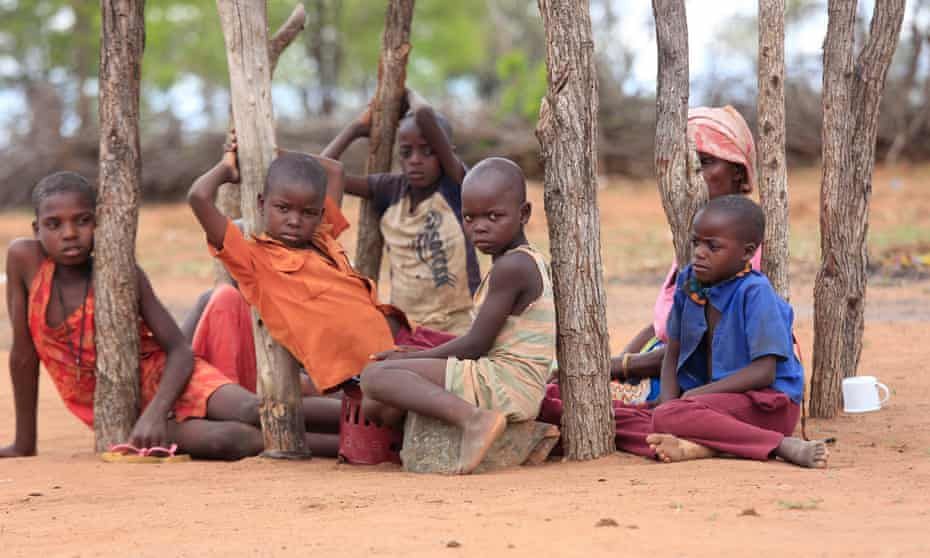
And in Zimbabwe, the overwhelming reality is that millions of citizens are not experiencing any of the benefits implied by these glowing statistics.
The poverty data alone is enough to shatter the illusion.
Zimbabwe has consistently recorded among the highest levels of extreme poverty in the region.
In recent years, nearly 80% of Zimbabweans have struggled to meet their basic needs, including food, healthcare, and other essentials, highlighting how widespread poverty remains despite impressive economic figures.
If economic progress were truly reaching households, poverty rates would be falling.
Yet they remain stubbornly high — a clear sign that the much-celebrated growth is not translating into real improvements for the majority of citizens.
Inequality tells the same story, only more starkly.
Zimbabwe’s inequality levels are among the highest in Sub-Saharan Africa.
With a Gini coefficient of around 50, the richest 10% of the population earn more than the poorest 50%, highlighting how wealth and income remain heavily concentrated among a small elite while the majority of citizens continue to struggle with poverty and limited access to basic services.
This means that even when the economy grows, the benefits are captured by a small, well-connected minority while the majority remain excluded.
The growth might be real, the numbers may indeed show expansion, but its fruits are unevenly distributed.
A nation can double its GDP and still keep its people in poverty if the wealth is concentrated at the top.
Beyond GDP and other economic metrics, the true value of citizens’ lives is measured by globally recognized benchmarks that assess human well-being.
The Human Development Index (HDI), compiled by the United Nations Development Programme (UNDP), combines indicators of life expectancy, education, and per capita income to provide a fuller picture of human progress.
According to the latest data, Zimbabwe ranks 159th out of 193 countries, placing it in the medium human development category.
The Multidimensional Poverty Index (MPI) further highlights the scale of deprivation, showing that roughly half the population is either multidimensionally poor or at risk of falling into poverty.
These figures make it clear that even with rising GDP, increased investment, or record crop production, the majority of Zimbabweans continue to face poor health, limited access to education, insecure livelihoods, and low-quality living conditions.
In other words, economic growth on paper tells only part of the story; the true measure of a nation lies in the well-being of its people.
Even when authorities boast about job creation, especially with new companies, it means little when most jobs fail to meet International Labour Organization (ILO) standards.
Many workers are underpaid or unpaid, employed on short-term contracts without access to medical care or pensions, overworked without paid overtime, and often exposed to unsafe conditions, particularly in mines — all of which fall short of the ILO’s minimum standards for fair and safe employment.
That is the tragedy of Zimbabwe’s current model.
The disconnect between impressive macro-economic statistics and grim day-to-day reality is not unique, but it is especially disturbing in a country with Zimbabwe’s resources.
With abundant minerals, vast agricultural potential, and a highly literate population, Zimbabwe is naturally positioned to transform growth into widespread prosperity.
Yet that transformation does not occur because the economic system remains structurally unfair.
Resources are mismanaged or captured by a select few, major investments rarely translate into decent jobs or fair wages, and public services remain chronically underfunded.
As a result, GDP becomes a misleading indicator — a measure of activity, not equality; of expansion, not justice.
Consider the highly publicised billion-dollar investment pledges.
In principle, these developments are positive: they boost production, increase exports, and improve the country’s global image.
But the question that matters is whether ordinary Zimbabweans feel any change.
Do such investments raise household incomes?
Do they reduce unemployment?
Do they reduce unemployment?
Even if they do, the jobs are often insecure, poorly paid, and unsafe.
Do they expand access to affordable healthcare, reliable electricity, or safe water?
In most cases, the answer is no.
The benefits are captured by political elites, foreign companies, or a small slice of the business community, while ordinary workers remain stuck in precarious, low-paying jobs — if they find jobs at all.
The same applies to infrastructure rehabilitation.
Roads are being resurfaced nationwide, but the measure of development is not the smoothness of a highway; it is whether transport becomes affordable, whether the economy generates more opportunities, whether people can easily access hospitals, schools, and markets.
Without improvements in livelihoods, infrastructure development becomes cosmetic — a visible but superficial marker of progress.
The same reader argued that we should give the authorities five to ten years for economic growth to trickle down to the people.
But this reasoning ignores decades of evidence showing that growth on paper does not automatically translate into improved lives for ordinary Zimbabweans.
Even as recently as 2020, Zimbabwe’s nominal GDP was around US$ 26.87 billion, with a GDP per capita of roughly US$ 1,224 — figures that should have been sufficient to fund functioning hospitals, well-stocked schools, and a reasonable standard of living.
Yet these basic services remained under-resourced, and millions continued to struggle with poverty and insecurity.
If we never truly enjoyed the benefits of these previous relatively decent figures, why should we suddenly expect to benefit from the current impressive economic growth, even five to ten years from now?
The real issue is not a lack of time but the entrenched inequality and the unequal distribution of wealth.
Without addressing these structural problems, waiting another decade will not lift the majority out of poverty; it will only perpetuate a system where growth benefits a small elite while ordinary citizens continue to suffer.
This pattern is not new.
During colonial Rhodesia, the economy posted some of the most impressive statistics in Africa.
Industrial output was booming; agriculture was world-class; the currency was strong; foreign investment was abundant.
By all macro-economic measures, Rhodesia was a success story.
Yet the majority of Black Zimbabweans lived in poverty, denied opportunities, and excluded from the wealth their labour helped create.
Economic growth did not equate to justice or shared prosperity.
That is why the liberation struggle was fought in the first place.
Today, independent Zimbabwe has drifted into a similarly disturbing contradiction.
The state celebrates figures on paper, but the lived experience of ordinary citizens tells a very different story.
Salaries remain too low to meet basic needs; inflation erodes incomes; public hospitals are under-resourced; schools are collapsing; electricity and water remain unreliable; and millions survive through informal trading because formal employment has all but disappeared.
Against this reality, claims of “rapid economic growth” ring hollow.
Growth that does not change the lives of the people is nothing more than an academic exercise — a number for reports, not a reflection of national well-being.
The truth is simple: economic growth is meaningful only when it is inclusive.
A growing economy that leaves most of its citizens behind is not progress; it is inequality accelerated.
Until the benefits of growth reach the majority — through decent jobs, living wages, functioning public services, and genuine social mobility — Zimbabwe’s impressive statistics will remain irrelevant to the people who need prosperity the most.
Numbers do not feed families.
Percentages do not guarantee medicine in hospitals.
Rankings do not ensure clean water, affordable education, or reliable transport.
The purpose of an economy is not to impress the world but to improve the lives of its people.
Until Zimbabwe fulfils that basic obligation, impressive economic figures will continue to mean little to the millions who still wait for the promise of a better life.
 TENDAI RUBEN MBOFANA - THE UN-OPPRESSED MIND!