We are tired of grand talkshops that never deliver anything tangible.
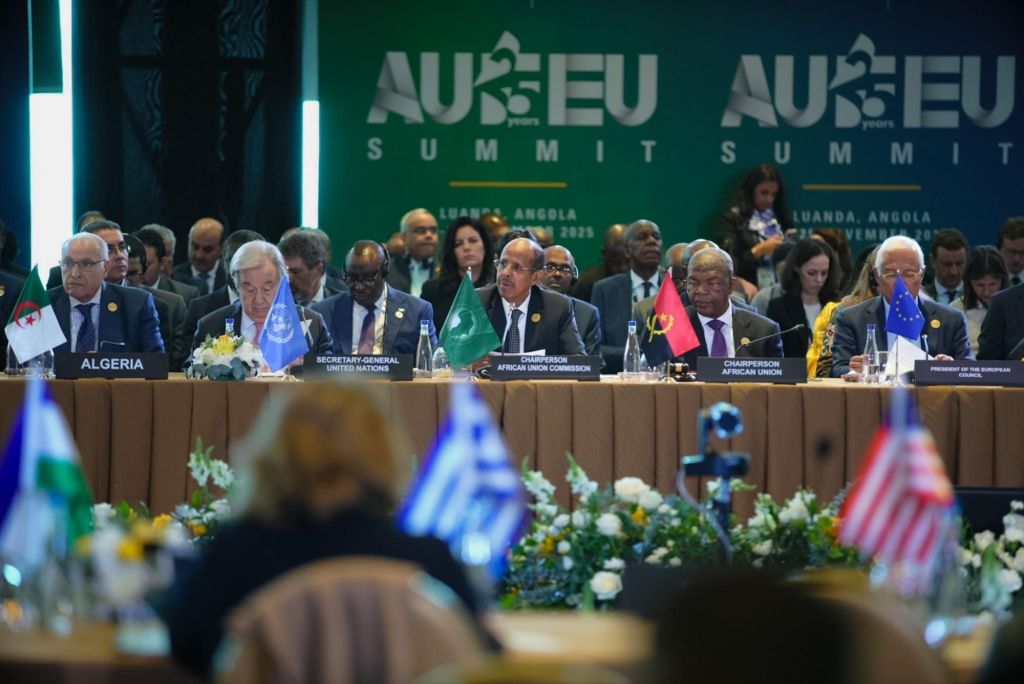
Whenever global leaders gather at grand summits—whether it is the G20 Leaders Summit hosted in South Africa or the AU-EU Summit held in Angola—we are repeatedly told that these engagements are anchored on “win-win relationships”.
To directly receive articles from Tendai Ruben Mbofana, please join his WhatsApp Channel on: https://whatsapp.com/channel/0029VaqprWCIyPtRnKpkHe08
It is a phrase thrown around so casually and confidently that one would be forgiven for thinking that both sides walk away with equal gains, equal power, and equal benefit.
Yet in practice, what the developed world calls a “win” is almost never what developing nations consider a “win”.
The divergence is not just wide; it is fundamental.
And unless Africa unites around a shared vision and common negotiating power, the rhetoric of “win-win cooperation” will remain nothing more than a polite diplomatic illusion masking deeply unequal partnerships.
For major powers such as the EU, the UK, the United States, and increasingly China, a “win” in global geopolitics and trade is ultimately about securing continued access to resources, markets, and political influence.
These countries measure success by strategic leverage—ensuring their industries are fed, their economies remain dominant, and their geopolitical footprints continue expanding.
Their priority is maintaining supply chains for critical minerals, securing lucrative investment conditions, and shaping global rules in ways that protect their interests.
This is not malicious; it is simply how global powers operate.
They protect themselves.
But when African leaders speak of “win-win” arrangements, they are often referring to completely different outcomes—value addition at source, technology transfer, fairer pricing, industrialization, decent jobs, sustainable mining, and a shift from raw resource extraction to empowering African economies with real downstream benefits.
These are aspirations rooted in a desire to escape the colonial pattern where Africa provides raw materials and the rest of the world reaps the real profits by processing and manufacturing finished products.
Yet these developmental objectives rarely align with what powerful nations consider a “win”.
And nowhere is this contradiction more obvious than in the global scramble for Africa’s minerals.
Take the example of lithium, now a cornerstone of the green energy transition.
African governments speak passionately about beneficiating lithium at source—processing it locally instead of exporting raw ore.
This is what African leaders consider a “win”.
But do the Chinese, for example, genuinely see local beneficiation as being in their interest?
Absolutely not.
For them, a “win” is securing raw ore as cheaply and easily as possible, shipping it to China, and processing it within their industrial ecosystem where the real value and profits lie.
The same is true for the EU and the US: their car manufacturers, battery producers, and renewable-energy industries depend on uninterrupted flows of critical minerals extracted in Africa but processed abroad.
This fundamental mismatch is why Africa repeatedly gets the short end of the stick even as leaders smile for cameras and issue glowing communiqués full of nice phrases about cooperation, mutual benefit, and partnership.
It is all talk and no action.
Zimbabwe’s lithium sector is a painful example.
The government banned raw lithium exports in 2022 and, in June 2025, announced that the ban would be extended to all lithium concentrates from January 2027.
On paper, this sounds like a bold step toward beneficiation and national development.
But on the ground, it is an open secret that Chinese companies continue exporting raw lithium with impunity—and will almost certainly keep exporting concentrates after 2027.
Why?
Because it is what they consider a “win”.
And Zimbabwe, weakened by corruption, desperation for investment, and a leadership terrified of upsetting its foreign benefactors, does nothing meaningful to enforce the ban.
This is not a uniquely Zimbabwean problem.
It is a continental one.
Africa has failed to develop a unified stance on mineral governance, investment terms, or beneficiation demands.
Countries compete against each other, offering sweetheart deals to foreign investors in the hope of attracting capital.
Multinational corporations exploit this fragmentation by playing African countries against one another.
Without unity of purpose, no African nation has the leverage to enforce a true “win-win” relationship with any global power.
The question then becomes: Why is Africa, with all its vast mineral wealth, still weak, pliable, and easily manipulated?
Why does a continent that supplies the world with cobalt, lithium, platinum, manganese, gold, diamonds, rare earths, and massive agricultural potential remain trapped in poverty and exploitation decades after independence?
Part of the answer lies in the desperation for investment.
African governments, constrained by limited capital, high debt, and weak industrial capacity, often accept lopsided deals simply to keep their economies afloat.
Anything—no matter how exploitative—gets labeled “investment”.
Even deals that displace communities, destroy rivers, or poison farmlands are presented as economic opportunities.
Leaders cling to foreign investors because they cannot envision alternatives.
But the larger, more troubling part is the greed of Africa’s own leadership.
Too many African leaders and senior officials negotiate deals not in the interest of their people but in pursuit of personal gain.
Shares are secretly allocated.
Kickbacks quietly exchanged.
Mining rights awarded under murky conditions.
This personal enrichment is why foreign companies feel emboldened to behave recklessly.
It explains why communities in Marange remain impoverished despite billions in diamonds being looted.
In Redcliff, we are witnessing the same tragedy unfolding as an entire mountain beside Cactus Dam is being torn apart, risking the flow of poisonous chemicals and silt into the water body while nearby houses crack from the blasting — yet no authority intervenes.
It explains why Chinese miners in Zimbabwe are allowed to operate with shocking impunity—displacing villagers, violating labor laws, polluting rivers, and intimidating workers.
They know political protection is guaranteed.
As long as Africa is divided and governed by leaders willing to mortgage national interests for personal benefit, global powers will never take the continent seriously.
There will never be sincere negotiations, fair terms, or genuine partnerships.
There will only be the relationship between a horse and its rider—Africa providing the muscle, the minerals, the labor, while others control the reins and determine the direction.
So when world leaders meet at summits and promise a new era of equal partnership, should Africans take them seriously?
Not unless Africa becomes serious about itself.
Not unless African nations unite to define clear, enforceable continental rules for mineral extraction and beneficiation.
Not unless Africa negotiates collectively rather than individually.
And certainly not unless Africans replace leaders who serve foreign interests at the expense of their own people.
A true “win-win relationship” is possible—but only if Africa first wins back its unity, dignity, and agency.
Without that, it will remain an illusion crafted for diplomatic speeches while the real wins continue flowing to powerful nations.
 TENDAI RUBEN MBOFANA - THE UN-OPPRESSED MIND!