The G20 was created to be a bridge between the world’s richest economies and the rising powers shaping the 21st century.
Yet with every summit, a troubling question resurfaces: how can a platform that includes the seven wealthiest nations on earth—countries with deeply entrenched geopolitical and economic interests—produce sincere, actionable commitments when those same interests often contradict those of emerging and developing economies?
To directly receive articles from Tendai Ruben Mbofana, please join his WhatsApp Channel on: https://whatsapp.com/channel/0029VaqprWCIyPtRnKpkHe08
The presence of G7 members within the G20 may give the grouping legitimacy, but it also weakens its ability to deliver meaningful outcomes.
Too often, G20 declarations end up vague, non-binding, and quietly abandoned because the richest members agree to them for optics, not implementation.
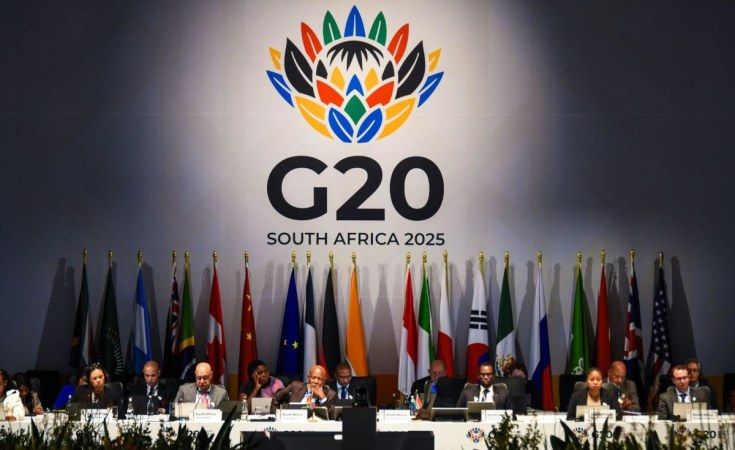
This is the uncomfortable truth that shadows every G20 communiqué, including the recent summit held in South Africa.
The G20 Leaders’ Declaration acknowledges the challenges facing developing economies, noting that “a high level of debt is one of the obstacles to inclusive growth” and pledging to “support efforts by low- and middle-income countries … in an effective, comprehensive and systematic manner.”
Yet much of this remains voluntary, non-binding, and framed to avoid disrupting the interests of wealthier nations.
President Cyril Ramaphosa worked tirelessly to place Africa’s priorities at the centre: reforming global financial institutions, securing climate financing, expanding infrastructure support, and pushing for fairer global trade.
He also highlighted the need to ensure that “critical mineral resources become a driver of prosperity … through beneficiation at the place of extraction.”
His message was clear—Africa can no longer be a peripheral observer but must be an active participant in shaping global economic rules.
Yet even as Ramaphosa championed African interests with clarity and conviction, the structural limitations of the G20 came into full view.
The G7’s dominance ensures that agreements remain carefully worded compromises designed to avoid disrupting the global power balance.
The contradictions start with climate commitments.
G7 nations regularly call for ambitious carbon reduction targets, yet continue financing fossil fuel projects, protecting carbon-intensive industries, and imposing environmental standards that place disproportionate burdens on poorer economies.
During G20 negotiations, these very countries endorse climate language that sounds progressive but stops short of binding commitments.
The Johannesburg declaration calls for “climate finance to be scaled up rapidly and substantially … from all sources,” yet avoids mandatory mechanisms to ensure delivery.
Their underlying interests do not change; only the phrasing does.
That is why developing countries repeatedly leave these summits with promises of climate financing that are chronically underfunded, delayed, or tied to restrictive conditions.
The much-publicised $100 billion climate finance pledge—first promised in 2009 and repeatedly reaffirmed in subsequent G20 and G7 meetings—still has not fully materialised in any meaningful form.
This gap is not accidental; it reflects a lack of genuine intention.
The same pattern recurs on debt relief and restructuring.
Many emerging economies continue to suffocate under unsustainable debt burdens, made worse by rising interest rates in Western financial markets.
African countries spend more on debt servicing than on health or education.
Ramaphosa and other leaders called for comprehensive debt restructuring mechanisms that are fair, swift, and development-oriented.
But the G7 members, who dominate global financial architecture, resist any reforms that might reduce their leverage over debtor nations.
Instead, G20 declarations offer soft language encouraging “collaboration” and “innovative financing instruments”—phrases that sound hopeful yet avoid addressing the real obstacles.
Progress on debt relief remains painfully slow because the countries with the greatest power to change the system are also the ones who benefit most from its current structure.
This imbalance extends to the governance of global institutions.
Emerging economies have demanded long-overdue reforms of the IMF and World Bank, both of which still reflect the post-World War II power distribution rather than today’s realities.
Africa, home to 1.3 billion people, still lacks permanent representation at the UN Security Council.
Major African economies hold negligible voting rights at the IMF, where the United States effectively retains veto power.
Ramaphosa highlighted these inequities in South Africa’s G20 presidency, but here too the entrenched interests of wealthier nations prevailed.
The G20 acknowledged the need for reform, but—as usual—without concrete timelines or commitments.
Another area where G7 interests dilute G20 sincerity is global taxation.
Efforts to coordinate a global minimum tax and crack down on illicit financial flows have stalled because they threaten the financial systems of rich countries that host multinational headquarters and tax havens.
Billions of dollars that could fund development in Africa, Asia, and Latin America continue to flow out through profit shifting and base erosion.
The G20 endorses tax reform in principle, but the language remains broad because binding commitments would undermine the advantages enjoyed by the wealthiest member states.
All of this exposes the fundamental contradiction within the G20: it tries to act as a collective decision-maker while housing members whose interests diverge sharply.
The G7 states that sit within the G20 agree to many proposals not because they intend to follow through, but because global image-management requires consensus.
The priority is to present a “successful summit,” not to bind themselves to obligations that conflict with domestic political calculations or economic priorities.
And so we end up with declarations that appear impressive on paper yet lack enforcement mechanisms, accountability timelines, or measurable targets.
President Ramaphosa’s determined effort to push Africa’s concerns onto the G20 agenda highlighted both the promise and the limits of this platform.
Africa’s voice was stronger, clearer, and more assertive than at any previous G20.
But diplomacy has its constraints: persuasion cannot overcome structural power imbalances.
The G20 cannot fully address global inequality when those who benefit most from that inequality hold decisive influence over the group’s direction.
This is why many emerging economies are increasingly sceptical of the G20’s effectiveness.
The world does not need more symbolic agreements.
It needs climate financing that is delivered, debt that is restructured, financial institutions that are reformed, and global tax rules that stop leakage from poorer economies.
Yet the G20 continues to perform sincerity without ensuring substance.
The result is predictable: the country hosting the summit declares victory, the final communiqué expresses unity, and the world moves on until the next meeting—where the same contradictions resurface.
Until the G20 confronts the conflicting interests at its core, it will remain a platform heavy on rhetoric and light on implementation.
That is the reality behind the spectacle and symbolism.
 TENDAI RUBEN MBOFANA - THE UN-OPPRESSED MIND!