Some lies are so absurd that they don’t even survive a moment’s scrutiny.
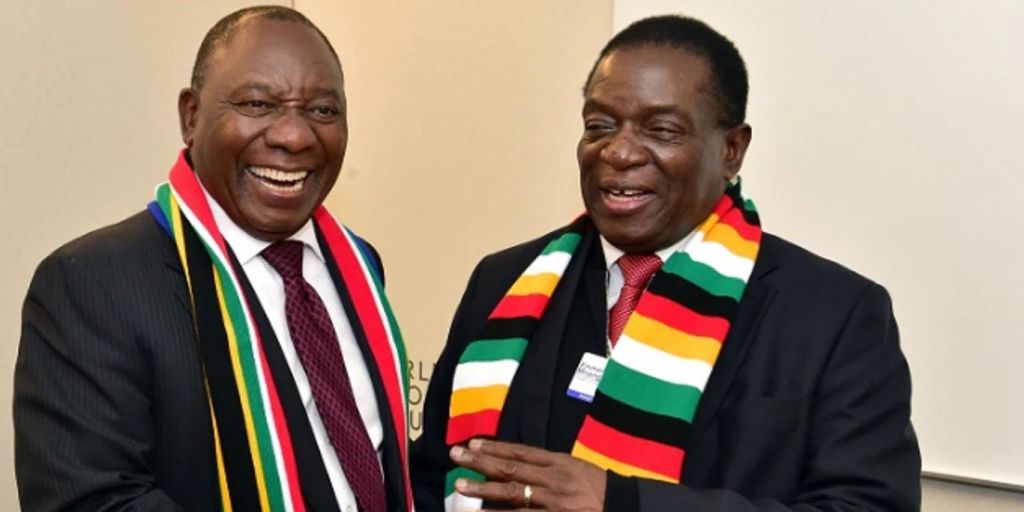
As I was watching, this morning, the official opening of the G20 Summit in South Africa—and reflecting on the run-up to this monumental gathering of the world’s largest economies—I could not help but notice the glaring differences in political maturity between South Africa and Zimbabwe.
To directly receive articles from Tendai Ruben Mbofana, please join his WhatsApp Channel on: https://whatsapp.com/channel/0029VaqprWCIyPtRnKpkHe08
When Zimbabwe hosted the SADC Summit last year and assumed its chairmanship, the propaganda machinery in Harare went full throttle, treating a routine rotational event as if it were a divine endorsement of President Emmerson Mnangagwa’s leadership.
State media gushed with exaggerated praise, feverishly insisting that this somehow confirmed Mnangagwa as a “visionary and astute leader” whose governance had supposedly elevated Zimbabwe to regional greatness.
Yet, in the year-long preparations for South Africa’s hosting of the G20 Summit—an event drawing world leaders from as far as France, Brazil, China, Germany, Australia, India, Saudi Arabia, and many others—not once did South Africans portray this as a personal triumph for President Cyril Ramaphosa.
Not once did they suggest that hosting the world’s most powerful economies was a stamp of approval for Ramaphosa’s greatness.
The South African government focused on logistics, diplomacy, and substance, not on elevating the president’s ego.
Their media did not flood citizens with songs of praise portraying Ramaphosa as a global messiah singled out for his brilliance.
They treated it as what it is: a national responsibility, not a personal endorsement.
Compare that with Zimbabwe’s reaction to a simple SADC Summit—an event attended mainly by neighbouring leaders, guided entirely by a rotation system, and hardly a remarkable feat on the global stage.
The level of self-congratulation, exaggeration, and political insecurity was astonishing.
It was as though Zimbabwe had hosted the G20, the UN General Assembly, and the World Economic Forum all at once.
But the truth is much simpler and far more embarrassing: the SADC chair rotates.
It has nothing to do with the leader’s governance, achievements, popularity, or competence.
It is your turn, you host.
That is all.
If hosting or chairing such summits were proof of exceptional leadership, then what would we say about President Ramaphosa?
Under his tenure, South Africa has hosted not just regional meetings but genuine world summits.
In 2018, it hosted the 10th BRICS Summit.
In 2023, it hosted the 15th BRICS Summit, attended by leaders from across entire continents.
In March 2025, it hosted the EU–South Africa Summit in Cape Town.
And now, it has just opened the G20 Summit—the most significant global economic forum after the United Nations.
If Zimbabwean propaganda logic were applied, Ramaphosa should now be hailed as the greatest African leader of the modern era.
But South Africans do not subscribe to such childish logic.
They understand that hosting a summit is not an accolade.
They know it does not turn a bad leader into a good one—or a good leader into a saint.
They know that summits, even global ones, are not measures of governance, prosperity, or national achievement.
And they certainly do not use them to manipulate public opinion or mask domestic failures.
In Zimbabwe, however, the regime desperately clings to anything that might paint Mnangagwa in a positive light.
It does not matter how hollow the symbolism is; the propaganda machine will inflate it, decorate it, and parade it as evidence of greatness.
But that only exposes the regime’s insecurity.
A confident government does not need to trumpet a rotational chairmanship as though it were a Nobel Prize.
If leadership positions in regional or global bodies were based on merit, Zimbabwe under Mnangagwa would not even make the longlist.
How does a country where over 80 percent of the population lives below the poverty datum line become a regional beacon?
How does a nation with unemployment estimated at around 90 percent become a model for others?
How does a government presiding over collapsing public hospitals—where patients die from lack of essential drugs, equipment, and basic care—claim to be a continental leader?
How does a country where some towns have gone for years without running water, and where electricity outages last up to 16 hours a day, pretend to be a shining example of progress?
These are not signs of leadership or national success.
They are signs of a nation gasping for survival.
If leadership roles in SADC, the AU, COMESA, or any international institution were awarded based on governance, human rights, economic performance, or the well-being of citizens, Zimbabwe would be permanently excluded.
No country with such levels of suffering, corruption, and institutional decay would be allowed to lead others.
But because these roles are rotational, not merit-based, Zimbabwe hosts summits regardless of its domestic collapse.
What is depressing is not the rotation—it is the deceit.
It is the audacity of presenting an automatic, scheduled event as a magical endorsement of Mnangagwa’s greatness.
It is the shameless attempt to convert procedural duties into national achievements.
It is the insulting suggestion that hosting a meeting is somehow equivalent to delivering development.
Zimbabweans do not need summits to validate their leaders.
They need working hospitals, clean water, electricity, jobs, and dignity.
They need a government that delivers real improvements in their daily lives.
When a nation is truly progressing, citizens feel it without being told.
They see it in their livelihoods, in their neighbourhoods, in their incomes, and in their future prospects.
Real development advertises itself—it does not require a propaganda blitz.
Soon, Zimbabwe will chair COMESA in 2026.
And predictably, the propaganda machinery will once again burst into celebrations, trying to spin rotational leadership into proof of Mnangagwa’s genius.
But this must be exposed for what it is: desperation.
A regime that has failed its people must cling to anything, even the most meaningless symbolism, to project relevance.
But leadership is not measured in summits hosted or chairs rotated.
Leadership is measured in the lived reality of the people.
Hosting COMESA, SADC, or any international gathering does not fill empty stomachs, fix broken hospitals, resuscitate industries, or restore the dignity of millions struggling in poverty.
Zimbabwe needs genuine leadership, not ceremonial chairmanships dressed up as national victories.
And until we recognise that truth, our leaders will continue hiding behind summits while the nation sinks deeper into hardship.
 TENDAI RUBEN MBOFANA - THE UN-OPPRESSED MIND!