The theories have been swirling, and I couldn’t resist adding my own.
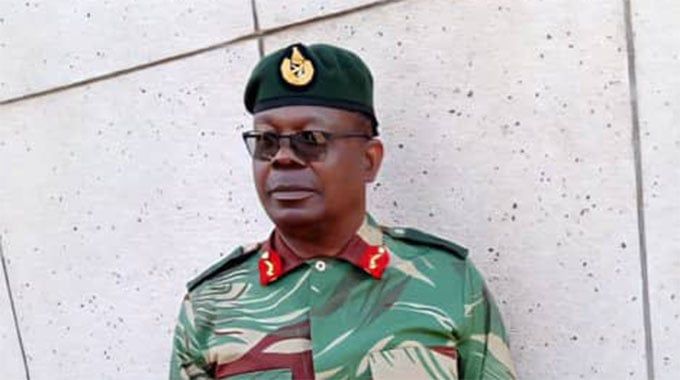
The appointment of former Major General, now Lieutenant General, Walter Tapfumanei as the new Commander of the Zimbabwe National Army (ZNA) has ignited a fresh round of political analysis.
To directly receive articles from Tendai Ruben Mbofana, please join his WhatsApp Channel on: https://whatsapp.com/channel/0029VaqprWCIyPtRnKpkHe08
He steps Into the role vacated by General Emmanuel Matutu, who at seventy-three years old has been elevated to lead the Zimbabwe Defence Forces, replacing General Phillip Valerio Sibanda after his retirement.
As always in Zimbabwean politics, the question is not simply about military reshuffles.
It is about power – who wields it, who fears losing it, and who is preparing for the next confrontation in the long and often treacherous contest for control of the state.
Many observers quickly concluded that President Emmerson Mnangagwa had just pulled off a strategic masterstroke, a decisive move to “coup-proof” himself by placing a trusted ally at the top of the army.
Under this interpretation, the promotion of Tapfumanei, long associated with intelligence work and reportedly central to the controversial FAZ machinery in the 2023 elections, was a calculated effort to break any lingering perception of military sympathy towards Vice President Constantino Chiwenga.
For years, Chiwenga has been rumoured to harbour presidential ambitions, and he is widely believed to retain significant influence within sections of the military that he once commanded.
To some analysts, therefore, Mnangagwa’s reshuffle – which also shifts Tapfumanei back into the military structure where he could soon be promoted further to ZDF Commander – was a bold checkmate.
But such conclusions, although tempting, fail to grasp the deeper lessons of Zimbabwe’s political past.
Anyone who imagines that placing allies at the top of the army constitutes genuine coup-proofing is being dangerously naïve.
Zimbabwe’s political history, like much of Africa’s, has repeatedly proven that there are no permanent friends or permanent enemies in politics – only permanent interests.
This is a lesson Robert Mugabe learnt too late.
For decades, he surrounded himself with people he believed were loyal, among them Mnangagwa himself.
He brushed aside warnings from Professor Jonathan Moyo — including the explosive 2017 “Blue Ocean” presentation that laid out evidence of a looming military takeover — yet those long-trusted comrades were indeed plotting to remove him.
Mugabe dismissed the caution as another attempt by a “Mafikizolo” to sow division.
Yet not long afterwards, it was precisely those supposed allies – Mnangagwa and the military brass – who toppled him from power in the November 2017 coup.
Even during the peak of factional battles between Grace Mugabe’s G40 and the Lacoste faction aligned with Mnangagwa, Chiwenga was widely perceived as loyal to Mugabe, right until the moment he was not.
Loyalty in Zimbabwean politics is always conditional, provisional, and subject to the shifting winds of personal survival.
It is therefore politically short-sighted to believe that Mnangagwa has secured himself merely by putting Tapfumanei at the apex of the army.
Tapfumanei’s closeness to Mnangagwa today does not guarantee an alliance tomorrow.
Those entrusted with military or political power often re-align themselves the moment they perceive better opportunities or greater security on the other side.
The same generals who had protected Mugabe for decades abandoned him the moment they believed their futures were safer under Mnangagwa — or under threat from Grace Mugabe, who was widely seen as being positioned to take over after Mnangagwa’s sacking just weeks earlier.
Why would today’s generals be any different?
Zimbabwe’s political landscape remains highly unpredictable.
The idea of coup-proofing through promotions and appointments assumes a level of loyalty that history consistently shows does not exist.
There is also a fundamental flaw in the popular assumption that any possible future coup in Zimbabwe would resemble the 2017 takeover.
That event was driven by elite power struggles – a battle among the political aristocracy over succession.
It was not a revolt born of popular suffering or national frustration.
It was an internal rearrangement of the ruling class.
Because of that, it was led by well-fed, well-connected, and well-resourced generals who were fighting for control of the feeding trough, not for the ordinary citizen.
This brings us to an often-overlooked reality.
Across Africa, most coups have been carried out not by the top brass, but by middle-ranking and junior officers – the very people who live much closer to the hardships faced by the general population.
Captain Ibrahim Traoré of Burkina Faso, who rose from a relatively modest rank to seize power, did so not because he belonged to the entrenched elite, but because he was responding to widespread national anger.
In Mali, Captain Amadou Sanogo — another junior officer — toppled President Amadou Toumani Touré in 2012, proving that coups often originate from frustrated officers closer to the people’s lived realities than the top brass.
In Burkina Faso, Captain Thomas Sankara seized power in 1983 not as part of the entrenched elite, but as a junior officer responding to widespread frustration with the ruling class, demonstrating again that coups often emerge from mid- or lower-ranking officers rather than pampered generals.
In Madagascar, Colonel Michael Randrianirina recently took over power, again demonstrating that coups often emerge from officers who are not insulated by the privileges enjoyed by generals.
These are individuals whose lives mirror the frustrations of ordinary citizens and who are not beneficiaries of the patronage networks that keep senior officers comfortable.
The assumption that Zimbabwe can be coup-proofed by promoting certain generals misunderstands how coups typically unfold.
If any future insurrection were to arise in Zimbabwe because of the worsening socio-economic suffering of the people, it is improbable that it would be led by those who live in luxury, enjoy government patronage, and have every incentive to maintain the status quo.
The generals may fight for their own political survival or for access to state resources, but they would not rise on behalf of an oppressed population.
Any uprising driven by public suffering would more likely emerge from lower and middle-ranking officers whose interests align more closely with the grievances of the nation.
In such a scenario, reshuffling a few generals would offer no protection whatsoever.
Mnangagwa’s reshuffle therefore does not represent a masterstroke.
It is a familiar political manoeuvre – the attempt of an embattled leader to surround himself with those he believes he can trust.
But trust in Zimbabwean politics has always been transactional and temporary.
Mugabe miscalculated by relying on people he thought were loyal, and Mnangagwa may be repeating the same mistake.
Political power in Zimbabwe shifts according to where interests converge, not according to where appointments are made.
Tapfumanei’s elevation may help Mnangagwa today.
But tomorrow, as history has shown time and again, the very people he positions as allies could be the ones who decide it is time for him to go.
I offer this not as fact, but as my own opinion on the current developments in Zimbabwe.
 TENDAI RUBEN MBOFANA - THE UN-OPPRESSED MIND!