True leadership is measured by lasting legacies, not by fleeting bursts of manufactured glory.
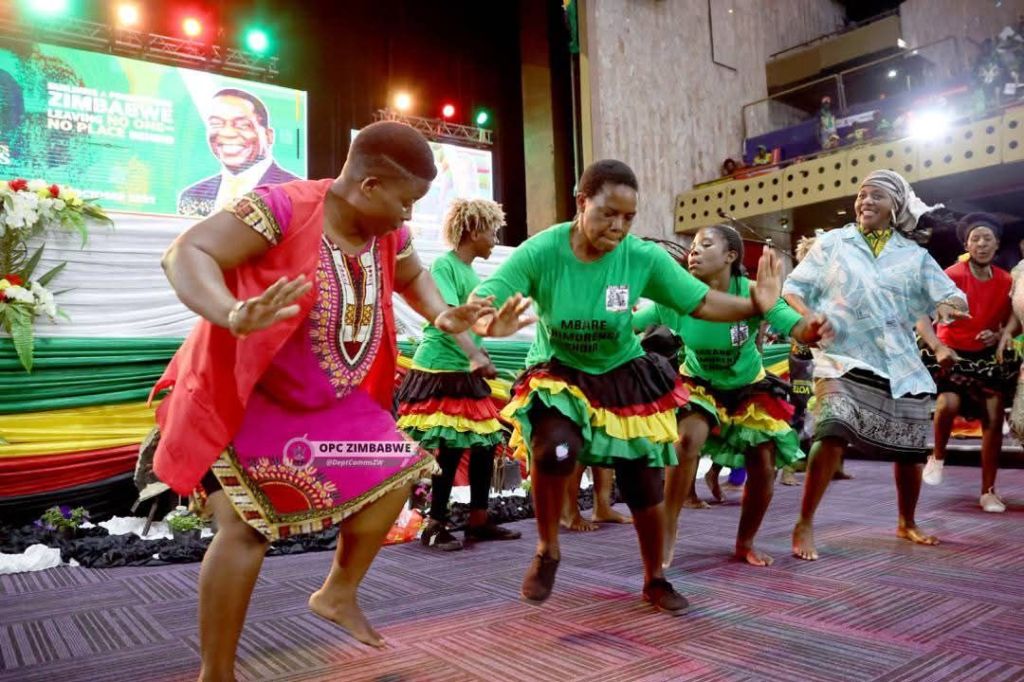
I was watching Zimbabwe Broadcasting Corporation (ZBC) this evening when one of the usual ruling party praise songs came on — the kind belted out by the ZANU-PF women’s choirs with such theatrical passion that one would think they were singing hymns of national salvation.
To directly receive articles from Tendai Ruben Mbofana, please join his WhatsApp Channel on: https://whatsapp.com/channel/0029VaqprWCIyPtRnKpkHe08
Over the past year alone, the state broadcaster has repeatedly churned out songs glorifying President Emmerson Mnangagwa for supposedly being “elected” SADC chairman — as if this were some heroic personal triumph — for his so-called “exceptional leadership”, for his alleged successes in international relations, and now even for his farming “prowess”.
Each time these songs play, I cannot help but smile.
Not out of agreement, but out of sheer disbelief at the absurdity of the entire spectacle.
The most striking thing is how temporary, how fleeting, how utterly unlasting this glorification of leaders is in Zimbabwe.
If someone unfamiliar with the country were to switch on ZBC for the first time, they might assume President Mnangagwa is a beloved national icon whose legacy has already been carved into the country’s eternal memory — a leader destined to be revered across generations.
But nothing could be further from the truth.
In Zimbabwe, political praise is as ephemeral as water vapour.
It appears with fanfare, fills the state media like a fog, and then disappears without a trace the moment the political winds shift.
We have seen it all before.
The fawning did not begin with Mnangagwa.
For 37 years under Robert Gabriel Mugabe, the nation was subjected to a similar parade of sycophantic songs and slogans, all portraying him as a liberator, a fearless Pan-Africanist, a visionary, a darling of the people.
Choirs sang about him, schoolchildren chanted his name, and party regalia emblazoned his face as though he were a demi-god whose presence would dominate Zimbabwe’s political memory forever.
Yet, the moment he was toppled by his own protégé — with the direct assistance of the military — in November 2017, Mugabe was erased almost overnight.
The songs stopped.
His face on party clothing disappeared.
His name vanished from speeches.
He was never again acknowledged as Zimbabwe’s “founding president”.
Even the public holiday established in his honour, February 21st, passes each year without a single official mention.
No recognition from those who once professed undying loyalty.
In South Africa, decades after his passing, Nelson Mandela remains revered with almost spiritual devotion.
In Zimbabwe, Mugabe — after ruling for nearly four decades — became a nobody the moment he fell from political grace.
This is what makes today’s praise songs feel so hollow and so ridiculous.
Watching the ZANU-PF Chimurenga Choir performing on ZBC this evening, I could not stop myself from wondering: what happens the day Mnangagwa is no longer president?
Will all these songs be thrown into the dustbin?
Will he, too, be forgotten as though he never existed — even by his own party?
Will all the exaltations of “visionary leader”, “outstanding farmer”, “God’s anointed one” evaporate in a single night?
If history is any guide, the answer is yes.
There is a reason Zimbabwean leaders rise to power surrounded by praise and yet leave office abandoned, uncelebrated, and unremembered.
The problem lies in the nature of political legitimacy in Zimbabwe.
Since independence, leaders have ruled not through genuine approval or popular loyalty but through coercion, intimidation, and manipulated elections.
Mugabe stayed in power for 37 years largely because violence, fear, and rigging made it possible.
And when he finally fell, it was through a coup — not through the democratic will of the people.
Mnangagwa’s own ascent followed a similar logic.
He did not rise on the wave of national affection; he was ushered in by the military and then preserved his hold on power through highly disputed elections.
Neither he nor Mugabe ever truly endeared themselves to the citizenry in a sincere or lasting way.
What then produces all this singing, dancing, chanting, and glorifying?
Survival.
Poverty.
Desperation.
Zimbabwe is a country where over 90 percent of citizens are outside formal employment and where more than 80 percent live in poverty.
In such conditions, singing praise songs becomes a livelihood strategy, a way to secure handouts, transport money, food hampers, or a place in the long queue of political patronage.
The praise is transactional, not affectionate.
It is performed, not believed.
Those singing often do not mean a word of it.
Ordinary Zimbabweans know exactly who has authored their misery.
That is why, when the moment comes for a leader’s fall, the people abandon them without hesitation.
On 17 November 2017, when the military moved against Mugabe, thousands poured into the streets of Harare to celebrate his anticipated departure.
People who had lived under him for decades erupted into cheers, dancing, and jubilation.
Not a single soul attempted to defend him.
Not one.
The Mbare Chimurenga Choir women who once sang for him were nowhere to be seen.
The cadres who claimed they would die for him did not utter a word in his favour.
And so I reflect again: What will be different when Mnangagwa leaves power — whether by retirement, or internal party machinations, or death?
Will he not be forgotten just as swiftly as Mugabe was?
Will the songs not cease immediately?
Will his face not be removed from regalia, replaced by that of the next political favourite?
Will the hearty praises not be redirected towards whoever occupies the throne next?
Zimbabwe desperately needs leaders who transform the lives of ordinary people — leaders whose legitimacy is grounded in real progress, real development, and real dignity for citizens.
Only such leaders are remembered lovingly long after leaving office.
True affection cannot be choreographed through state media.
Genuine respect cannot be manufactured through choirs.
A legacy cannot be built on propaganda and poverty.
Imagine a Zimbabwe where leaders uplift citizens from poverty, restore dignity, create jobs, and strengthen institutions.
In such a country, even when that leader steps away from office, the people will continue praising him — spontaneously, sincerely, without coercion.
Even if the new government tried to suppress that admiration, the people would still honour the leader on social media, in buses, at community gatherings, and in the quiet conversations of everyday life.
But today, in a country where even the man who led us into independence is almost never spoken of, what hope is there that Mnangagwa will be remembered any differently?
In Zimbabwe, leaders are glorified today and forgotten tomorrow — because the praise is not rooted in love but in survival.
And until we have leaders who genuinely serve the people, the cycle will continue: loud songs, loud praise, loud propaganda — and then, sudden, deafening silence.
 TENDAI RUBEN MBOFANA - THE UN-OPPRESSED MIND!