There are moments when even those in power need to be reminded and enlightened.
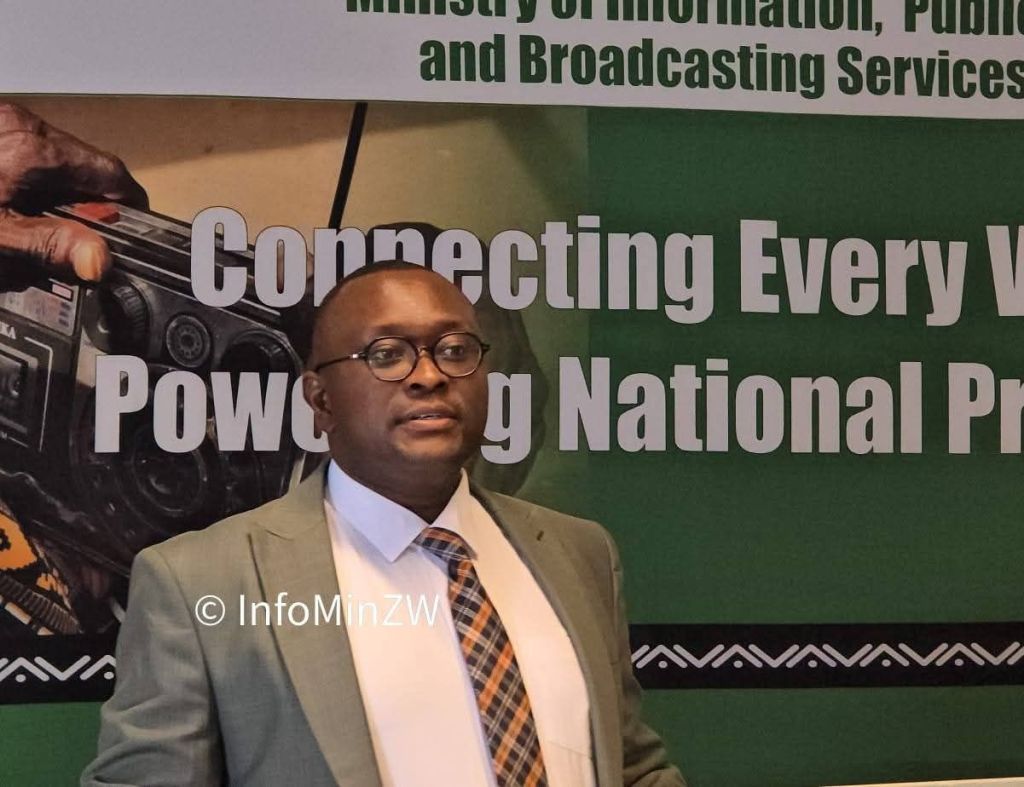
Development journalism has increasingly become a fashionable term in Zimbabwean government circles, repeated with almost religious fervour by senior officials, particularly ministers of information.
To directly receive articles from Tendai Ruben Mbofana, please join his WhatsApp Channel on: https://whatsapp.com/channel/0029VaqprWCIyPtRnKpkHe08
Most recently, current Minister Jenfan Muswere has joined the familiar chorus, urging—and at times practically commanding—the media, both public and private, to “exercise development journalism.”
Yet, in the regime’s understanding, this concept has been twisted into a demand for blind loyalty: a requirement that reporters fix their gaze only on bridges being built, roads being patched, boreholes being drilled, and harvests being celebrated.
Critical questions about how these projects are funded, who benefited from tenders, and why the same roads need repairs every year are suddenly considered “counter-productive,” “unpatriotic,” or “tarnishing the image of the country.”
What Muswere and many in government deliberately ignore is that true development journalism, as originally conceived, is the very opposite of this sanitised, propagandistic version they are attempting to impose on the nation’s media.
Authentic development journalism has never been about massaging the ego of those in power or shielding them from scrutiny.
In fact, development journalism has its roots in the post-World War II era, particularly in newly independent nations across Asia, Africa, and Latin America.
It emerged as journalists recognized that meaningful national development required not only reporting achievements but also highlighting challenges, exposing corruption, and amplifying the voices of the marginalized.
Countries like India, Nigeria, and Ghana were early pioneers, using the press as a tool to guide public discourse, promote transparency, and mobilize citizens toward genuine socio-economic progress.
Its purpose is to illuminate issues of national development with clarity, depth, and honesty.
That requires exposing problems as much as it celebrates progress.
In fact, development journalism arose in the global South precisely because journalists recognised that meaningful national development cannot occur in an environment where corruption is concealed, where poor policy decisions go unquestioned, and where communities’ lived experiences are silenced.
Development journalism, at its core, is a commitment to telling the truth about why development succeeds or fails.
And this includes amplifying the voices of the poor, the marginalised, the rural, and the neglected—voices that are often drowned out in official government narratives that obsess only over ribbon cuttings and ground-breaking ceremonies.
In Muswere’s version, development journalism is expected to cheerlead government actions, to applaud every pothole filled, and to focus only on the positive side of state projects.
But genuine development journalism also asks: how much did that bridge cost?
Was the tender awarded transparently?
Were local communities consulted?
Why was a contractor with no track record given a multi-million-dollar contract?
Why is a road, allegedly rehabilitated with taxpayers’ money, already crumbling?
Who is benefiting from “national development” and who is being left behind?
These questions are not anti-development—they are the foundation of ensuring development actually happens.
The irony is that by demanding uncritical coverage, Muswere undermines the very development he claims to champion.
A country cannot develop sustainably when corruption thrives unchecked, when accountability is demonised, and when the media is reduced to a public relations department for the ruling elite.
Development is not simply the construction of physical infrastructure; it is the establishment of systems that ensure those projects are durable, equitable, and economically sound.
That means monitoring resource allocation, transparency in procurement, fairness in public spending, and the efficient use of national resources.
It means identifying flaws in government programmes so they can be corrected before further harm is done.
This is the journalism that builds nations—not one that hides the rot under the carpet.
The government’s discomfort with scrutiny betrays a deeper insecurity: that many state projects cannot withstand the light of serious inquiry.
This is precisely why genuine development journalism is indispensable.
It protects national resources from abuse.
It gives citizens the information they need to demand quality services.
It exposes inefficiencies so they can be fixed.
It holds leaders to the standards they themselves claim to uphold.
Development journalism is not about singing praises; it is about ensuring that development is real, inclusive, and sustainable.
If Muswere truly wants development journalism, then he should welcome tough questions, investigative reports, and critical evaluations of government programmes.
He should encourage journalists to interrogate public budgets, follow the money, and expose corruption wherever it occurs.
He should applaud newspapers that dig into how Cyclone Idai funds were misused, how gold smuggling syndicates drain the nation’s wealth, or how local authorities misuse devolution allocations.
He should equally welcome investigations into why the Trabablas Traffic Interchange cost far more than initially announced and how tenders were quietly awarded to politically connected contractors.
The same applies to scrutiny of the opaque deals the government has signed with Chinese investors in Zimbabwe.
He should understand that accountability is not hostility; it is a patriotic duty in any democratic society.
Zimbabwe’s media has a responsibility to the people, not to the political elite.
True development journalism serves the public interest by helping a nation confront its shortcomings honestly.
It is through transparency, accountability, and open debate that countries progress—not through choreographed praise-singing.
If the minister wishes to preach development journalism, he must first understand it.
It is not about shielding the government from criticism; it is about ensuring that the government’s actions genuinely contribute to national development.
And that can only happen when the media is free to ask hard questions, expose wrongdoing, and ensure that every dollar meant for development truly benefits Zimbabweans.
 TENDAI RUBEN MBOFANA - THE UN-OPPRESSED MIND!