So, Zimbabwe is indeed a colony again!
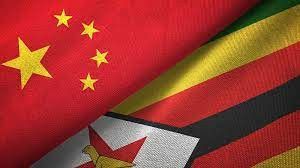
My heart broke this morning after receiving a message from a Zimbabwean worker employed by a Chinese-owned mining company in Zvishavane.
To directly receive articles from Tendai Ruben Mbofana, please join his WhatsApp Channel on: https://whatsapp.com/channel/0029VaqprWCIyPtRnKpkHe08
His story is one of pain, humiliation, and despair — a mirror reflecting the grim reality that many Zimbabweans endure at the hands of so-called “investors” who have turned our nation into a playground for exploitation.
For years, we have been told that Chinese investors are bringing “development” and “job creation” to Zimbabwe.
Our leaders never tire of boasting about these partnerships, painting them as a lifeline for our economy.
Yet, beneath this polished rhetoric lies a darker truth — one of abuse, servitude, and the slow erosion of human dignity.
The man who reached out to me began working at a chrome processing plant in Mhondongori last December.
He was initially employed as a security guard, working twelve-hour shifts with no off days — and if he dared to ask for one, his wages were cut as punishment.
Without notice or consent, he was later reassigned to heavy manual labour in the plant, forced to handle toxic materials without protective clothing.
For months, he and his colleagues worked barefoot or in tattered shoes until, belatedly, they were issued a single pair of gumboots and a worksuit to share between shifts.
The conditions he described are chilling.
Workers have no written contracts.
They are forbidden to unionize or even to question management decisions.
They live in constant fear of being dismissed without pay or warning.
Salaries fluctuate unpredictably from month to month, sometimes as low as $140, and payments are often delayed.
The Chinese supervisors, he said, regularly slap, insult, or threaten workers.
Many employees, including himself, have contracted tuberculosis from prolonged exposure to dust and chemicals — yet those who reveal their illness risk being fired.
Even when he produced a medical certificate for three days of sick leave, his manager ordered him back to work immediately or face dismissal.
This is what passes for “employment” in Zimbabwe today.
This is what our government hails as “economic development.”
How can such cruelty coexist with the government’s claims of progress and prosperity?
What sort of development thrives on the suffering of its people?
When a man works twelve-hour days without rest, without safety, and without dignity — that is not employment.
That is modern-day slavery.
What is happening in Mhondongori is not an isolated case.
Across the country, from Hwange to Mutoko, from Mazowe to Marange, and even my hometown of Redcliff, Chinese companies have become synonymous with exploitation.
In mining areas, entire communities have been displaced from their ancestral lands without consultation or fair compensation.
Rivers are polluted, mountains are hollowed out, fields are destroyed, and forests are stripped bare — all in the name of “foreign investment.
Those who protest are often intimidated, silenced, or arrested.
The government’s silence on this widespread abuse is deafening.
Where are the ministries responsible for labour rights, environmental protection, and community welfare?
Where are the inspections, the enforcement, the justice?
Why do our authorities turn a blind eye while our people are treated like disposable tools in their own homeland?
The answer is painfully clear.
Our leaders have chosen allegiance to Beijing over accountability to their own citizens.
They have allowed the Chinese to operate with near-total impunity, shielded by political protection and economic dependence.
While workers are beaten, underpaid, and silenced, ministers line up to pose for photo-ops with Chinese executives, singing praises of “strategic partnerships” and “South-South cooperation.”
But there is nothing cooperative about a relationship in which one side bleeds and the other profits.
This is not partnership — it is plunder, sanctioned by the very people who should defend us.
The hypocrisy is staggering.
Zimbabwe, a nation that once fought a bitter war against colonial oppression, now finds itself in the grip of a new form of colonialism — one draped not in the Union Jack, but in the red flag of supposed friendship.
The difference is that this time, the oppressors are invited in and celebrated as saviours.
The exploitation of workers like the man from Mhondongori should shame us as a nation.
It exposes how little the lives of ordinary citizens mean to those in power.
When a government cannot ensure the safety and fair treatment of its people — when it cannot guarantee that an employee will not be slapped or insulted for doing his job — that government has failed in its most basic duty.
Zimbabwe does not need “investors” who treat our people as expendable labourers.
We need partners who respect our laws, our environment, and our humanity.
Development that destroys lives is not development; it is devastation.
Every ton of chrome or lithium exported under such conditions carries with it the suffering of our people.
Every shipment of minerals bound for China represents not just lost wealth, but lost dignity.
The hands that dig these riches are blistered, the lungs that breathe the dust are diseased, and the dreams of those who labour are crushed by the arrogance of those who exploit them.
This is not an attack on ordinary Chinese people, but on the system of exploitation that their companies, with government complicity, have entrenched in our land.
Friendship between nations must never be built on the suffering of one side.
It is time for Zimbabweans to speak out.
Workers must find their collective voice again, even in the face of fear.
Civil society must expose and document these abuses.
Parliament must summon and question those responsible for allowing such atrocities.
And the international community must hold both Zimbabwean and Chinese authorities accountable for labour violations and environmental crimes.
We cannot continue to pretend that this is progress.
It is regression — moral, economic, and human.
If the government of Zimbabwe truly believes in its people, then it must protect them.
If it truly values sovereignty, then it must defend its citizens from foreign exploitation.
The man from Mhondongori, and thousands like him across the country, deserve better than this cruel imitation of development.
True progress is not measured by the number of foreign investors we attract, but by the dignity and well-being of our people.
Until that becomes our guiding principle, Zimbabwe will remain a nation rich in minerals but poor in humanity.
 TENDAI RUBEN MBOFANA - THE UN-OPPRESSED MIND!