The fantasy never ends.
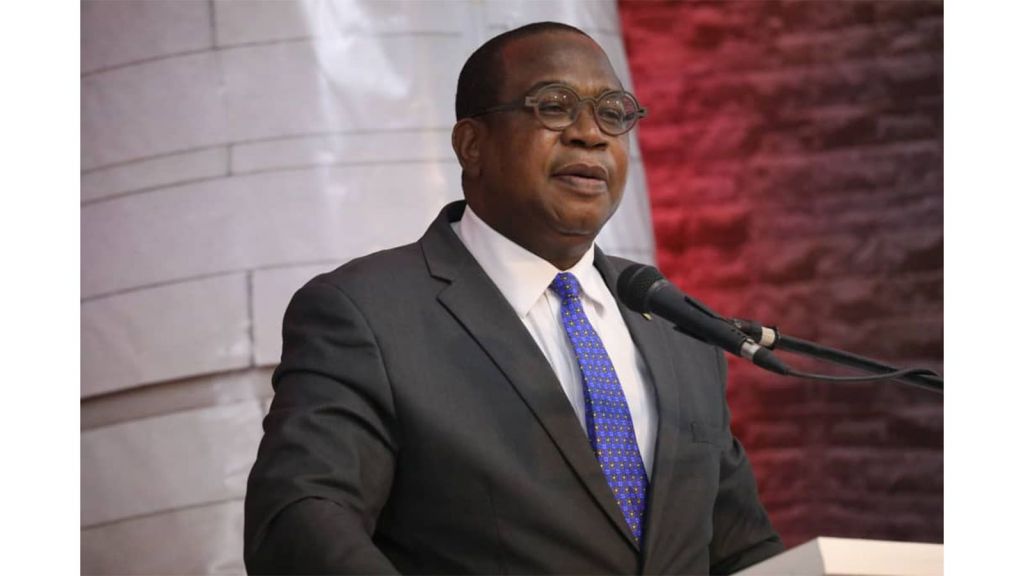
According to Finance Minister Mthuli Ncube, a significant number of Zimbabweans have now reached middle-income status, spending an average of US$9 per day.
To directly receive articles from Tendai Ruben Mbofana, please join his WhatsApp Channel on: https://whatsapp.com/channel/0029VaqprWCIyPtRnKpkHe08
He described this as a milestone, suggesting the country is firmly on course to achieving its Vision 2030 goal of attaining upper middle-income status.
The minister spoke proudly at the 2026 Pre-Budget Seminar in Bulawayo, citing growing economic stability, infrastructure investments, and statistical averages to justify his claim.
But for the ordinary Zimbabwean, the question is simple: if most people are now “middle-income,” why does life continue to be a daily struggle?
The answer is painfully obvious — nothing has changed.
The streets, homes, schools, and hospitals tell a story that no average can erase.
Averages are deceptive.
They are like saying a family of five has an average income of US$1,000 a month when the father earns US$950 and the rest of the family nothing at all.
On paper, the family looks comfortable, but in reality, four out of five members are penniless.
This is exactly what is happening in Zimbabwe.
A handful of politicians and business elites spend vast sums of money, inflating national statistics, while the majority of citizens earn meagre wages, rely on informal vending, or subsistence farming.
Middle-income status, according to the World Bank, refers to a country whose Gross National Income per capita lies between US$1,136 and US$4,465.
But what does this mean for ordinary Zimbabweans who earn less than US$250 per month?
What does it mean for teachers taking home less than US$150, nurses surviving on similar wages, or pensioners receiving just a few dollars from the National Social Security Authority?
The average may tick the boxes, but the lived reality of millions tells a completely different story.
The disconnect between statistical averages and everyday life is staggering.
In Zimbabwe’s towns and cities, power cuts lasting up to sixteen hours are normal.
Many urban communities, including parts of Bulawayo, Harare, and Redcliff, have gone years without running water.
In rural areas, families still draw drinking water from open wells and rivers shared with livestock.
Schools remain trapped in the colonial era, without electricity, textbooks, furniture, or laboratories, and thousands of children walk long distances just to learn under trees.
Hospitals that are supposed to serve citizens as a public good remain death traps where patients must bring their own gloves, bandages, and medicine.
Meanwhile, informal traders, who employ the majority of Zimbabweans, continue to operate under harassment, spot fines, and arbitrary levies, without any real government support.
Civil servants struggle to afford transport to work.
Families in towns rely on firewood for cooking, while rural clinics operate in darkness.
These are the real conditions of life for the people Ncube claims are now “middle-income.”
To put Zimbabwe’s statistical middle-income claim in perspective, consider countries that have genuinely achieved middle-income status.
Botswana, for example, has invested heavily in healthcare, education, and infrastructure.
Its average worker earns over US$800 per month, public hospitals are well-equipped, and electricity and water supply reach most households.
Mauritius provides free healthcare and education to all citizens, and its per capita income is over US$11,000.
Malaysia, which was at a similar development stage as Zimbabwe in the 1980s, now boasts modern infrastructure, a thriving industrial base, and a per capita income above US$12,000.
In these nations, being middle-income translates into tangible improvements in living standards for the majority.
In Zimbabwe, it remains only a number on a spreadsheet.
The danger of relying on averages is that it hides inequality.
When a few elites accumulate vast wealth through state contracts or private investments, national income statistics rise, but the majority see no benefit.
Claiming that most Zimbabweans are now middle-income because the average daily spending is US$9 is like saying one person eating a whole chicken while nine others go hungry means everyone has eaten a tenth of a chicken.
It is absurd, yet that is the logic behind the government’s narrative.
This statistical illusion also masks the fallacy of Vision 2030.
If the country is already “middle-income” on paper, what miracle is expected to happen by 2030 when Zimbabwe is supposedly projected to reach upper middle-income status?
Upper middle-income economies are defined by a GNI per capita of at least US$4,500.
Even if Zimbabwe reaches that threshold in the future, the key question remains: who will actually benefit?
Without structural reforms that address inequality, create jobs, improve public services, and strengthen social protection, “upper middle-income” will remain a hollow slogan.
Professor Ncube is correct that the economy has recorded growth, and statistical averages may show progress.
But growth on paper does not translate into better livelihoods for the poor.
Ordinary Zimbabweans continue to struggle for food, water, healthcare, electricity, and decent housing.
Development is not measured by GDP or GNI alone; it is measured by the quality of life of the people.
So yes, Zimbabwe may be “middle-income” on paper, according to averages.
But for the teacher walking to school under a tree, the nurse struggling to buy basic medicine, the vendor harassed in town, and the family living without water or electricity, nothing has changed.
The statistical claim is irrelevant when the reality of the majority remains daily struggle and deprivation.
Zimbabweans must now look beyond the averages and demand that development be measured not by graphs, figures, or global rankings, but by the dignity, security, and well-being of every citizen.
Until that happens, the rhetoric of “middle-income” — and the promised upper middle-income dream of 2030 — remains nothing more than an illusion.
 TENDAI RUBEN MBOFANA - THE UN-OPPRESSED MIND!