There is nothing more frightening than watching a nation slowly lose its soul.
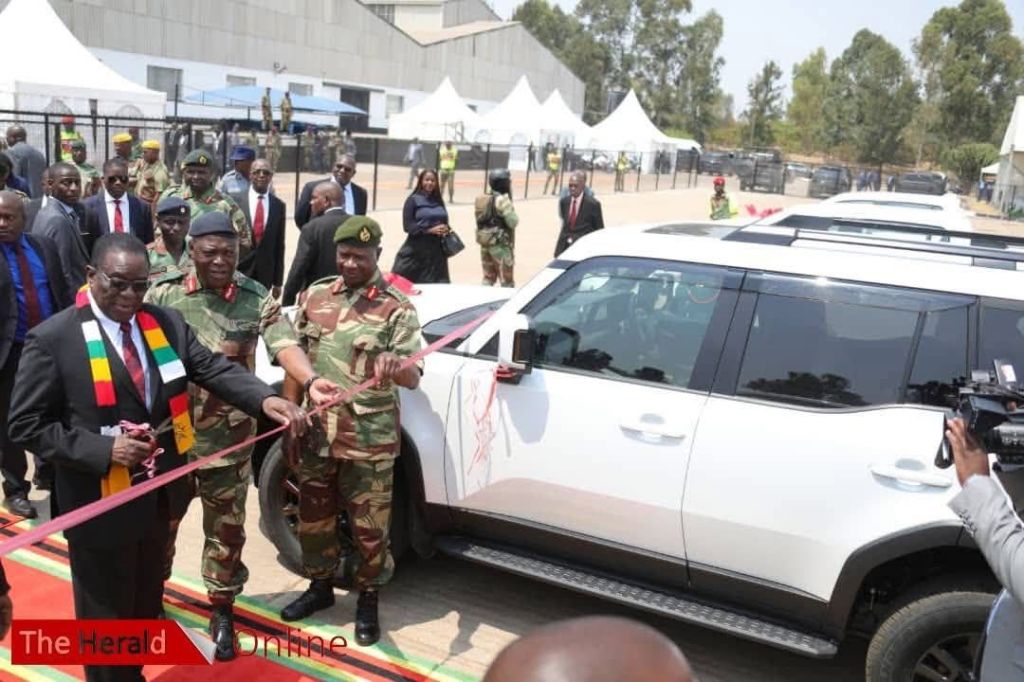
In Zimbabwe, the practice of particularly chosen individuals being rewarded with cars is nothing new.
To directly receive articles from Tendai Ruben Mbofana, please join his WhatsApp Channel on: https://whatsapp.com/channel/0029VaqprWCIyPtRnKpkHe08
In fact, it has now become something of an artform perfected by one Wicknell Chivayo — a convicted criminal who, through his proximity to power, has managed to make millions of dollars from multi-million-dollar public tenders.
Most of these tenders have been awarded outside proper legal procurement procedures, at hugely inflated costs, and in some cases, with no delivery of goods or services at all.
With these ill-gotten riches, Chivayo has made it a habit to dole out cars like confetti.
He has gifted celebrities, gospel musicians, church leaders, and prominent Mnangagwa praise-singers.
Recently, he even donated cars to the ten ZANU-PF provincial chairpersons.
Not to be outdone, another shadowy tenderpreneur, Kudakwashe Tagwirei, who has amassed obscene wealth from his close ties to the ruling elite, reportedly donated 300 vehicles worth US$21 million to ZANU-PF Central Committee members.
Only yesterday, President Emmerson Mnangagwa himself handed over “top-of-the-range all-terrain vehicles” to more than 700 senior army officers.
This raises a crucial question: why the obsession with gifting cars?
It is widely believed that Zimbabweans’ perplexing obsession with cars is being cleverly exploited by Mnangagwa loyalists to buy loyalty and entrench power.
In particular, the president is believed to be “coup-proofing” himself by keeping the military brass on his side through gifts of luxury vehicles and other perks.
This strategy comes amid a growing power struggle between Mnangagwa and his deputy, Constantino Chiwenga, whose popularity has been on the rise.
Chiwenga has recently taken a vocal stance against the so-called zvigananda — the opportunistic, politically connected tenderpreneurs accused of pillaging national resources.
Despite his own checkered past, Chiwenga has unexpectedly become a ray of hope for ordinary Zimbabweans, who see in him a possible crusader against the ruthless plunderers bleeding the country dry.
The people are desperate for a hero, someone to rescue them from the destructive clutches of crooks who have left behind a trail of poverty, collapsing hospitals and schools, and dysfunctional service delivery marked by nearly daily power cuts and years-long water shortages in many towns and cities.
The Mnangagwa camp, however, where these zvigananda have found a safe and comfortable home, is not taking this challenge lying down.
They are resorting to strategies of buying loyalty — not just with cars but also with wads of cash, some of it disguised as so-called “empowerment projects or funds.”
And that is where the moral question arises: what sort of person is prepared to sell their conscience, to accept a car or money in exchange for silence in the face of unimaginable national suffering?
Do such people genuinely have a conscience?
Or are they simply selfish and heartless, unmoved by the plight of millions of ordinary Zimbabweans?
I have spent years speaking for the voiceless, writing about the daily struggles of the poor and oppressed.
Over the past week, my concern became intensely personal as I wrote about the heartbreaking scenes I witnessed at Kwekwe General Hospital, where I had gone with my sick elderly mother.
I personally saw and experienced the pain and suffering ordinary Zimbabweans endure daily due to a broken-down public healthcare system that has been underfunded for years, while tenderpreneurs milk billions from the treasury.
Men and women, the elderly, and those with disabilities, many traveling from rural areas as far away as Zhombe and Silobela—nearly 70 kilometers away—arrived at the hospital with various ailments.
Yet all they received were prescriptions or a bed to sleep on
A woman from Zhombe recounted how she had to spend US$20 every day to hire a car to take her elderly and ailing mother-in-law to Kwekwe Hospital, only to often leave without the urgent treatment she desperately needed.
And still, all these people were still expected to cover every expense at private institutions—every medication, lab test, and scan—at exorbitant costs, as public hospitals offered none of these services.
Just yesterday, after my mother’s cytology results came out following her admission for pleural effusion, the lab indicated the detection of “clusters of suspiciously atypical cells,” signaling a possible resurgence of cancer she battled in 2015.
She now requires an expensive abdominal CT scan costing a staggering US$300—before even considering the costs of treatment, should cancer be confirmed.
This is in a country with very few functional radiotherapy machines and similarly expensive chemotherapy.
The question that has been at the forefront of my mind all week is: how are economically struggling people flooding the hospital expected to find money for all these procedures?
I am already finding it most difficult to gather funds for my mother—what about those who cannot even afford a single meal a day?
Where would they even begin?
I watched helplessly as patients struggled to find money even for basic treatment.
If I am already finding it extremely difficult to raise the funds for my mother’s care, how much worse is it for those who cannot even afford a decent meal a day?
How are they expected to pay hundreds of dollars for scans and drugs?
It doesn’t have to be this way.
Zimbabwe is not a poor country.
We are blessed with vast mineral wealth, fertile agricultural land, tourism potential, and one of the most educated populations on the continent.
Yet we live like the citizens of the world’s poorest nations.
Why?
Because a handful of politically connected crooks are looting billions from the treasury each year, enriching themselves while the majority wallow in misery.
Given this reality, I cannot understand how anyone with a shred of humanity could look the other way simply because they have been gifted a shiny new car.
Can a vehicle really make someone so insensitive and heartless?
Or is it that such individuals were already lacking in compassion, and the car merely helps them justify their numbness?
The tragedy is that when individuals who should know better — religious leaders, musicians, community influencers, politicians, military officers — accept such bribes, they lend legitimacy to a corrupt system that thrives on people’s silence.
They send a message to ordinary Zimbabweans that loyalty to the oppressor pays, while speaking out leads only to poverty and victimization.
But at what cost?
Every car handed out represents stolen resources that could have gone toward repairing hospitals, equipping schools, or improving power supply.
Every person who accepts such a gift is, in essence, choosing to stand with the tormentors rather than the tormented.
As I sat in Kwekwe General Hospital this past week, watching my mother and countless other patients suffer because of a broken healthcare system, one thought kept tormenting me: what kind of person would I be if I ignored this pain just because someone handed me a car?
How could I call myself a human being, let alone a Christian, if I betrayed the poor for a fleeting material reward?
That is why I say with conviction: anyone who can be bribed to back our oppressors never genuinely cared about the suffering of the people of Zimbabwe.
Their loyalty was always to themselves, never to the masses.
A person who can silence their conscience with a luxury car has no heart for justice, no empathy for the poor, and no vision for a better Zimbabwe.
As long as we continue to allow such individuals to be bought, the cycle of looting and suffering will persist.
But if we stand firm, refusing to be bribed or silenced, then perhaps one day we can build the Zimbabwe we deserve — a nation where hospitals heal instead of kill, where schools empower instead of crumble, and where wealth serves the many, not the greedy few.
 TENDAI RUBEN MBOFANA - THE UN-OPPRESSED MIND!