Titles carry power, shaping how nations see their leaders and even determining whether societies are built up or torn apart.
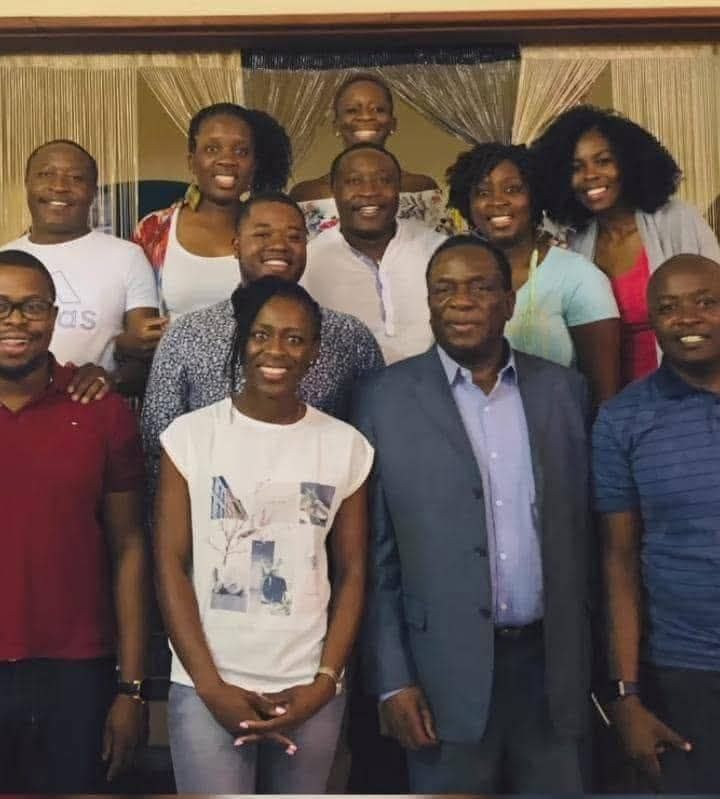
It has always struck me as odd, and even troubling, how in countries that proudly proclaim themselves democratic republics, the family of the head of state is treated with a sense of exaltation not far removed from that accorded to monarchs.
To directly receive articles from Tendai Ruben Mbofana, please join his WhatsApp Channel on: https://whatsapp.com/channel/0029VaqprWCIyPtRnKpkHe08
We frequently hear terms like First Lady, First Daughter, First Son, and First Family thrown about, as though these individuals are somehow elevated above the rest of the nation.
Yet, in essence, is this not a subtle propagation of the monarchial system, where one individual and his or her family are seen as more superior, powerful, and important than everyone else?
And is that not in stark contradiction to the very principles upon which republics are supposed to stand—where all citizens are equal, and the president is nothing more than a servant of the people?
The whole notion of “first” titles emerged from the United States, which is ironic given that the American Revolution of 1776 was explicitly fought to free the colonies from the grip of monarchy.
One would have expected that, in the wake of such a struggle, the Americans would have been more cautious about anything that even remotely resembled royal privilege.
Yet history shows us that the term “First Lady” entered the American lexicon in the 19th century, with Dolley Madison—the wife of James Madison, the fourth president of the United States—often credited as the first to be thus described.
Over time, the term gained traction through media and popular culture, spreading far beyond American borders.
Soon, countries in Africa, Asia, and Latin America were adopting the same practice, often giving it even more weight than the Americans themselves ever intended.
But why did this happen?
Could it be that despite proclaiming republican values, there lingered an unconscious yearning for the pomp, ceremony, and mystique that monarchy provided?
After all, human societies have for centuries been conditioned to rally around kings and queens, whose families were placed on pedestals above the masses.
When the Americans rejected the British crown, perhaps they still felt a cultural void—a need for a symbolic “royal family” that could serve as a focal point for national identity.
The president’s spouse and children conveniently filled that role.
Though the title “First Lady” was never official, its symbolic power was undeniable.
And it is this symbolism that has been exported, often uncritically, to the rest of the world.
The danger, of course, is that symbolism has real psychological weight.
The words we use shape the way we think, and the way we think determines the way we act.
When we start calling the president’s wife the “First Lady,” we are not simply extending respect.
We are, in fact, reinforcing a hierarchy that places her above every other woman in the nation.
When we refer to the president’s child as the “First Daughter” or “First Son,” we are subtly teaching ourselves to see them as more important than our own children.
And when we collectively label the president’s family the “First Family,” we are essentially resurrecting the idea of a ruling house—modern-day royalty in all but name.
In practice, this has bred a dangerous culture of untouchability.
Here in Zimbabwe, the president’s wife is glorified as the “Mother of the Nation,” a title that suggests not just symbolic importance but moral authority over citizens who never consented to such a relationship.
Only this morning, I came across a social media post referring to President Emmerson Mnangagwa’s daughter with the proud declaration, “Meet the First Daughter.”
This is not about respect; it is about elevation.
It is about placing individuals above the nation itself.
It is about encouraging hero-worship of presidents and their kin, who come to see themselves as superior beings, entitled to privileges and power well beyond their official positions.
We witnessed this at its most grotesque during the era of Grace Mugabe, who paraded herself as “First Lady” with reckless abandon.
Far from being a symbol of unity or humility, she wielded the title as a weapon of intimidation and entitlement.
Who can forget her infamous shopping sprees abroad, her sprawling empire of properties, or her shameless displays of extravagance in a country where millions were starving?
Under the cover of her exalted status, she insulted and humiliated opponents, all while amassing wealth through opaque means.
The glorification of her title made her practically untouchable, even as her actions undermined the dignity of the very people she claimed to be “mother” to.
Sadly, the trend did not die with Mugabe’s ouster.
Under Mnangagwa, his wife Auxillia has also stepped into the carefully choreographed role of “Mother of the Nation.”
She is regularly showcased in state media distributing food aid or leading charitable programs, often with heavy political undertones.
To the unsuspecting, this may appear benevolent.
But scratch beneath the surface, and one sees how the title is used to build a cult of personality, projecting a quasi-sacred aura around the president’s family.
Instead of being seen as private citizens who happen to be related to the head of state, they are thrust into the public eye as national figures, commanding reverence and wielding influence without any democratic mandate.
The results are predictable.
Families of presidents across the world often live in luxury, immune to accountability, while ordinary citizens struggle with poverty and hardship.
In the Philippines, Imelda Marcos, as “First Lady” from 1965 to 1986, became a powerful political figure in her own right, amassing vast wealth while ordinary Filipinos suffered.
In Africa, we have seen the wives and children of leaders using their proximity to power to enrich themselves, shielded by their exalted status as members of the so-called First Family.
These titles, by creating a mystique of superiority, make it harder to hold them to account.
They fuel a culture where corruption, abuse, and arrogance thrive unchecked.
Would it not be better, then, for countries that claim to be democratic republics to completely break from this monarchial-derived notion, albeit clothed in “modern” titles?
Why should we continue to perpetuate terms that serve no purpose other than to glorify a handful of individuals at the expense of republican equality?
In fact, there are democratic states that have refused to go down this path.
In countries like Ireland and Germany, the spouses of presidents are usually referred to in the most straightforward terms—simply as “the president’s wife” or “the president’s husband.”
There is no fuss, no mystical aura, no attempt to elevate them above the citizenry.
That simplicity is far more in line with the foundational principles of a republic, where leaders are meant to serve, not rule; to represent, not reign.
The truth is that there is nothing “first” about the president’s family.
The wife of the president is no more important than the wife of a farmer, a factory worker, or a schoolteacher.
The daughter of the president is no more deserving of adulation than the daughter of a nurse, a vendor, or a police officer.
By insisting on these “first” titles, we are not honoring democratic values but undermining them.
We are reinforcing social hierarchies that elevate some citizens above others, which is precisely what democracy was meant to dismantle.
It is time for us to rethink our language and the symbolism it carries.
If we truly believe that a republic is a nation of equals, then let us speak accordingly.
Let us call the president’s wife simply “Mrs. Mnangagwa,” or “the president’s wife.”
Let us refer to his children as “the president’s son” or “the president’s daughter,” if there is a need to mention them at all.
Better yet, let us stop placing them at the center of national discourse altogether.
They are private citizens, and their lives should be treated as such.
Words matter.
Titles matter.
The way we frame our leaders and their families matters.
If we are serious about building a culture of equality, accountability, and humility in leadership, then we must strip away the trappings of modern-day monarchy disguised as republican symbolism.
There is nothing “first” about the president’s family, and it is high time we stopped pretending otherwise.
 TENDAI RUBEN MBOFANA - THE UN-OPPRESSED MIND!