Those driven by self-serving agendas often offer justifications that create even bigger problems down the line.
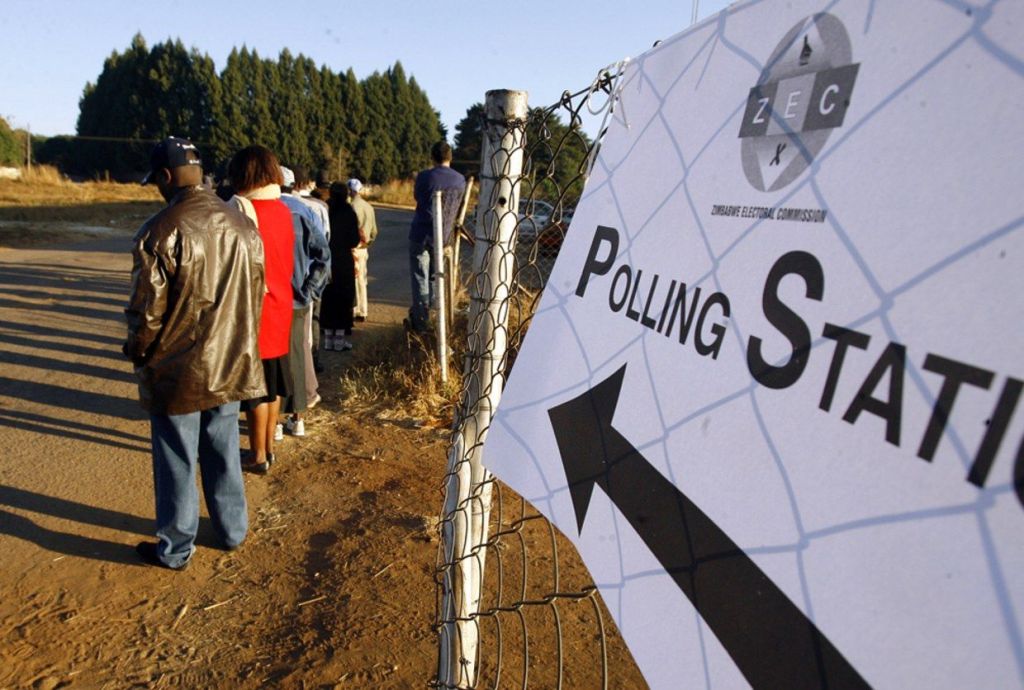
That is exactly the case with the push by some of President Emmerson Mnangagwa’s loyalists to postpone Zimbabwe’s next harmonised elections from 2028 to 2030.
To directly receive articles from Tendai Ruben Mbofana, please join his WhatsApp Channel on: https://whatsapp.com/channel/0029VaqprWCIyPtRnKpkHe08
They argue that holding elections in 2028 places an unbearable financial strain on the country, draining millions of scarce dollars that could be better directed toward development.
They also claim that elections throw the nation into “campaign mode,” creating endless bickering, political tensions, and a toxic environment that distracts leaders from focusing on the urgent task of rebuilding the economy.
On the surface, these arguments may sound pragmatic and even patriotic.
After all, Zimbabwe faces serious fiscal challenges, and political campaigns often become more about tearing each other down than building the nation up.
So, why not ease the financial pressure and spare the country the endless divisiveness by delaying elections just a little?
But this reasoning is dangerously misleading.
In fact, once tested against the Constitution, it collapses under its own weight and produces an even bigger problem for the country.
The reality is that Zimbabwe’s Constitution is very clear on the matter.
Section 158 stipulates that general elections for the President, Members of Parliament, and councillors must be held every five years.
Since the last harmonised elections were conducted in 2023, the next must take place in 2028.
Pushing them forward to 2030 would mean extending the terms of office of all elected officials, including the President.
Yet sections 91 and 95 of the Constitution impose strict two-term limits for the presidency, with each term lasting five years.
Mnangagwa’s second and final term will therefore end in 2028.
Delaying elections beyond that date is not just a scheduling matter—it effectively amounts to extending a presidential term.
And here is where section 328 of the Constitution comes into play.
It provides that any amendment to presidential term limits cannot be passed by a simple two-thirds parliamentary majority alone but must also be subjected to a national referendum.
This referendum would itself be a massive electoral process, with voter registration, polling stations, ballot printing, security deployments, and election observers.
The costs would run into millions of dollars, just like a general election.
And the complications don’t end there.
Section 328(7) explicitly prohibits an incumbent from benefiting from such an amendment.
This means Mnangagwa could not legally gain from any extension unless that very clause was amended as well.
That would require yet another constitutional change, again subjected to a second national referendum.
So, instead of avoiding the cost and divisiveness of one general election in 2028, Zimbabwe would be plunged into the chaos of two consecutive national referendums—each expensive, each highly charged, and each fiercely contested.
The irony is impossible to ignore.
In the name of saving money and sparing the nation from divisiveness, Mnangagwa’s loyalists would create a scenario that is far more costly and divisive than simply holding the scheduled election in 2028.
Put simply, in attempting to avoid one election, we would ironically end up with two costly and divisive referendums (akin to elections)—far worse than simply holding the scheduled vote.
Their logic collapses into absurdity the moment it collides with constitutional reality.
As for the claim that elections are inherently divisive, this too is hollow.
Yes, Zimbabwe’s elections are often marred by hostility and conflict, but that is not because elections themselves are bad for the nation.
The real source of division lies in ZANU-PF’s toxic brand of politics, which has long thrived on intolerance, coercion, and the silencing of dissent.
It is political repression, not the ballot, that tears communities apart.
In fact, regular elections are designed to provide peaceful accountability.
Blaming elections for division while ignoring the ruling party’s conduct is nothing more than deliberate deception.
Another line of argument is that Mnangagwa needs more time to complete his “Vision 2030.”
This is equally ridiculous.
National development is never the personal property of any one leader.
Constitutions are not bent to suit the unfinished projects of a sitting president.
No genuine democracy anywhere in the world extends a leader’s tenure simply because his personal development blueprint has not yet been realised.
Leaders come and go, but constitutions must remain sacrosanct.
It is no coincidence that those most invested in this narrative are the very people who stand to gain from Mnangagwa’s continued grip on power.
They present their proposal as fiscal prudence and a quest for unity, but in truth, it is nothing more than a thinly disguised power grab.
The people of Zimbabwe fought long and hard to secure the right to freely choose their leaders through the ballot.
To undermine this right in the name of saving money or sparing the nation from division is a betrayal of that struggle.
The real causes of national division are clear: political intolerance, the abuse of state institutions, and the harassment of opposition voices.
If Mnangagwa’s loyalists were truly concerned about unity and stability, they would address these issues head-on instead of trying to erase elections from the calendar.
Delaying the vote only allows repression to deepen and frustration to fester.
Far from saving Zimbabwe from division, it would inflame tensions and destabilise the nation even further.
Zimbabweans must therefore see this push for what it is: a calculated attempt to subvert the Constitution and entrench one man in power under the guise of pragmatism.
The truth is simple.
Holding elections as scheduled in 2028 is less costly, less divisive, and more in line with the Constitution than embarking on the madness of two national referendums.
Respecting the law, upholding democracy, and maintaining constitutionalism is the only healthy way forward for genuine development.
The Constitution is clear.
The people are clear.
Zimbabwe cannot afford the folly of turning one election into two referendums simply to satisfy the ambitions of one man.
 TENDAI RUBEN MBOFANA - THE UN-OPPRESSED MIND!