In Zimbabwe, there appears to be a selective definition of corruption.
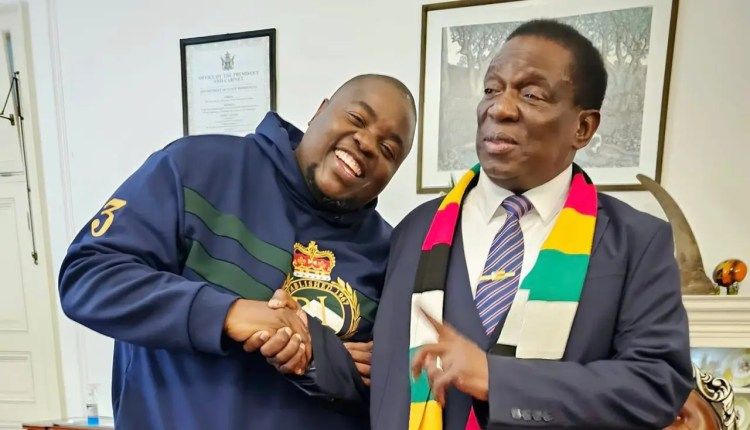
Recently, President Emmerson Mnangagwa appeared to take a bold stand against corruption.
To directly receive articles from Tendai Ruben Mbofana, please join his WhatsApp Channel on: https://whatsapp.com/channel/0029VaqprWCIyPtRnKpkHe08
Addressing his party’s politburo in Harare, he lamented how deeply entrenched graft had become within ZANU-PF, warning that it threatened the party’s reputation and alienated it from ordinary Zimbabweans.
He spoke of integrity, discipline, and clean governance as if these were the guiding principles of the ruling elite.
For once, it sounded as though the president was finally ready to confront the rot that has long consumed Zimbabwe’s political and economic landscape.
Yet Zimbabweans know better.
For decades, corruption has not only been a cancer eating away at our nation—it has become the very lifeblood of the ruling class.
The World Bank estimates that over 80 percent of Zimbabweans live below the poverty datum line, while basic infrastructure and services such as electricity, water, hospitals, and schools collapse before our eyes.
This is not due to a lack of resources.
Far from it.
Zimbabwe is believed to lose an estimated US$4 billion annually through corruption, mineral smuggling, and illicit financial flows.
This is a staggering sum in a country endowed with gold, platinum, lithium, diamonds, and rich agricultural land.
It is money that could transform Zimbabwe into a prosperous nation, ensuring that no child goes hungry, no family lives without clean water, and no patient is turned away from a hospital for lack of basic medicines.
Instead, Zimbabweans remain among the poorest people on the planet, trapped in conditions no different from the world’s most impoverished states.
Against this backdrop, Mnangagwa’s rare public condemnation of corruption should have been welcomed.
But a pressing question lingers in the minds of many Zimbabweans: if the president is genuinely intolerant of corruption, why does he not begin by dealing with those closest to him?
Why are the most obvious and glaring cases of looting, involving individuals within his inner circle, not investigated?
Take, for example, the case of businessman Wicknell Chivayo.
In 2015, he received a US$5 million advance payment from the state-owned power utility, ZESA, for the Gwanda Solar Project.
Years later, not a single megawatt of electricity has been generated from that project, and the solar farm remains nothing more than bushland.
Should the president not begin his anti-corruption crusade by demanding answers from Chivayo on what happened to that money?
But the story does not end there.
Chivayo reportedly received a staggering R800 million (about US$40 million) from South Africa’s Ren-Form CC, which itself was paid R1.1 billion by the Zimbabwe Treasury, allegedly for electoral material.
What is most shocking is not only the sheer magnitude of these sums, but also how opaque these transactions remain.
Why was Chivayo even given such colossal amounts in the first place, and on what grounds were these payments justified?
Similarly, another South African company, TTM Global Medical Exports—registered only a few months before—allegedly won a US$500 million tender to supply cancer machines to Zimbabwe, with links once again traced to Chivayo.
If the president is serious about fighting corruption, would these not be the most logical starting points?
Instead of probing such scandals, Zimbabweans were stunned to see President Mnangagwa officiating at a handover ceremony just days ago, where Chivayo “donated” 10 brand-new 2025 Toyota Land Cruiser 300 Series VXR vehicles—each valued at US$190,000—to ZANU-PF provincial chairpersons.
He also presented 10 brand-new ambulances, each worth about US$90,000, supposedly in honour of the president’s 82nd birthday.
This act was celebrated within the ruling party as generosity.
Mnangagwa himself has gone so far as to call Chivayo a “philanthropist.”
But what sort of philanthropy is this?
Can a man whose name is constantly linked to multi-million-dollar scandals be celebrated as a benefactor simply because he donates a fraction of the money he is alleged to have siphoned off?
Is this how “philanthropy” is now defined in Zimbabwe—steal from the public purse, then donate a fraction of the loot and suddenly be celebrated as a philanthropist?
For ordinary citizens struggling to buy a loaf of bread or pay school fees, this spectacle is nothing short of grotesque.
It sends a chilling message: in Zimbabwe, corruption is not condemned when it enriches the ruling elite; it is only corruption if one engages in looting without the blessings of those in power.
This double standard exposes the hollowness of Mnangagwa’s recent remarks.
What is the point of warning against corruption if those who bankroll the ruling party and fund its internal structures remain untouchable?
What credibility can the president claim when he condemns graft in one breath while embracing and honouring its most visible faces in the next?
The tragedy is that this culture of selective morality has eroded public trust to the point of collapse.
Zimbabweans have heard countless anti-corruption pronouncements before.
Commissions of inquiry have been set up — for example, the Uchena Commission into the Sale of State Land in and Around Urban Areas since 2005 (sworn in February 2018) — reports have been written, and high-sounding speeches delivered.
Yet never do we see the political will to pursue those whose proximity to power shields them from accountability.
The message is unmistakable: corruption is not about the theft of public resources—it is about politics.
It is a label applied selectively, depending on who is aligned with the ruling elite and who has fallen out of favour.
The consequences of this duplicity are catastrophic.
As billions are siphoned off through illicit financial flows, hospitals lack even paracetamol, schools operate without textbooks, and power cuts leave households in darkness for up to 16 hours a day.
Children drown in unprotected wells because clean water is unavailable, while preventable diseases claim lives that could have been saved.
Meanwhile, those responsible for this suffering parade their ill-gotten wealth openly, buying luxury cars, building mansions, and staging lavish parties—secure in the knowledge that their political loyalty buys them immunity.
Zimbabwe does not need more empty speeches condemning corruption.
What it desperately needs is leadership with the courage to confront graft wherever it is found, starting from within the corridors of power.
Until President Mnangagwa demonstrates this courage, his words will remain meaningless.
True integrity is not tested in what one says in front of a politburo—it is tested in what one does when faced with uncomfortable truths about friends and allies.
If Mnangagwa is indeed serious about fighting corruption, let him begin with Wicknell Chivayo and the web of scandals that have enriched him and others.
Let him demand full transparency and accountability in public procurement, electoral financing, and state contracts.
Let him prove, through decisive action, that no one is above the law, not even those who donate luxury vehicles to ZANU-PF chairpersons.
Anything less will confirm what Zimbabweans already suspect: that in this country, the “corrupt” are not those who plunder the nation’s wealth, but only those who do so without the blessing of those in power.
Until then, Zimbabweans will continue to watch in despair as their leaders condemn corruption by day and celebrate its proceeds by night.
 TENDAI RUBEN MBOFANA - THE UN-OPPRESSED MIND!