Sometimes, the most controversial and difficult decisions are the very ones a nation must take to secure its future.
There are times when history, though bitter, leaves us with lessons that we ignore at our own peril.
To directly receive articles from Tendai Ruben Mbofana, please join his WhatsApp Channel on: https://whatsapp.com/channel/0029VaqprWCIyPtRnKpkHe08
One of the most vilified political figures in our history, Ian Douglas Smith, remains remembered with anger and contempt by many for his defense of white minority rule in Rhodesia.
Yet, as uncomfortable as it may sound, some of the arguments he advanced in his resistance to “one man, one vote” deserve sober reflection.
Smith was clear that democracy was not simply about the counting of heads.
He believed that allowing every person over 18 years of age to cast a ballot, regardless of education, economic standing, or understanding of governance, was a recipe for disaster.
His answer was the “qualified franchise,” where the right to vote was tied to certain thresholds such as education, income, property, or profession.
At first glance, this appears patently unfair, elitist, and undemocratic.
It immediately raises alarms about disenfranchisement and exclusion.
But let us pause and consider Zimbabwe’s current political crisis.
Since independence in 1980, the country has been trapped in a cycle of misrule under ZANU-PF, which has managed to cling to power for over four decades.
Yes, the party has relied heavily on electoral fraud, state capture, intimidation, and violence.
That much is beyond dispute.
Yet one uncomfortable truth we often shy away from is that ZANU-PF has also enjoyed genuine, overwhelming support from millions of Zimbabweans, particularly in the rural areas and among less educated sections of the population.
This is where Smith’s argument acquires a new and troubling relevance.
The very people who suffer most under ZANU-PF’s misrule have consistently voted it back into office, often with unquestioning loyalty.
It is not enough to dismiss this as mere coercion.
Millions genuinely believe ZANU-PF’s narratives, however implausible.
They accept without scrutiny that the collapse of our economy, the crumbling of our hospitals and schools, the disappearance of jobs, and the destruction of our currency are the work of so-called “sanctions.”
Ask them how exactly sanctions caused hospitals to run out of essential drugs and equipment, or how they resulted in our roads becoming war-zone craters, and they will struggle to answer.
Ask them why these same sanctions did not prevent the government from channeling billions of dollars into the pockets of questionable businessmen like Wicknell Chivayo and other politically connected tenderpreneurs, and the conversation abruptly collapses.
This inability to make connections between corruption, looting, and personal hardship is not the fault of the people themselves but the result of a deliberately disempowering system.
For decades, our education system has been left in tatters.
Schools, especially in rural areas, remain poorly resourced, producing generations who cannot critically interrogate political rhetoric.
Without a solid grounding in civic education, economics, or even basic governance, voters are easily swayed by slogans, handouts, and fearmongering.
Populist leaders thrive in such an environment, knowing that they can win elections not through sound policy but through manipulation of ignorance.
Herein lies the logic of the qualified franchise.
Smith’s model was based on exclusion and racial domination, but in principle, it can be repurposed in a progressive way.
Imagine a Zimbabwe where the right to vote is tied not to race or privilege but to measurable benchmarks of civic competence.
This need not mean that only a tiny elite forever holds the vote.
Rather, it could serve as a national incentive to raise educational standards, modernize schools, and empower citizens economically.
With genuine political will, the qualified franchise could actually lead to more people—not fewer—exercising their democratic rights.
As education and prosperity spread across society, so too would the pool of qualified voters.
A population that is literate, economically active, and civically aware is far less likely to fall prey to simplistic propaganda.
A voter who understands how public finances are supposed to work will not readily accept that a man can become a billionaire overnight without producing anything or employing anyone.
A voter who grasps procurement processes will immediately question how tenders are awarded to politically connected cronies.
A voter who knows the basics of economics will not be duped into believing that sanctions alone destroyed our currency, while ignoring the government’s reckless money-printing and corruption.
In short, an informed electorate cannot be easily manipulated into perpetuating its own oppression.
Of course, critics will argue that such a system is undemocratic, that it denies a voice to the poor and marginalized.
Yet what has our current system achieved?
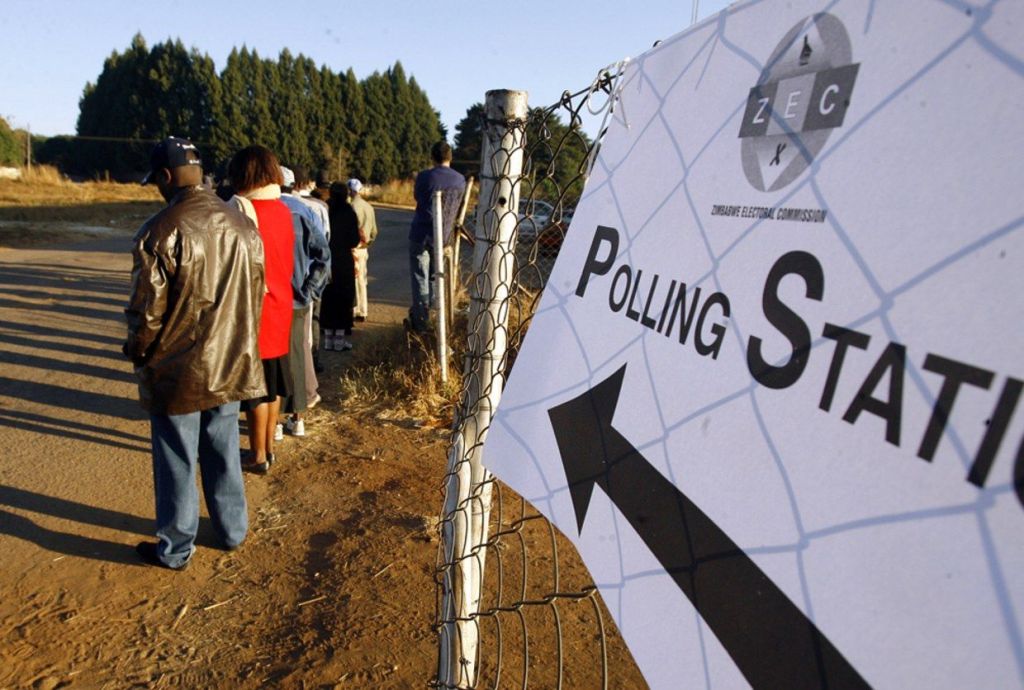
Millions of Zimbabweans dutifully queue at polling stations every election, only for their collective choice to be exploited by the ruling elite.
They exercise the right to vote, but without the tools to make informed decisions, that right becomes meaningless.
Democracy has been reduced to a ritual of casting ballots without substance.
What good is universal suffrage if it merely entrenches the very system that destroys lives?
The uncomfortable truth is that our “one person, one vote” model has failed.
It has failed because it assumed that the act of voting alone was enough to produce accountable leadership.
But democracy without educated, empowered citizens is hollow.
The ballot becomes a weapon wielded against the very people it was meant to liberate.
That is why Zimbabwe today, forty-five years after independence, remains stuck in the clutches of a ruling party that long ceased to serve the nation.
Revisiting the idea of a qualified franchise should not be seen as a nostalgic defense of Rhodesian authoritarianism.
Instead, it should be understood as a challenge to rethink the foundations of our democracy.
Rather than lowering the bar so that everyone can participate in name only, we should raise the bar so that participation is meaningful.
That requires massive investment in education, especially in rural schools.
It requires economic reforms that create real prosperity, ensuring that citizens understand the workings of money and policy.
It requires civic education that equips people to question, analyze, and hold leaders to account.
If we are honest, Zimbabwe’s biggest problem has never been the absence of elections, but the quality of those elections.
And that quality is directly tied to the capacity of the voter.
A democracy is only as strong as the people who sustain it.
Until we fix that, the cycle of manipulation and misrule will continue, and no amount of electoral reforms will rescue us.
Perhaps Smith was right when he said democracy is not about counting heads like sheep.
In our context, his words echo with painful relevance.
Zimbabwe must move beyond the illusion that universal suffrage alone is democracy.
True democracy demands an electorate that is equipped to make informed, rational, and responsible choices.
Without that, the vote itself becomes a curse rather than a blessing.
 TENDAI RUBEN MBOFANA - THE UN-OPPRESSED MIND!