When a government fails, its greatest skill becomes disguising that failure as success.
In my years of social justice advocacy writing, I have been privileged to receive overwhelming support from readers across the world.
To directly receive articles from Tendai Ruben Mbofana, please join his WhatsApp Channel on: https://whatsapp.com/channel/0029VaqprWCIyPtRnKpkHe08
People from all walks of life—ordinary villagers, professionals in cities, fellow activists, and even those in other parts of the globe—have found resonance in the issues I raise.
This incredible support has been such a powerful source of encouragement, and for that I am eternally grateful.
Yet, despite this encouragement, there have always been a few—truly, just a handful—who have expressed reservations about my writings.
These individuals usually take issue with my unapologetic stance in calling out the ruling elite’s insatiable greed for looting national resources.
They find discomfort in my insistence on speaking out for the voiceless, the poor, and the oppressed.
I have never shied away from speaking truth to power, even if it makes some uneasy.
I have spoken out against the deplorable poverty endured by millions of Zimbabweans—men and women who earn far below the poverty datum line and struggle daily to put food on the table.
I have written about parents who cannot afford school fees, workers whose meagre wages are eroded before they even reach their hands, and families who find life nothing short of a nightmare.
I have raised alarm about the shocking state of our public health system, where hospitals run without medication, and patients are forced to bring their own bandages and painkillers.
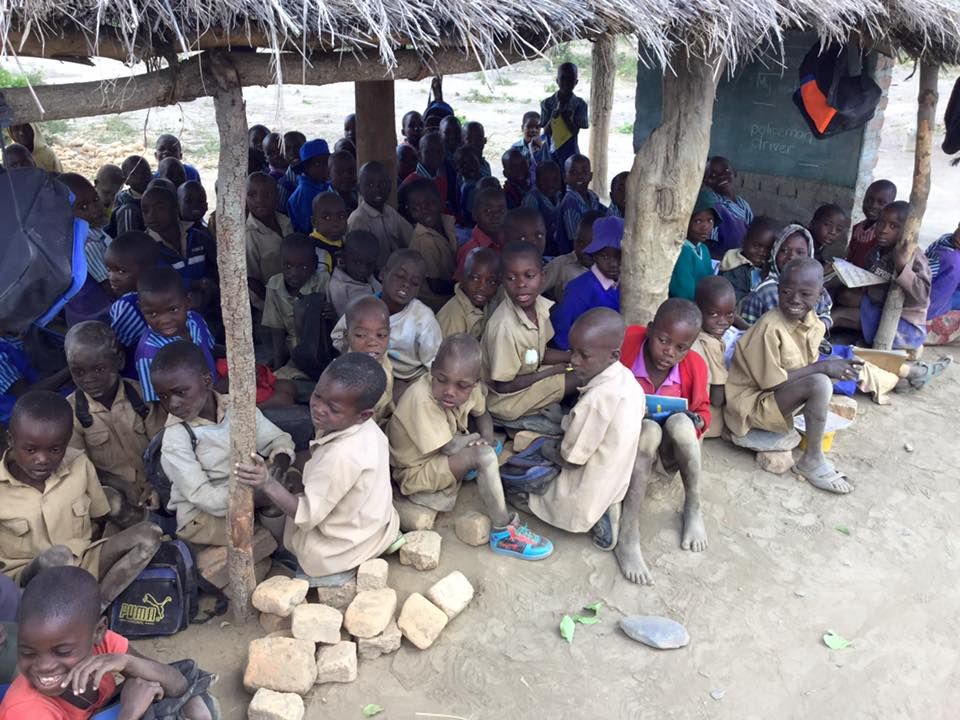
I have decried the poor state of our learning institutions, especially in rural areas, where children still learn under trees in the scorching sun.
I have highlighted the crumbling infrastructure, from potholed roads to collapsing bridges, and the dismal service delivery in our cities, where residents go for years without running tap water in their homes, and where hours-long electricity blackouts have become a daily ritual.
And while the majority of Zimbabweans are subjected to such humiliation and suffering, those close to power live in vulgar opulence.
They flaunt their ill-gotten riches, amassed through shady deals, opaque tenders, and the questionable acquisition of state assets.
They drive luxury cars, build incredible mansions, and parade their wealth on social media—without even the decency of shame.
This grotesque display of privilege, built upon the impoverishment of millions, is an insult to the very people they have failed.
It is precisely this reality that makes my writings resonate with so many people.
But then, there is always that small group who find my work problematic.
They accuse me of being biased, of being too negative, of refusing to acknowledge what they term “the positives” happening in Zimbabwe.
When confronted with such claims, I always ask them to be specific.
What “positives” do they want me to write about?
Recently, one such individual asked why I never acknowledge the rehabilitation of roads being undertaken by the government.
Indeed, there are some projects that have been carried out.
Roads have been resurfaced here and there.
The Robert Gabriel Mugabe International Airport has been expanded.
Hwange Power Station has had two additional units constructed.
The Beitbridge Border Post has been upgraded.
There are a few new dams under construction, and in some rural areas, a handful of schools and clinics have been built.
But let us be brutally honest.
This is 2025—forty-five years since independence, and forty-five years of uninterrupted ZANU-PF rule.
Can any sane Zimbabwean, with a straight face, celebrate the resurfacing of a few roads, the drilling of a communal borehole, or the construction of a single clinic or school?
The first question we must ask is: why did our roads, which we inherited from the colonial regime in pristine condition, degenerate into such hazardous and shocking disrepair in the first place?
The answer is simple—decades of willful neglect, corruption, and mismanagement under ZANU-PF.
How, then, can we celebrate the same government for patching up a few kilometers of tarmac after forty-five years of neglect?
Take, for example, the traffic interchange that was finally completed in 2025.
We are told this is a milestone.
Yet, should we not be asking what ZANU-PF has been doing for the past four and a half decades?
Why are we celebrating one interchange when, by now, we should have fifty or sixty across the country, of varying scales, befitting a modern nation?
Why should Zimbabweans be expected to celebrate two new electricity units after 45 years of ZANU-PF rule?
Since 1980, the regime has neglected our power infrastructure, failing both to maintain old plants and build new ones.
For over two decades, we have endured daily power cuts lasting hours, crippling industry and disrupting lives.
Is it not absurd to hail as progress what merely scratches the surface of a crisis the government itself created?
The same logic applies to every so-called development project we are told to cheer.
Why should I write glowing tributes about a single school finally constructed in a rural district, when for forty-five years, three successive generations of children were forced to walk twenty kilometers every day just to access basic education?
Why should we clap for a clinic finally being built when entire rural populations have been neglected for decades, compelled to travel fifteen kilometers or more for the nearest medical care?
And even when these structures are finally built, of what value are they when they lack the most basic equipment and when demoralized staff are underpaid and overworked?
What, exactly, is there to celebrate in the drilling of a borehole in a city where residents had running tap water decades ago, before independence, but have since been condemned to months or years of dry taps because of government and municipal failure?
This is regression disguised as progress.
We must stop pretending as if ZANU-PF is a new government that just assumed power a few years ago, trying to mend what it found broken.
This is not 1985, when optimism and patience may have been justified.
This is 2025.
After nearly half a century in power, ZANU-PF must be judged not by piecemeal projects, but by the full record of its governance.
Zimbabweans deserve far better than being told to celebrate mediocrity.
Real development is not a resurfaced road or a communal borehole.
Real development is when citizens enjoy modern infrastructure that surpasses what was inherited from the colonial regime in 1980.
Real development is when hospitals are fully equipped and staffed, when schools provide quality education in modern facilities, when clean water flows reliably in every home, and when electricity is constant and affordable.
Real development is when a country has thriving industries, efficient public transport systems, and cities that work for their people.
Until then, I will not sugarcoat failure.
I will not join the chorus of those who mistake token gestures for progress.
My loyalty is not to those in power but to the millions of Zimbabweans whose lives have been reduced to endless struggle.
I will keep holding accountable those who have presided over decades of unimaginable suffering.
Because the truth is simple: this is not 1985.
It is 2025.
Zimbabwe deserves better.
 TENDAI RUBEN MBOFANA - THE UN-OPPRESSED MIND!