When those in power cling to authority and manufacture excuses to avoid accountability, it is the duty of the people to take notice and stand against it.
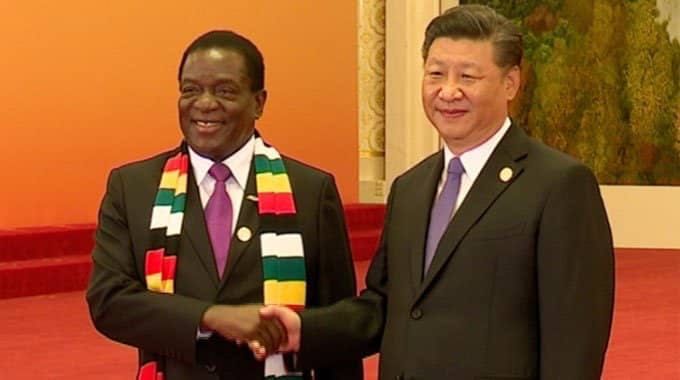
The latest pronouncements by Dereck Goto, a self-confessed ZANU-PF “murakashi,” calling for Zimbabwe to abandon multiparty democracy in favor of a Chinese-style one-party system, should disturb anyone who values freedom, accountability, and dignity.
To directly receive articles from Tendai Ruben Mbofana, please join his WhatsApp Channel on: https://whatsapp.com/channel/0029VaqprWCIyPtRnKpkHe08
His attempt to romanticize China’s authoritarian model, while disparaging the United States’ democracy and Donald Trump’s controversial presidency, is not only disingenuous but also an unashamed attempt to normalize dictatorship in Zimbabwe.
This is precisely the kind of dangerous rhetoric that seeks to deny ordinary Zimbabweans their fundamental right to choose their leaders and hold them to account.
Let us be clear from the onset: the United States, like any democracy, is far from perfect.
Its political system has deep flaws, with moneyed interests often drowning out the voices of ordinary people.
Donald Trump’s polarizing leadership has highlighted the shortcomings of American democracy.
He remains a divisive figure, often accused of fueling intolerance, undermining institutions, and sowing social discord.
Yet, despite all this, Trump was democratically elected by the American people in 2016, and after losing the 2020 election, he was lawfully removed—only to return through another democratic election in 2024.
The same system that once voted him out also allowed citizens to bring him back.
That is the power of democracy—it gives people the right to make choices, sometimes questionable, but ultimately theirs.
No ruler is beyond accountability, and no office is held by divine right.
Contrast this with China’s governance model, which Goto so uncritically glorifies.
Xi Jinping, the most powerful Chinese leader since Mao Zedong, was not chosen by the Chinese people in a free and fair election.
He was elevated by the Chinese Communist Party (CCP) through internal processes shielded from public scrutiny.
In 2018, constitutional amendments scrapped presidential term limits, effectively allowing him to remain in power for life.
This was not the will of the people expressed through the ballot box, but a maneuver by an elite political machine to entrench its own dominance.
The Chinese people were never consulted, nor could they meaningfully resist.
This is not meritocracy.
This is dictatorship, dressed up in the language of stability and order.
Admiring such a system for Zimbabwe is not just misguided—it is profoundly dangerous.
It amounts to telling Zimbabweans that their voices, choices, and rights do not matter, and that they should surrender their future to a small political elite.
Our liberation struggle was not fought merely for material advancement but for freedom, dignity, and self-determination.
To trade multiparty democracy for a one-party straitjacket would be to betray the sacrifices of those who gave their lives for independence.
What Goto and others like him fail to grasp is that human beings are not robots programmed only to seek food and economic survival.
Yes, economic progress matters.
But prosperity stripped of freedom is hollow.
What good is it to live in a country with new highways and glittering infrastructure if citizens cannot speak their minds without fear, cannot choose their leaders, and cannot determine their own destiny?
It is like living in a well-furnished prison—comfort without liberty.
True human development must encompass not just material needs but also fundamental rights: freedom of expression, association, assembly, and political participation.
These rights are not Western imports.
They are intrinsic to human dignity.
Zimbabwe’s own painful history offers sobering lessons about the perils of unchecked one-party dominance.
Since 1980, ZANU-PF has ruled uninterrupted, often suppressing opposition through violence, intimidation, and manipulation of elections.
The Gukurahundi massacres of the 1980s, where thousands were killed in Matabeleland and Midlands, were facilitated by a government intolerant of dissent.
More recently, disputed elections in 2008, 2018, and 2023, along with crackdowns on civil society, have shown what happens when power is concentrated in one ruling elite.
To now suggest that the solution is to formalize Zimbabwe as a one-party state is to say that citizens should permanently accept authoritarianism as their fate.
The Chinese model may appear attractive on the surface, with its rapid economic growth and infrastructure boom.
But even in China, these achievements come at a high human cost.
Citizens are denied freedom of speech, religious liberty is restricted, dissenters are jailed, and entire communities—like the Uyghurs in Xinjiang—are subjected to persecution.
The “stability” Goto admires is stability imposed through fear and repression, not stability rooted in consent and inclusion.
This is akin to claiming that Zimbabweans are generally content and at peace with the current system simply because we do not rebel or revolt.
In reality, this so-called “peacefulness and seeming contentment” is nothing more than the silence of a people subdued by fear—fear of violence, persecution, or economic ruin should they dare to challenge the ruling elite.
The so-called “stability” in China does not reflect the contentment or approval of its people; it is the product of a regime maintained through fear, coercion, and brutality.
The 1989 Tiananmen Square protests tragically demonstrated this, when thousands of peaceful demonstrators calling for political reform and freedom were massacred by the state.
Over the years, courageous activists and thinkers such as Liu Xiaobo, Ai Weiwei, and Wang Dan have been imprisoned, silenced, or placed under constant surveillance for speaking out.
More recently, the crackdown on pro-democracy movements in Hong Kong, including the arrest of Joshua Wong and other prominent activists, shows that dissent is ruthlessly suppressed.
What appears as order and discipline is in reality a society forced into submission, where “peace” is bought at the cost of freedom and human dignity.
Exporting such a model to Zimbabwe would cement authoritarianism under the guise of development.
Democracy, with all its flaws, remains the best system for guaranteeing human dignity.
It allows people to make choices, correct mistakes, and hold leaders accountable.
In a democracy, citizens can replace an unpopular or corrupt leader at the ballot box.
That is precisely why Trump could not cling to power when he lost in 2020.
Democracy enables peaceful change, while dictatorship suppresses it.
Goto’s disdain for multiparty politics as “chaotic and manipulative” is both shallow and self-serving.
Democracy is noisy, messy, and sometimes frustrating.
But it is through this very contestation of ideas that societies grow stronger.
Multiparty systems allow different voices to be heard, force leaders to engage with citizens, and prevent the concentration of power in one set of hands.
The alternative—a one-party state—may seem orderly, but it is an order sustained by repression.
Zimbabweans know this all too well from four decades of ZANU-PF dominance.
At the heart of this debate is a deeper question: What do we, as Zimbabweans, truly value?
If we value dignity, liberty, and the right to shape our own destiny, then we cannot afford to be seduced by the false promises of authoritarianism.
We must insist that human needs go beyond bread and butter.
We also need the right to dream, to speak, to question, and to choose.
That is the essence of being human.
Zimbabwe does not need a one-party state modeled after China.
What we need is a genuine commitment to democratic governance—where institutions are strong, leaders are accountable, and citizens are free to determine their future.
To admire China’s dictatorship is to admire a prison with golden bars.
To advocate for such a system in Zimbabwe is a direct affront to the sacrifices made during our liberation struggle, which was fought on the principle of “one man, one vote” and embodied the collective yearning of Zimbabweans for democracy—the inalienable right to choose their leaders freely and shape their own destiny.
Those who seek to drag us into authoritarian darkness under the guise of “stability” must be firmly resisted.
Zimbabwe’s future cannot and must not be built on silence and submission.
It must be built on freedom, accountability, and the vibrant participation of all its people.
Anything less is not stability—it is enslavement.
 TENDAI RUBEN MBOFANA - THE UN-OPPRESSED MIND!