In trying to justify the unjustifiable, people inevitably descend into the depths of absurdity.
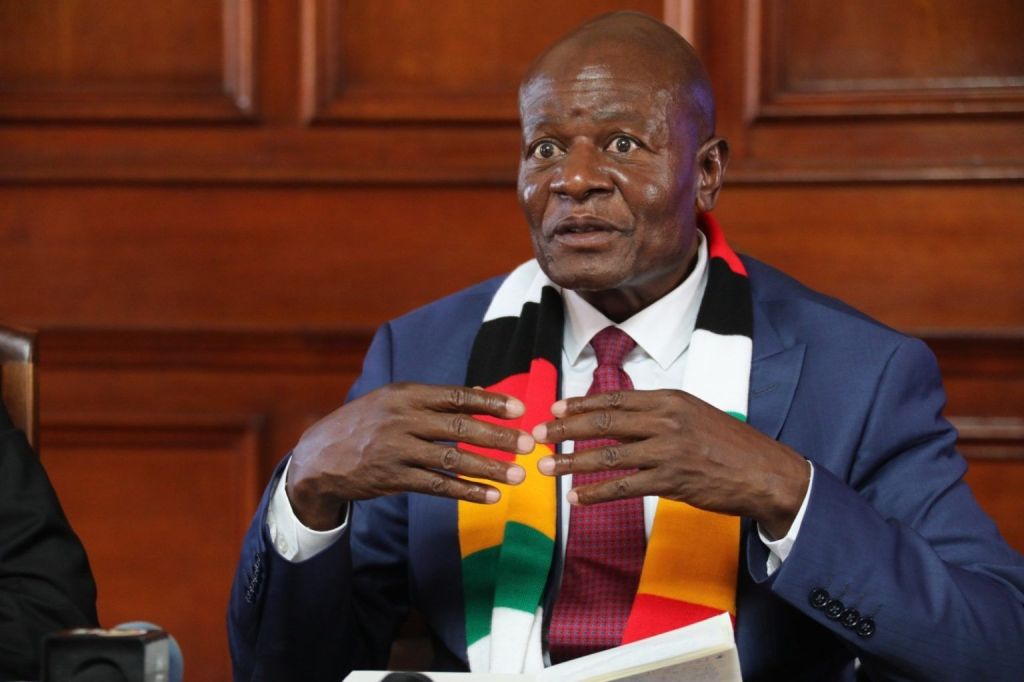
The latest push by ZANU PF loyalists to extend President Emmerson Mnangagwa’s rule beyond the constitutionally prescribed two five-year terms must surely go down as one of the most absurd propositions ever made in Zimbabwe’s political history.
To directly receive articles from Tendai Ruben Mbofana, please join his WhatsApp Channel on: https://whatsapp.com/channel/0029VaqprWCIyPtRnKpkHe08
In a country where the ruling elite have mastered the art of bending laws, manipulating institutions, and trampling on citizens’ rights to safeguard their own political survival, it takes something truly outrageous to raise eyebrows.
Yet, Local Government and Public Works Minister Daniel Garwe, speaking in his capacity as ZANU PF Mashonaland East provincial chairman, has managed to do exactly that.
His bizarre argument is that Mnangagwa should remain in office until 2030 because he supposedly “lost” four years of his presidency dealing with Cyclone Idai and the COVID-19 pandemic.
The logic is as insulting as it is dangerous.
Constitutions exist precisely to set limits on power, ensuring that no individual becomes bigger than the nation or its laws.
Zimbabwe’s 2013 Constitution, overwhelmingly endorsed by citizens in a referendum, is explicit: a president may serve only two five-year terms, and anyone who has already benefited from these cannot extend their tenure.
These provisions were not accidental; they were hard-won safeguards, born from a painful history of authoritarianism and unchecked executive dominance.
They were put in place to protect Zimbabweans from the very temptation now being dangled before us—that of twisting the law to suit the whims of those in power.
To claim that a president deserves extra years in office because of national crises not only trivializes the sanctity of the Constitution but also insults the collective suffering endured during those very crises.
Did Zimbabweans themselves not also “lose years” of their lives during COVID-19 and Cyclone Idai?
Families lost loved ones, livelihoods were destroyed, children’s education was disrupted, and the economy was battered.
If time can be “compensated” because of disasters, then surely the ordinary people, not the president, are the ones who deserve restitution.
It is preposterous to suggest that the appropriate response is to extend the political career of one man who has already had more than enough time to demonstrate his capacity—or lack thereof—to govern.
Furthermore, if this warped reasoning were to be applied consistently, then should not all presidents and prime ministers across the globe who governed during COVID-19 also demand term extensions?
Should South Africa’s Cyril Ramaphosa argue for an additional mandate because lockdowns distracted him from economic reforms?
Should Britain’s Boris Johnson have asked for extra years in office since Brexit negotiations coincided with the pandemic?
Should America’s Donald Trump, whose first stint as US president was dominated by COVID-19, have demanded a bonus term?
The very suggestion exposes itself as ludicrous once placed in an international context.
Crises are part of leadership; they do not suspend constitutional order.
It is especially disingenuous for Mnangagwa’s allies to present this push as a mere “postponement” of elections or as “compensation” for lost time, as if these were minor administrative adjustments.
In truth, what they are proposing is nothing less than tampering with the supreme law of the land for personal gain.
More troubling is their open talk of circumventing a national referendum, which would be constitutionally required for any amendment relating to presidential term limits.
This reveals a deep contempt for both the letter and spirit of the Constitution, and a willingness to undermine democracy under the guise of loyalty to the party and its leader.
History shows why term limits are non-negotiable.
They prevent the entrenchment of personal rule and safeguard against the corruption and stagnation that inevitably accompany indefinite presidencies.
When leaders overstay, institutions rot, economies decline, and citizens are left voiceless.
Zimbabweans need only look to their own recent past.
The late Robert Mugabe’s 37-year reign—marked by economic collapse, political repression, and international isolation—should have been a permanent lesson in why no leader, however “visionary,” should be allowed to rule indefinitely.
Yet here we are again, faced with sycophants eager to repeat history by extending Mnangagwa’s stay, this time cloaking their intentions in the language of disaster management.
The irony is that Mnangagwa’s track record during these crises is hardly one to boast about.
Cyclone Idai victims in Chimanimani and Chipinge are still living in makeshift shelters years later, their promised homes and infrastructure never materializing.
COVID-19 exposed the decrepit state of Zimbabwe’s public health system, with hospitals starved of resources, health workers striking over poor conditions, and corruption scandals—such as the infamous Drax International saga—robbing the nation of critical funds.
If anything, these disasters underscored the failures of leadership, rather than presenting grounds for extending it.
To now turn around and argue that Mnangagwa should be rewarded with more time is the height of audacity.
Beyond the constitutional violations and logical absurdities, the economic implications of such maneuvers cannot be ignored.
Investors and international partners value predictability and respect for the rule of law.
The mere suggestion that Zimbabwe’s supreme law can be bent at will to suit one individual sends a chilling message about the country’s governance environment.
It signals that political expediency, not institutional integrity, rules the day.
This will further erode confidence, discourage investment, and deepen the country’s economic malaise.
Zimbabwe’s citizens, already burdened by poverty, unemployment, and runaway inflation, will pay the price.
It is also telling that the justifications for Mnangagwa’s continued stay are framed not around popular will or democratic legitimacy, but around party resolutions and declarations by provincial chairpersons.
The people’s voice, expressed in 2013 through the referendum and in the Constitution itself, is conveniently sidelined.
Instead, we are told that a handful of ruling party elites will decide the fate of the nation, and then “inform” the president that he must stay in power.
This reduces Zimbabwe’s democracy to a stage-managed charade, where the Constitution is treated as a mere inconvenience to be rewritten at the whim of the ruling elite.
Ultimately, what Zimbabwe needs is not more years of Mnangagwa but stronger institutions, genuine accountability, and leadership renewal.
True visionaries build systems that outlast them, not cling to office under flimsy pretexts.
By floating the idea of extending Mnangagwa’s presidency to 2030, Garwe and his fellow loyalists are not only insulting the intelligence of Zimbabweans but also betraying the very principles of constitutionalism and democracy.
Zimbabweans must reject this dangerous path.
If the Constitution can be so casually manipulated today, then no safeguard remains tomorrow.
The fight for term limits is not about one man; it is about the future of the nation.
Otherwise, does it mean that if another devastating natural disaster or pandemic were to hit Zimbabwe, more years would automatically be added to Mnangagwa’s term in office?
It is about ensuring that no leader, however powerful or popular, is ever allowed to become bigger than the law.
Those who endured the Mugabe era know all too well the cost of failing to enforce these boundaries.
The country cannot afford to repeat that mistake.
 TENDAI RUBEN MBOFANA - THE UN-OPPRESSED MIND!