When leaders resort to lofty ambitions and grand dreams, it is often because they have failed to deliver on the basics.
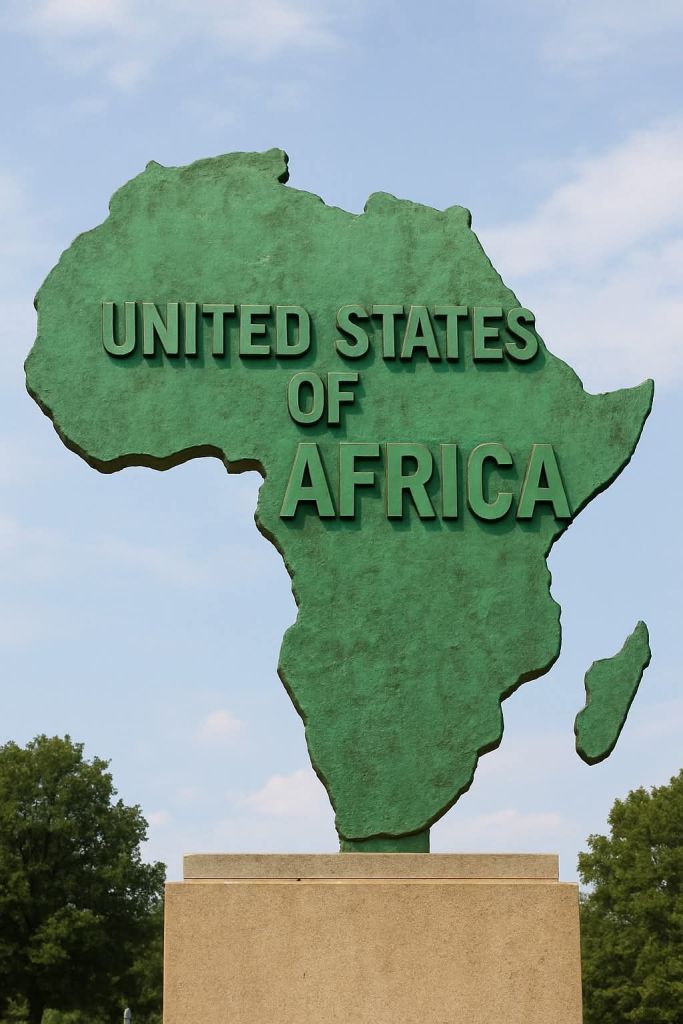
South African opposition leader, Julius Malema’s fiery call for a borderless Africa under one president, one currency, and one army, delivered at the Nigerian Bar Association conference, is the latest revival of an old dream.
To directly receive articles from Tendai Ruben Mbofana, please join his WhatsApp Channel on: https://whatsapp.com/channel/0029VaqprWCIyPtRnKpkHe08
The idea of a United States of Africa has been circulating since the days of Kwame Nkrumah, a vision of continental unity that would dissolve the colonial borders drawn in Berlin in 1884 and replace them with a pan-African state strong enough to rival global powers.
It is a seductive vision, especially to a continent that has suffered centuries of conquest, exploitation, and division.
But as stirring as it sounds, we must be honest with ourselves as Africans: lofty declarations of unity, while emotionally powerful, remain pipe dreams in the face of the political and institutional realities of Africa today.
What is needed is not rhetoric about one president or one army, but urgent and achievable reforms that address the real reasons our continent remains poor despite its vast abundance of natural resources.
Malema is correct that Africa loses when it is divided.
It is true that our resources, when pooled and harnessed collectively, could transform the continent into a global economic power.
But what holds us back is not merely the persistence of colonial borders.
The deeper problem lies in the rampant corruption that rots our states from the inside, the weak institutions that fail to uphold accountability, the looting of public resources by political elites, the absence of strong economic and social policies to protect and harness our natural wealth, and the deliberate erosion of democracy and human rights.
These are the cancers that impoverish Africa.
To pretend that simply declaring a united Africa with one president will cure these ills is to miss the core of the problem.
Consider the record of our leaders.
Across the continent, too many presidents treat their nations as personal fiefdoms.
They manipulate constitutions to extend their rule indefinitely.
They rig elections and unleash violence on their citizens to cling to power.
They siphon billions of dollars from public coffers into offshore accounts while their people live without clean water or electricity.
Transparency International estimates that Africa loses more than US$50 billion every year to illicit financial flows — money that could build infrastructure, pay teachers, or fund hospitals.
The Democratic Republic of Congo, one of the richest countries in the world in terms of mineral endowment, remains one of the poorest in terms of human development.
Nigeria, Africa’s largest oil producer, has squandered decades of petroleum wealth while its citizens suffer fuel shortages.
Zimbabwe, sitting on vast deposits of lithium and other critical minerals, watches as foreign powers extract those resources with little beneficiation, while communities are displaced and the environment degraded.
These are not failures of borders.
They are failures of governance, of political will, and of integrity.
It is naïve to believe that the very leaders who cling so tightly to their own small fiefdoms would willingly surrender their thrones to a continental president.
Can anyone realistically imagine Emmerson Mnangagwa of Zimbabwe, Paul Biya of Cameroon, or Yoweri Museveni of Uganda bowing to a single president of Africa?
If they refuse to relinquish power even within their own nations, sometimes resorting to violence and bloodshed to suppress challengers, why would they willingly dissolve their states into a supranational authority?
The truth is that many African leaders criticize the colonial borders publicly while privately cherishing them because those borders guarantee their power and privileges.
If they truly wanted to erase them, nothing is stopping them from beginning regional integration by dismantling borders within their own subregions.
The Southern African Development Community, the East African Community, and ECOWAS could easily eliminate internal passport controls, harmonize tariffs, and create shared standards.
Yet progress has been painfully slow, precisely because leaders fear losing control.
This is why calls for one African president ring hollow.
It is easy to make speeches about unity; it is harder to build the rule of law, strengthen independent institutions, and stamp out corruption.
But it is the latter that matters most to ordinary Africans.
The people of Africa want leaders who will ensure that wealth from resources like gold, cobalt, oil, and lithium benefits local communities rather than lining the pockets of elites or foreign corporations.
They want functioning economies that create jobs, protect workers, and provide safety nets.
They want democracy where votes count, where constitutions are respected, and where opposition voices can speak freely without fear of imprisonment or assassination.
They want human rights upheld, not trampled.
These are not utopian demands; they are the everyday building blocks of dignity and prosperity.
The European Union model that Malema indirectly gestures to offers more practical lessons.
The EU is not one state with one president but a union of sovereign countries that pool certain aspects of their sovereignty in limited areas such as trade, monetary policy, and regulation.
Even that integration took decades of painstaking negotiations and trust-building among states with far stronger governance records than most African nations.
If Africa is to pursue deeper unity, it should begin with realistic goals: harmonizing trade regulations, building regional value chains for mineral beneficiation, creating a common passport that allows Africans to travel freely within the continent, strengthening the African Continental Free Trade Area so that it actually facilitates intra-African trade rather than remaining a symbolic treaty.
These steps are achievable, and they would bring tangible benefits to millions of Africans far more quickly than speeches about a single continental president.
Pan-Africanism at its best has always been about dignity, self-reliance, and solidarity.
Those values remain urgent today.
But they will not be realized by grand declarations alone.
They require rolling up our sleeves to tackle the hard, unglamorous work of building accountable states, strengthening institutions, and protecting our resources from predatory exploitation.
They require pushing for corporate governance reforms, demanding transparency in mining contracts, insisting on equitable distribution of wealth, and standing up for civil liberties.
They require Africa’s leaders to stop looting and start serving.
Until we confront these realities, the dream of one president, one currency, and one army will remain just that: a dream.
Worse, it risks distracting us from the urgent work we must do to lift millions out of poverty and reclaim control of our resources.
Africa does not need a president; it needs accountability.
It does not need one army; it needs governments that will protect their own citizens rather than repress them.
It does not need one currency tomorrow; it needs functioning economies today.
The path to African strength lies not in lofty speeches but in the everyday struggle for justice, democracy, and good governance.
That is where our focus must be.
 TENDAI RUBEN MBOFANA - THE UN-OPPRESSED MIND!