It is often said that poverty and desperation can make a person thank the thief who stole their only cow, simply because he returned the liver.
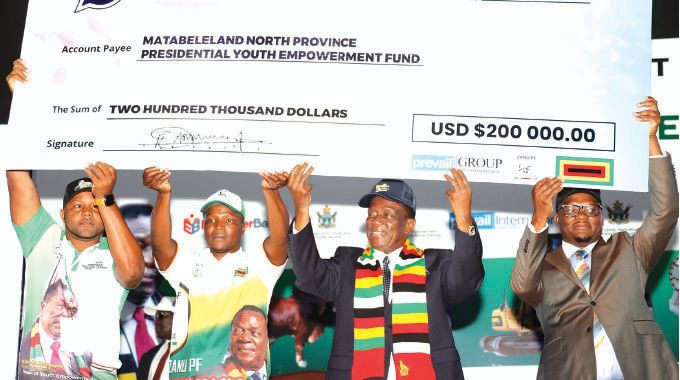
Most times, as I have often said, my heart bleeds when I see ordinary Zimbabweans struggling to survive.
To directly receive articles from Tendai Ruben Mbofana, please join his WhatsApp Channel on: https://whatsapp.com/channel/0029VaqprWCIyPtRnKpkHe08
Vendors, teachers, nurses, farmers, cross-border traders, women, youth, war veterans, and the elderly — all forced by dire circumstances to dance, sing, and publicly glorify those in power.
They do this simply for trinkets handed out under so-called “empowerment projects” or gifts of cars and cash from dubious characters pretending to be benefactors.
These people, in pitiful sight, end up offering glowing tributes to the president, praising him for “leaving no one and no place behind,” pledging to support him with all their hearts.
The irony is unbearable: those very individuals have been left to suffer the consequences of decades of mismanagement, corruption, and looting, yet here they are, celebrating crumbs from the table of their oppressors.
The so-called “empowerment projects” — often vending stalls, loans for backyard projects, corner shops, or pieces of land for housing — are not real solutions to Zimbabwe’s systemic economic decay.
Many beneficiaries are too poor to meaningfully leverage these projects.
Some may not even have the resources to build anything substantial on the land offered to them.
They are handed opportunities that are largely performative, designed to generate loyalty rather than lift lives.
Watching these theatrics, I cannot help but ask myself: had Zimbabwe’s economy been functional, would these people have been so destitute that they needed handouts to make ends meet, to have a place to stay, or to own a vehicle?
Would they have been compelled to perform in public for their survival, when in fact what they need is dignity, opportunity, and a country that works for them?
I have often told those around me that even if I were offered a gift from the president — even a grand mansion or a luxury car — I would still not support him.
Not because I am beyond temptation, but because accepting such gifts would constitute complicity with the very forces that created the poverty I live among and fight against.
It would be a betrayal not only of the millions of Zimbabweans who have been marginalized, exploited, and silenced, but also of the higher calling I have embraced: to speak for the poor, oppressed, and voiceless.
To accept such gifts would mean silencing my conscience, betraying Jehovah God who called me to this work, and undermining my integrity.
I would live in comfort, but I would not be able to look at myself in the mirror, and the guilt might even shorten my life.
Such a betrayal would consume me from within.
Even if I were to do the unthinkable and accept these gifts, they would never alter my understanding of the truth: those who handed them out are the very people who created the circumstances of our collective suffering.
A writer of my talent and experience, in a functional country, would live in relative comfort simply from their craft.
I could afford a beautiful home, comfortable vehicles, quality education for my children, and the freedom to even travel abroad for holidays.
Yet here I am, deprived of those basic possibilities.
The question is simple: whose fault is this?
It is the fault of a leadership that has systematically destroyed the foundation of what was once a prosperous nation, described as the “jewel of Africa” by Tanzania’s founding president, Mwalimu Julius Nyerere, in 1980.
A nation that had a thriving economy, strong institutions, and immense potential, now reduced to a basket case of poverty, mismanagement, and despair.
It is the fault of those who have looted our national resources, enriching themselves while impoverishing millions, forcing teachers, nurses, factory workers, war veterans, and even religious leaders into pauperdom.
In normal circumstances, these individuals would have been able to afford a comfortable living without handouts.
Indeed, this was the reality in Zimbabwe during the 1980s and 1990s.
There were no “presidential schemes” then because there was no need for them.
People were able to live, work, and thrive without being subjected to humiliating performances for crumbs.
So why now?
Why do we witness this grotesque theatre of handouts, loyalty pledges, and empty empowerment schemes?
It is because the very people pretending to be benevolent are the same ones who stole our wealth, abandoned the population, and left millions behind.
The handouts are not gifts; they are instruments of control.
They are meant to generate dependence, gratitude, and loyalty from those who have already been impoverished by misrule.
If those in power genuinely wanted to empower Zimbabweans, the solution would be simple: end the looting.
Allow the nation’s wealth — its minerals, agriculture, forests, wildlife, and other natural resources — to benefit all citizens.
Let the bounty of Zimbabwe create opportunities for every ordinary person, rather than enriching a few while leaving the majority to survive on scraps.
In a country so richly blessed, no one should need handouts to live with dignity.
Before anyone begins singing praises for “presidential schemes,” they must ask themselves: how did I become so poor as to need these handouts in the first place?
And when the answer becomes clear, the follow-up question is inescapable: why should I support those who made me a beggar?
I understand why most Zimbabweans accept handouts, sing, and dance in praise of the very same people who ruined their lives.
It is survival.
In a country robbed of hope and opportunity, one must do whatever is necessary to endure.
But deep down, every Zimbabwean knows the truth.
We know who stole our land, our factories, our resources, and our future.
We know who turned prosperity into pauperism.
And we know that real empowerment does not come in the form of a handout — it comes from a country that works for its people, a leadership that serves its citizens rather than enslaves them in gratitude for scraps.
Even if the president himself were to gift me a mansion, it would change nothing. I would not support him.
I would not be coerced into complicity.
I would not trade my conscience, my integrity, or my responsibility to the voiceless for comfort.
Because no mansion, no car, no sum of money, can redeem the moral and economic devastation inflicted on Zimbabweans.
Comfort bought with compromise is not worth living.
True empowerment comes not from handouts, but from justice, accountability, and the restoration of a nation robbed of its promise.
In the end, this is not about personal gain.
It is about Zimbabwe.
About the millions whose lives have been upended, who continue to struggle to survive, and who deserve leaders who build systems, not illusions.
We should never support those who made us beggars.
We should not be silenced.
We can never be bought — no mansion, no luxury car, no empty handout will ever change that.
 TENDAI RUBEN MBOFANA - THE UN-OPPRESSED MIND!