The ruling elite in Zimbabwe never ceases to amaze in their sycophancy.
Yesterday’s eulogy in Parliament by ZANU-PF’s Chegutu East MP Webster Shamu, as reported in The Herald, was yet another glaring example of how the political class in our country has perfected the art of empty glorification.
To directly receive articles from Tendai Ruben Mbofana, please join his WhatsApp Channel on: https://whatsapp.com/channel/0029VaqprWCIyPtRnKpkHe08
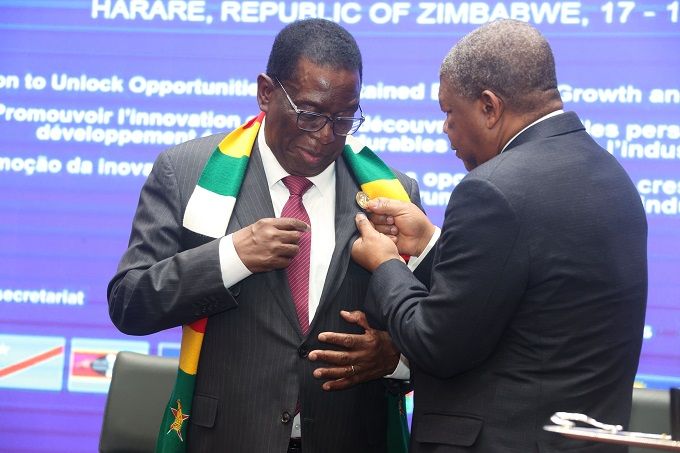
Cloaked as a “point of national interest,” Shamu’s address was nothing more than a sanctimonious ode to President Emmerson Mnangagwa’s chairmanship of SADC, a tenure they desperately want to project as historic and transformative.
Yet, when stripped of the propaganda, the reality is far less flattering.
The first question any reasonable Zimbabwean should be asking is this: if Mnangagwa’s chairmanship of SADC was indeed so successful, why is there such an obsessive need to keep reminding us?
Real achievements speak for themselves.
When leadership is genuinely transformative, it does not require state-controlled newspapers to hammer the point into the public consciousness day after day.
That The Herald and ZANU-PF voices like Shamu must resort to this overkill suggests something deeper: the regime knows that Mnangagwa’s SADC tenure was, in truth, underwhelming.
What we are witnessing now is an elaborate exercise in convincing not only the nation, but also themselves, that failure was somehow success.
Take the list of “achievements” Shamu rattled off in his parliamentary speech.
The Beitbridge-Harare-Chirundu Highway is cited as though it was delivered within the short twelve months of Mnangagwa’s chairmanship, when in reality this project has been under construction for years, riddled with cost overruns, shoddy workmanship, and corruption scandals.
The so-called Trabablas Interchange in Harare is held up as evidence of regional leadership, yet it is a purely domestic road project whose connection to SADC is tenuous at best.
Similarly, the modernised VIP pavilion at the Robert Gabriel Mugabe International Airport is hardly an achievement that “propelled Southern Africa forward” — unless, of course, one confuses pampering elites with regional development.
Hwange Units 7 and 8 have been paraded as a milestone in Zimbabwe’s energy sector and, by extension, the SADC region.
Yet on the ground, their impact is barely perceptible.
Despite their commissioning, amidst pomp and fanfare, crippling load-shedding persists across the country, industries continue to lose millions to power shortages, and ordinary households endure daily blackouts.
Far from contributing meaningfully to SADC’s power pool, the units have struggled even to stabilize domestic supply — exposing the hollowness of claims that this was a landmark achievement.
To present this as a regional triumph under Mnangagwa’s chairmanship borders on dishonesty.
Shamu also hailed “Education 5.0” and “Pfumvudza/Intwasa” as models celebrated across the region.
Yet anyone who has set foot in Zimbabwean universities or rural communities knows these programmes for what they really are: political slogans dressed up as policy.
Education 5.0 has left institutions underfunded and students struggling with inadequate resources, while Pfumvudza, with its tiny hand-dug plots, is a far cry from a serious strategy to achieve food security in a region facing climate shocks.
To pretend these schemes are regional models is an insult to our intelligence.
On peace and governance, Shamu claimed Mnangagwa presided over stability and democracy in the region.
This is perhaps the most cynical assertion of them all.
Beyond the disputed 2023 election in Zimbabwe — condemned even by SADC observers — the regime has a worrying record of meddling in other countries’ political processes.
In Mozambique, ZANU-PF members openly confessed on camera that they registered and voted in support of FRELIMO, contributing to post-election unrest.
In Botswana, senior ZANU-PF officials campaigned for the then-ruling BDP, inflaming tensions and arguably playing a role in its historic electoral loss, with Mnangagwa himself being booed at President Duma Boko’s inauguration.
Meanwhile, in the DRC, SADC forces deployed under Zimbabwe’s chairmanship were forced to withdraw after suffering repeated defeats at the hands of M23 rebels.
Far from projecting regional strength and stability, these episodes exposed the limits of Zimbabwe’s leadership and the ineffectiveness of its chairmanship in ensuring peace and security in the region.
Even the glowing references to conservation ring hollow.
Zimbabwe’s record in environmental stewardship is far from laudable.
From the continued plunder of wildlife through questionable trophy hunting deals to the government’s opaque decision to cull 200 elephants in 2024, there is little for Zimbabwe to boast about in this area.
That the state-controlled press dares to trumpet this as a success of SADC leadership underscores the extent of its desperation.
This obsession with exaggerated praise reflects a much deeper pathology in Zimbabwean politics.
For decades, survival has depended on one’s ability to sing praises of those in power.
From the highest corridors of Parliament to the lowest rungs of state institutions, people instinctively know that sycophancy is the surest path to securing positions, contracts, or even just crumbs from the table.
In such a system, truth becomes expendable, and exaggeration becomes the currency of survival.
Shamu’s effusive tribute to Mnangagwa is not just about SADC; it is part of the ritual performance required of anyone wishing to remain in the good books of the ruling establishment — a posture made all the more revealing given that Shamu previously declared he wished he were then-President Robert Mugabe’s son, laying bare the culture of sycophancy that continues to dominate Zimbabwean politics.
The result is a grotesque distortion of reality.
Zimbabweans live with collapsing health systems, decayed infrastructure, a broken education sector, and an economy that has pushed millions into poverty.
Yet, instead of confronting these failures, the ruling elite find solace in choreographed displays of praise.
They tell themselves, and try to tell us, that Mnangagwa’s SADC chairmanship was a shining success.
But the louder they proclaim this, the more obvious it becomes that they are trying to mask a failure.
Zimbabweans are not fooled.
They know that true leadership cannot be measured by VIP terminals or by handing over ceremonial chairmanships.
It is measured by the quality of life of the ordinary people, by whether children can attend school without sitting on the ground and the entire class not sharing a single book, by whether hospitals can function without asking patients to bring their own medicines and bandages, by whether jobs are created in an economy stripped bare by corruption.
By these real measures, Mnangagwa’s record — both as President and as SADC Chair — is found wanting.
If anything, Shamu’s over-the-top speech in Parliament and its reproduction in The Herald should remind us that the regime is desperately trying to manufacture glory where none exists.
It is a hollow theatre of praise designed to mask the lived reality of ordinary Zimbabweans.
And the louder they sing, the clearer it becomes: Mnangagwa’s chairmanship of SADC was no triumph at all, but a failure that now requires the crutch of propaganda.
 TENDAI RUBEN MBOFANA - THE UN-OPPRESSED MIND!