Talk is cheap, they say – but delivering concrete results is a totally different issue.
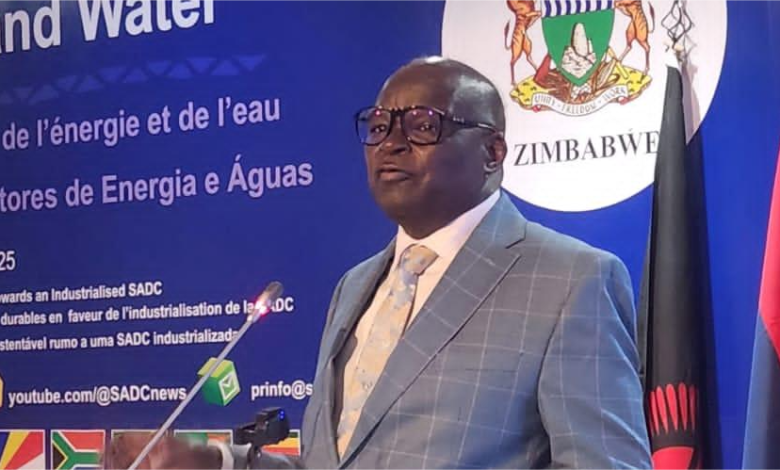
The recent headlines announcing that Zimbabwe is courting Japan’s energy giants may have been intended to inspire hope in a country suffocating under the weight of crippling power shortages.
To directly receive articles from Tendai Ruben Mbofana, please join his WhatsApp Channel on: https://whatsapp.com/channel/0029VaqprWCIyPtRnKpkHe08
During an official visit to Tokyo, Energy Minister July Moyo highlighted efforts to attract investment from Japanese giants like Toshiba and Hitachi, as well as smaller solar energy companies, to overhaul Zimbabwe’s electricity sector and restore reliable power supply.
On the surface, the prospect of Japanese companies, with their technological sophistication and financial muscle, entering our energy sector looks promising.
Yet when the layers of political rhetoric are peeled back, one cannot help but question whether such overtures will translate into tangible investment.
Courting private players into our energy sector is one thing; persuading them to actually commit their capital is quite another.
The fundamental question the government ought to ask itself is whether Zimbabwe’s economic environment is viable for private players in the energy sector.
Energy projects are not the type of ventures that can be sustained on mere promises or political charm offensives.
These are undertakings that require billions of dollars in upfront capital and yield returns only over the long term.
For serious investors, decisions to enter such a market depend not on sentiment but on a combination of economic fundamentals, regulatory clarity, and political credibility.
Sadly, Zimbabwe’s current environment fails dismally on all these fronts.
The first and most obvious stumbling block is economic instability.
Investors thrive in predictability.
Yet Zimbabwe’s economy has been defined by volatility—high inflation, a local currency that collapses at will, and policies that shift with political winds.
For a Japanese energy giant, the simple question would be: how do you forecast future earnings in a country where the value of your revenues could evaporate overnight due to exchange rate shocks or arbitrary monetary policy?
Committing billions in such an environment is akin to building on quicksand.
Without a stable macroeconomic framework, Zimbabwe’s attempts to attract energy investors will remain futile.
Tariffs present another equally daunting obstacle.
Zimbabwe’s power utility, ZESA, has long been hamstrung by politically determined tariffs that are kept artificially low to appease the electorate.
While this might appear as a pro-poor measure, in reality it is economically suicidal.
No private investor can sustain operations when consumers are paying far below the cost of production.
In markets that have successfully attracted independent power producers, such as Kenya, tariff regimes are transparent, cost-reflective, and insulated from political interference.
Kenya’s renewable energy boom, which has made it one of Africa’s leaders in geothermal and wind power, was driven largely by guarantees of cost-reflective tariffs under its feed-in-tariff policy.
In Zimbabwe, the opposite is true—electricity pricing is treated as a political tool rather than an economic instrument.
Unless there is a credible and transparent framework guaranteeing investors fair returns through realistic tariffs, Japan’s energy giants are unlikely to view Zimbabwe as a serious destination for their capital.
Beyond economics lies the issue of credibility and trust in government.
Zimbabwe has a notorious history of policy inconsistency and outright disregard for contractual obligations.
From land seizures to arbitrary changes in indigenization laws, investors have seen time and again that promises made on paper mean little when political expediency takes precedence.
For energy investors, the risks are even higher because power projects often operate under Power Purchase Agreements (PPAs) that bind governments for decades.
The simple question for any investor would be: can the Zimbabwean government, or ZESA for that matter, be trusted to honor these agreements without reneging or delaying payments?
Given ZESA’s record of indebtedness and default, the answer is far from reassuring.
Just last year, the utility was reported to have been owing a staggering US$430 million to Hwange Electricity Supply Company (Hesco), which operates units 7 and 8 at the country’s largest thermal power station — a debt accumulated from unpaid power supplied between May and November 2024.
This colossal arrear threatened the continued operation of the newly commissioned units, further exposing the fragility and mismanagement within Zimbabwe’s energy sector.
Contrast this with South Africa, which, despite its own electricity challenges, managed to attract over US$20 billion in private investment into renewable energy through its Renewable Energy Independent Power Producer Procurement Programme (REIPPPP).
Investors were reassured by a clear regulatory framework, legally binding PPAs, and sovereign guarantees that were respected in practice.
Zimbabwe’s credibility deficit is what sets it apart in the worst possible way.
The domestic market itself raises further doubts.
Energy investors require a strong base of reliable off-takers—industries, mines, and commercial enterprises—that can guarantee consistent demand and payment.
But Zimbabwe’s industrial base has been decimated by years of deindustrialization, while unemployment has left households financially fragile.
Even if Japanese companies were to invest, who exactly would they be selling power to?
Unlike South Africa or Botswana, where industries consume vast amounts of electricity, Zimbabwe’s economy has shrunk to a point where demand cannot be assumed to be commercially viable.
Mozambique offers another instructive example.
The Cahora Bassa Dam not only powers much of Mozambique but also exports electricity to South Africa, generating reliable revenues for the government and private investors.
Zimbabwe, by contrast, cannot even guarantee that its domestic consumers will be solvent enough to sustain a profitable energy market.
Corruption and bureaucratic inefficiency add another layer of deterrence.
Zimbabwe is consistently ranked among the most corrupt countries in global indices.
Investors routinely complain of opaque procurement systems, political gatekeeping, and demands for kickbacks.
For Japanese firms accustomed to operating under stringent corporate governance and anti-corruption laws, this presents a reputational and legal risk.
How do you convince a Tokyo boardroom that their investment in Zimbabwe will not be lost to rent-seeking officials or delayed by endless bureaucratic red tape?
In countries like Morocco, which has become a continental leader in solar energy, streamlined procurement processes and strong institutional support have helped attract billions in investment.
Zimbabwe has instead become synonymous with red tape and corruption, scaring away precisely the kind of players it claims to be courting.
In 2007, Econet Wireless founder Strive Masiyiwa approached the government with a proposal to establish a US$250 million, 500 MW power generation plant.
However, this initiative never saw the light of day due to demands from executives of the state-owned Zimbabwe Electricity Supply Authority (ZESA) to be included in the project for facilitating its licensing.
Masiyiwa adamantly refused to comply with these demands, illustrating how the country’s environment for investment is suffocated by self-interest and institutional corruption.
Perhaps the most overlooked yet critical factor is the issue of guarantees.
In functioning markets, governments provide sovereign guarantees to backstop PPAs, assuring investors of payment even if utilities struggle.
But in Zimbabwe, government guarantees are worth little.
Investors know the state is already burdened with debt, perpetually cash-strapped, and with a history of default.
The credibility gap is so wide that no serious investor would consider a Zimbabwean sovereign guarantee bankable.
Kenya’s model again provides a counterpoint: international investors flocked to its geothermal and wind projects because they trusted that the government-backed agreements would be honored and that they could repatriate their profits without fear of arbitrary restrictions.
In Zimbabwe, no such assurances exist.
What all this reveals is that courting Japan’s energy giants is more about political optics than genuine economic feasibility.
It allows the government to appear proactive, to claim it is engaging the international community, and to shift blame for power shortages away from its own failures.
Yet investors are not swayed by political theater.
They are swayed by stability, predictability, and profitability.
None of which Zimbabwe currently offers.
To be fair, Japanese companies may entertain such discussions for diplomatic reasons or exploratory purposes.
They may attend investment forums, listen politely to government pitches, and even sign memoranda of understanding.
But MOUs are not investments.
They are non-binding gestures.
Until Zimbabwe demonstrates real reform—by stabilizing its currency, creating a transparent tariff regime, ensuring respect for property rights, curbing corruption, and rebuilding trust in state institutions—such overtures will remain empty rituals.
The tragedy is that Zimbabwe is in desperate need of investment in its energy sector.
Power shortages are crippling industries, suffocating small businesses, and tormenting households.
The economy requires an additional 800–1,000 megawatts just to meet current demand, let alone support future growth.
Yet instead of creating a genuinely investor-friendly climate, the government resorts to grand announcements of courtship with foreign companies, hoping that the optics alone will inspire confidence.
This is not strategy; it is wishful thinking.
Japan’s energy giants are not naïve.
They have a wealth of global options and are unlikely to risk their reputations or resources in an environment as toxic as Zimbabwe’s unless fundamental reforms are undertaken.
Until then, these courtship efforts will remain little more than another chapter in Zimbabwe’s long saga of failed promises and missed opportunities.
The lesson is clear: no amount of charm offensives or diplomatic overtures can substitute for real reform.
Investors do not follow words; they follow environments where their capital is safe, respected, and rewarded.
Until Zimbabwe internalizes this truth, its courtship of Japan’s energy giants will remain a hollow performance staged for domestic consumption rather than a pathway to resolving the country’s crippling energy crisis.
 TENDAI RUBEN MBOFANA - THE UN-OPPRESSED MIND!