When a leader who has failed to deliver today starts promising heaven tomorrow, skepticism is not only wise — it is necessary.
We are constantly told by those in power that Zimbabwe is on course to becoming an “upper middle-income society” by the year 2030.
To directly receive articles from Tendai Ruben Mbofana, please join his WhatsApp Channel on: https://whatsapp.com/channel/0029VaqprWCIyPtRnKpkHe08
This phrase has become one of the most repeated slogans of the Mnangagwa administration, a sort of mantra designed to instill hope in a weary population.
Yet, upon closer inspection, this vision raises a troubling and fundamental question: if Zimbabwe is already classified as a middle-income economy, why are its people living worse than citizens in many of the world’s poorest countries?
And if this is the reality of being middle-income in Zimbabwe, what hope can there possibly be that graduating to “upper middle-income” status will suddenly improve our lives?
According to the World Bank, countries are classified as low-income, lower middle-income, upper middle-income, or high-income, based on gross national income per capita.
The arithmetic is simple: divide the country’s total economic output by its population.
Zimbabwe’s GDP currently stands at about US$44.4 billion.
With a population of 16 million, this works out to roughly US$2,775 per person, which squarely places Zimbabwe within the World Bank’s lower-middle-income bracket.
In other words, Zimbabwe is already classified as a middle-income economy today — even before we begin talking about reaching upper middle-income status.
On paper, this is not a bad place to be.
But the reality lived by ordinary Zimbabweans bears no resemblance to this statistical categorization.
While figures suggest we have achieved a level of prosperity, the lived reality tells a story of deprivation, poverty, and desperation.
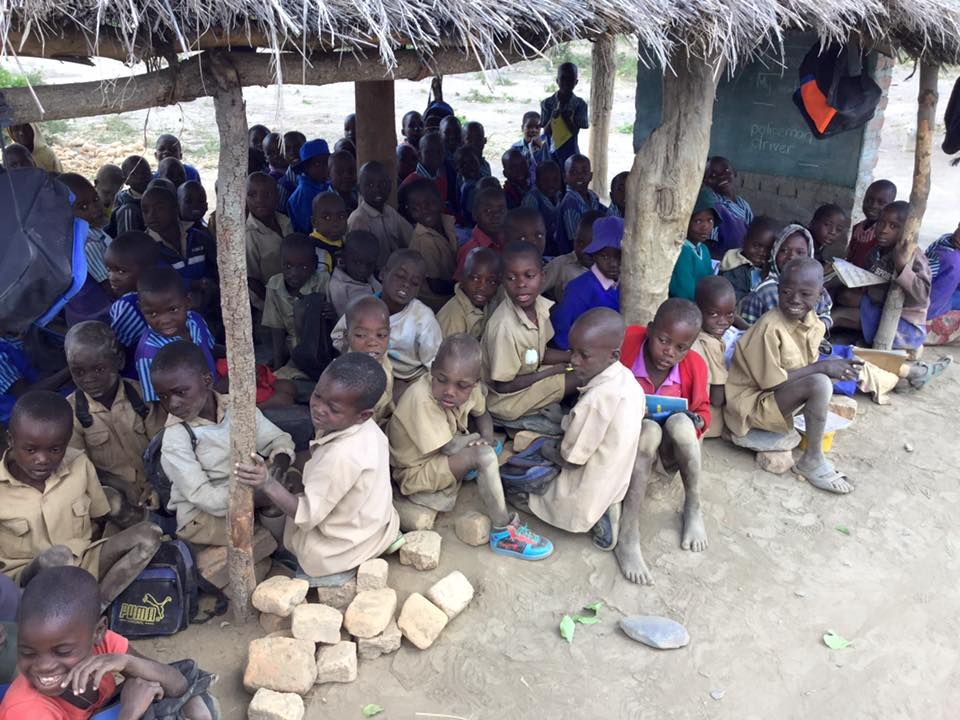
Millions of Zimbabweans struggle to put food on the table, survive on informal vending or menial jobs, and live in conditions that fall well below what even the World Bank classifies as low-income existence.
This contradiction exposes the hollowness of celebrating middle-income status in Zimbabwe.
Let me give an example.
There are essentially two reasons why a family may go hungry, have nothing to wear, and fail to send its children to school.
The first is obvious: they are simply too poor, perhaps earning less than US$100 a month, which is nowhere near enough to meet their basic needs.
But there is another possibility.
The family may actually be earning over US$2,000 a month — more than enough for a relatively comfortable and decent life — yet the father squanders most of this money on friends, luxuries, or lovers, leaving little or nothing for his household.
In the end, his family lives a life no different from that of a household earning under US$100 a month.
This is exactly the situation in Zimbabwe.
On paper, we are already a middle-income economy, and Zimbabweans should be enjoying the benefits of that status — as families in countries like the Philippines or India do — yet our lived reality is closer to that of low-income nations such as Malawi or Mozambique.
The reason is simple: the ruling elite misuses and loots the nation’s wealth for their own enrichment, leaving millions of ordinary citizens trapped in poverty.
Statistics can tell us one thing, but if the wealth of a nation is concentrated in the hands of a tiny oligarchy, then the average figure becomes meaningless for the vast majority.
The GDP per capita calculation assumes a fairer distribution than actually exists.
In Zimbabwe, where the national cake is consumed by a few connected elites, the number becomes nothing more than a cruel joke for the ordinary person scrambling for crumbs.
If we want to test the true meaning of being a middle-income country, we need only look elsewhere.
Take India, for instance.
With a per capita income of about US$2,730 — nearly identical to Zimbabwe’s — India offers far more to its citizens in terms of public services and opportunities.
Its vast population has access to heavily subsidized healthcare, relatively affordable tertiary education, and a growing manufacturing and technology sector that creates jobs on a massive scale.
Indonesia, with a per capita income of around US$5,050, has invested heavily in public infrastructure and social protection programs that have lifted millions out of poverty, giving its middle class genuine spending power and stability.
Now consider upper middle-income countries such as South Africa and Brazil.
South Africa’s per capita income sits at about US$6,700, while Brazil’s is around US$10,400.
Despite their own struggles with inequality, these countries still manage to deliver far better living standards for their citizens.
Their populations have access to social grants, public healthcare systems that function, reliable electricity for the majority, and job opportunities created by diversified economies.
In Zimbabwe, by contrast, citizens in the same “middle-income” category endure collapsed healthcare, unaffordable education, crumbling infrastructure, and chronic unemployment.
The contrast could not be starker: we share the same income grouping with India and Indonesia, and aspire to join South Africa and Brazil, yet our citizens’ quality of life is closer to those trapped in the poorest nations on earth.
This glaring mismatch between classification and reality raises an uncomfortable truth: the problem is not about the economy’s size on paper, but about who controls and consumes the wealth that economy generates.
Zimbabwe has become what can best be described as a lootocracy, where state resources and opportunities are monopolized by a politically connected elite.
Billions generated through mining, agriculture, and state-owned enterprises are siphoned off through corruption, patronage networks, and opaque deals.
Ordinary Zimbabweans see little of this wealth trickling down into better wages, affordable services, or improved infrastructure.
Instead, they are left to hustle in informal markets, bear the brunt of collapsing public services, and survive in conditions comparable to or even worse than those in low-income countries.
The destruction of Zimbabwe’s middle class has been central to this crisis.
In many societies, the middle class provides stability and resilience.
It is the middle class that pays taxes, sustains consumer markets, and anchors democratic accountability.
But in Zimbabwe, the middle class was systematically decimated by reckless and ill-conceived policies over the past three decades — unbudgeted payouts to war veterans in 1997, costly military misadventures in the Democratic Republic of Congo, and the chaotic land reform program that destroyed commercial agriculture without creating viable alternatives.
These decisions hollowed out the economy, collapsed industry, and drove millions of educated and skilled Zimbabweans into the diaspora.
Without a thriving middle class, the fabric of Zimbabwean society has been shredded.
Those with skills and education fled abroad to enrich other countries, while those left behind have been reduced to survivalist hustling.
The result is a nation in which the gulf between a wealthy minority and the impoverished majority grows wider by the day.
It is this structural inequality that explains why Zimbabweans can live in a so-called middle-income economy but experience poverty more severe than that of low-income nations.
And yet, government officials continue to dangle the promise of an “upper middle-income society” as if this will magically transform lives.
But why should anyone believe them?
If Zimbabweans are not benefiting from middle-income status now, what assurance is there that graduating to the next level will change anything?
Without structural reforms to end corruption, rebuild the middle class, and ensure inclusive growth, upper middle-income status will simply mean more riches for the oligarchy and continued suffering for the majority.
The classification will once again be statistical window-dressing — impressive to international financial institutions, but irrelevant to citizens who cannot afford bread or medicine.
The deception lies in treating economic categorization as an end in itself, rather than focusing on what truly matters: the lived quality of life for citizens.
A country’s greatness is not measured by the size of its GDP but by whether its people have access to dignified work, decent healthcare, quality education, reliable infrastructure, and the ability to aspire for a better life.
By these real measures, Zimbabwe is failing, and no amount of middle-income labels can conceal this truth.
What Zimbabwe desperately needs is not another slogan or a statistical upgrade, but a genuine transformation of governance and economic management.
This requires dismantling the systems of patronage and corruption that have entrenched a tiny oligarchy at the expense of the majority.
It requires restoring and rebuilding a middle class that can stabilize society and drive sustainable growth.
Above all, it requires leadership that sees wealth not as personal loot but as a national resource to be invested in the well-being of all.
Until then, the middle-income label will remain meaningless.
Zimbabweans will continue to live worse than citizens in low-income countries, trapped in poverty despite their nation’s potential.
And when the government proclaims “upper middle-income status” in 2030, we will have every reason to ask: what difference does it make when the people are still hungry, unemployed, and hopeless?
The truth is that economic progress without inclusivity is nothing more than a mirage.
Zimbabwe does not need a new label.
It needs justice, equity, and a leadership committed to sharing the national cake with all its citizens.
Only then will being middle-income mean something real for the ordinary man and woman struggling to survive in this country.
 TENDAI RUBEN MBOFANA - THE UN-OPPRESSED MIND!