There will always be those who find comfort in self-delusion – but burying your head in the sand has never made danger disappear.
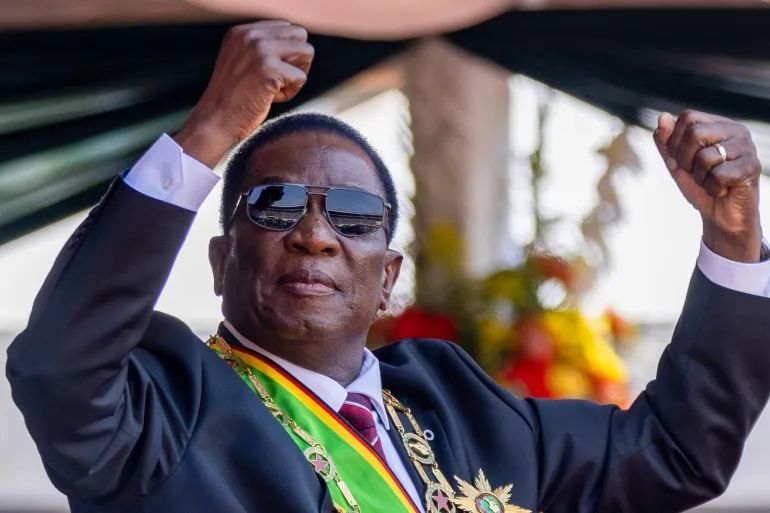
Today, during the state-controlled broadcaster ZBC afternoon news bulletin, I watched in utter disbelief a snippet of an interview with President Emmerson Mnangagwa, commemorating this year’s Heroes Day.
To directly receive articles from Tendai Ruben Mbofana, please join his WhatsApp Channel on: https://whatsapp.com/channel/0029VaqprWCIyPtRnKpkHe08
In the clip, Mnangagwa claimed that life in Zimbabwe today – particularly for the youth – was better than it was under colonial rule.
I genuinely did not know how to feel – whether to laugh at the absurdity, be angry at the insult to our intelligence, or feel sorry for the President for trying so desperately to whitewash the abysmal failures of his ZANU-PF regime to fulfill the lofty promises of the liberation struggle.
In the brief clip, Mnangagwa patronized the young interviewer, pointing out that they had not been born during colonial rule and therefore could not possibly know how “horrendous” it was.
I can already imagine the rest of the interview – portraying the Rhodesian regime as entirely vile, while painting ZANU-PF as the liberators who ushered in a better life for all.
Yet, even in this snippet, it was telling what Mnangagwa regarded as the horrors of Rhodesian rule: the fact that he and fellow fighters were arrested by the Ian Smith government.
This is curious.
Has Mnangagwa forgotten how many Zimbabweans have been arrested under post-independence governments – including his own – simply for demanding their rights and speaking out against injustices?
Does he not see the irony of condemning Smith for arresting political opponents while presiding over a regime that has repeatedly arrested opposition leaders, human rights defenders, and journalists on flimsy charges, only for those cases to collapse in court?
The “Avondale 78” come to mind – arrested at the home of opposition leader Jameson Timba on June 16, 2024, while commemorating the Day of the African Child.
Job Sikhala and Jacob Ngarivhume languished in prison for months for alleged crimes later overturned on appeal.
Journalists Blessed Mhlanga and Faith Zaba still await trial for simply doing their jobs.
And who can forget the unarmed civilians gunned down in cold blood on the streets of Harare in August 2018 and January 2019 by security forces?
As much as arrests and killings occurred under Rhodesia – regrettable as they were – they happened in the context of an armed liberation war.
Ordinary unarmed civilians were never shot dead in Salisbury’s streets for protesting or demanding better living conditions — in fact, black people routinely marched and demonstrated against racial segregation, for fair wages, and for equality, yet were never met with live bullets from the security forces.
Under independence, however, we have witnessed far worse – from the Gukurahundi massacres in Matabeleland and the Midlands, which butchered over 20,000 innocent civilians, to the systematic crushing of dissent through fear and violence.
If Mnangagwa himself had been Rhodesia’s Prime Minister during a war against his government, would he not have arrested—or even killed on the battlefield—armed insurgents, regardless of the nobility of their cause?
That is no defense of colonialism – but it exposes the hollowness of claiming today’s repression is somehow more “liberating.”
The so-called ‘horrors’ of the Smith regime occurred in the context of an armed war, unlike the brutality of ZANU-PF, which has been unleashed in times of peace.
On the economic front, the President’s claim is even more laughable.
I was born in 1973 and witnessed the final years of Rhodesia.
Let us not kid ourselves – the economy then was far stronger.
Anyone with a job could live decently – whether a general labourer, bus driver, factory worker, teacher, or nurse.
Wages were enough to sustain a family comfortably.
No one needed “side hustles” just to survive, as is now the norm.
My father was a teacher and my mother a nurse.
We lived comfortably.
We ate nutritious meals, dressed well, and could regularly travel to different places.
Even domestic workers had their own cottages provided by employers.
Today, nurses flee to the UK to work as caregivers, and teachers become parking attendants in South Africa.
The education system, though segregated, offered adequate books, well-trained teachers, and sufficient resources – producing leaders like Robert Mugabe, who would later preside over a decaying system in which many schools now lack even the most basic textbooks.
I was born in Torwood Hospital, located in the small town of Redcliff, which was then operated by Risco, an iron and steel manufacturing company.
I entered the world not breathing, not moving, not crying.
For eight grueling hours, medical staff fought to save me, using life-saving equipment—oxygen tanks, masks, resuscitation devices—and, by Jehovah God’s grace, which is found in Christ Jesus, they succeeded.
That hospital, well-resourced and staffed with motivated professionals, no longer exists.
It collapsed after Risco, later renamed Ziscosteel following independence, fell into ruin due to corruption, plunder, and mismanagement—hallmarks of the post-independence era.
I pity any child born today in the same fragile condition I was—unresponsive, not breathing, and not crying—because with the deplorable state of our healthcare system, even major city hospitals would likely be unable to save them.
This is no exaggeration.
Who can forget Brigadier-General Victor Chikudo Rungani, who died in May this year reportedly because three hospitals—including a military facility—lacked a ventilator?
Or broadcaster Zororo Makamba, Zimbabwe’s first COVID-19 casualty in March 2020, who passed away after his family, despite their considerable wealth, was unable to secure access to a ventilator?
Under Rhodesia, Zimbabwe was Africa’s industrial engine.
Our industries, manufacturing plants, agriculture, mining, and tourism flourished.
International companies such as Lonrho and Rio Tinto had significant operations here.
We produced nearly everything we needed—ranging from food and clothing to assembled cars, building materials, and manufactured goods—and still had enough surplus to export.
The products were durable and built to last—some of which remain functional decades later—unlike the cheap imports now flooding our markets.
Today, much of that industrial base lies in ruins.
Trains that once transported raw materials and finished goods now sit idle.
We import almost everything except a few agricultural products.
The result?
Unemployment of around 90%, pushing our youth into street vending, prostitution, artisanal mining, and crime.
The luckier ones flee – with an Afrobarometer survey showing six out of ten young Zimbabweans want to leave the country.
If life is better now, why are they running away?
The so-called “gains of independence” that Mnangagwa sells to the youth are a cruel deception.
The majority of urban households have gone years without running water.
Power cuts last most of the day.
Public hospitals are death traps.
Roads are crumbling.
The currency is unwanted.
No amount of propaganda will hide this reality.
In Rhodesia, life was far from perfect – especially for the black majority denied political rights and full equality.
But materially, economically, and institutionally, the country functioned.
The trains ran.
The hospitals worked.
The industries produced.
The currency was stable.
Above all, Rhodesian leaders maintained essential services out of a sense of responsibility and a desire to see the country prosper—even in Black communities where public outrage was often contained.
So, I ask President Mnangagwa: under which warped logic can anyone claim life was worse under Rhodesia?
The only people who can utter such insults with a straight face are those who live in mansions, travel in convoys, dine on imported delicacies, and send their children to foreign schools, while the rest of the nation wallows in poverty.
The liberation struggle was not waged so that a tiny political elite could inherit Ian Smith’s privileges and then multiply the suffering of the majority.
To stand before a hungry, jobless, hopeless nation and tell them they are better off today is not just dishonest – it is spitting in their faces and daring them to say it’s raining.
 TENDAI RUBEN MBOFANA - THE UN-OPPRESSED MIND!