The moment has come for serious introspection.
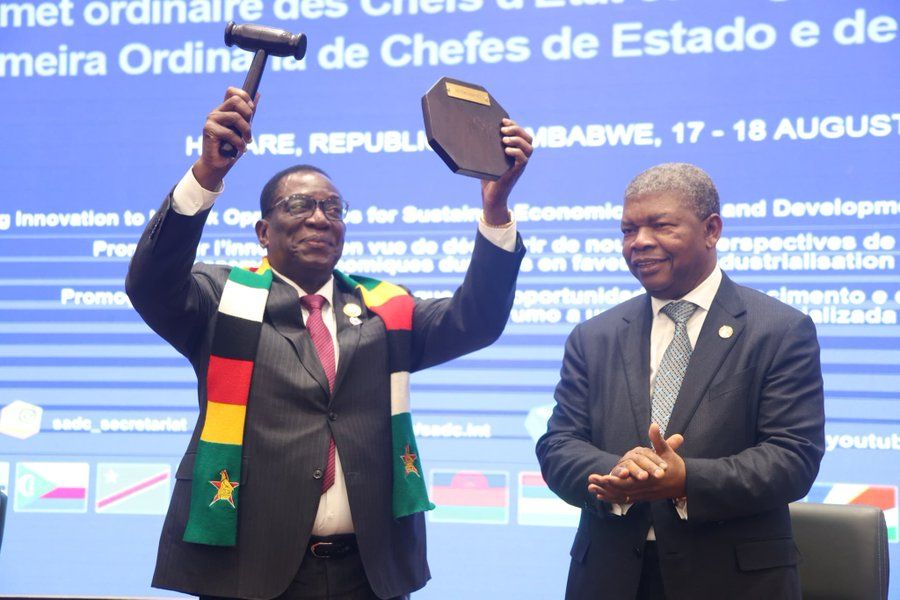
Zimbabwe’s one-year tenure as Chair of the Southern African Development Community (SADC) is nearing its end, set to conclude on 17 August 2025.
Officially, it was anchored on the theme: “Promoting Innovation to Unlock Opportunities for Sustainable Economic Growth and Development.”
To directly receive articles from Tendai Ruben Mbofana, please join his WhatsApp Channel on: https://whatsapp.com/channel/0029VaqprWCIyPtRnKpkHe08
Yet, for many observers across the region, what stood out most was not a record of developmental progress, but a troubling contradiction between rhetoric and reality.
The chairmanship will likely be remembered more for repression than for regional renewal.
To its credit, Zimbabwe did host the 7th SADC Industrialisation Week and fronted discussions on technology advancement, agro-processing, and regional value chains.
These forums were important in raising the profile of key developmental issues.
However, many of these engagements had the hollow ring of political theatre.
Far from energizing industrialisation across the bloc, the initiatives mostly served as talk shops lacking the credibility and policy muscle to bring about real change.
The summit period itself was marred by the arrest of over 160 citizens — including journalists, opposition figures, and civil society activists — in what was widely seen as a desperate and heavy-handed attempt to silence dissent and project an image of national stability.
This crackdown did not just reflect domestic repression; it severely undermined Zimbabwe’s credibility as the face of regional leadership.
For an administration widely criticized for its chronic governance failures, the SADC chairmanship was viewed as a rare opportunity to manufacture a global “success story.”
In their eagerness to prevent any disruption to the summit and ensure a flawless showcase, the Mnangagwa government overreached — deploying law enforcement to quash even the mildest criticism.
Ironically, this overzealousness backfired.
Rather than enhancing Zimbabwe’s image, it placed the country’s appalling human rights record under the harsh glare of international scrutiny.
Global watchdogs — including the United Nations, Amnesty International, and Human Rights Watch — flagged the wave of arrests and condemned the state’s clampdown on fundamental freedoms.
Instead of inspiring regional confidence, Zimbabwe’s chairmanship opened with headlines not about innovation or integration, but about brutality and repression.
In trying to present itself as a capable leader in regional progress, the regime merely amplified its deepening authoritarianism — and signaled a chairmanship founded not on merit, but on manipulation and fear.
The ambition to champion SADC’s Industrialisation Strategy (2015–2063) was undermined by the chair country’s own governance failures and economic dysfunction.
Zimbabwe’s industrial base is a shadow of what it once was.
The economy is still heavily reliant on raw exports with little beneficiation.
Hyperinflation, a collapsing local currency, and a ballooning informal economy provide neither the environment nor the credibility to lead a conversation on innovation or structural transformation.
In fact, Zimbabwe’s economy served as a cautionary tale during its chairmanship — demonstrating the precise risks of misgovernance, policy inconsistency, and corruption.
Efforts around regional value chains, digital infrastructure, and intra-SADC trade also failed to gain real momentum.
The themes were attractive, but implementation was nonexistent.
Countries across the region remain divided by fragmented trade policies and poor digital integration.
A glaring example of ineffective leadership under Zimbabwe’s SADC chairmanship was the region’s disjointed and weak response to the recent wave of punitive trade tariffs imposed on African exports by U.S. President Donald Trump.
These tariffs, targeting key sectors like agriculture, textiles, and mining, threaten to choke several economies in southern Africa that depend heavily on access to the U.S. market.
Rather than using its position to convene an emergency regional summit or coordinate a unified strategy, Zimbabwe — as SADC Chair — responded unilaterally and controversially.
In an unexpected move, President Emmerson Mnangagwa announced the complete removal of tariffs on all U.S. imports into Zimbabwe.
This was done without consulting fellow SADC members or even Zimbabwe’s own Parliament.
The decision, widely criticized by economic analysts and regional observers, was seen as a desperate attempt to appease Washington and portray Zimbabwe as cooperative on the international stage — even at the cost of regional cohesion and local industry protection.
Instead of rallying SADC around a collective negotiation platform to challenge or engage with the U.S., Mnangagwa’s administration acted alone, effectively abandoning the bloc’s interests in favor of short-term optics.
This incident not only betrayed the principles of regional solidarity but also laid bare the fragmentation within SADC.
As chair, Zimbabwe had a responsibility to lead from the front — to push for consensus, defend shared economic interests, and amplify the region’s collective voice on the global stage.
Instead, what transpired was a clear case of diplomatic isolationism, where a country already grappling with domestic economic turmoil chose to curry favor with a global power at the expense of regional integrity.
The silence from other member states in the wake of this unilateral move further revealed SADC’s institutional weakness and lack of coordination under Zimbabwe’s leadership.
In the face of a global economic threat, what was needed was unity.
What we got was retreat.
Zimbabwe missed the opportunity to steer the bloc toward greater food security, even in the face of a devastating El Niño-induced drought.
Instead, the focus was more on summit optics and political branding than meaningful outcomes.
It is difficult to inspire regional cohesion when your own domestic policies are steeped in mistrust and dysfunction.
Symbolically, Zimbabwe said all the right things about integration, innovation, and sustainable growth — but the reality back home told a different story.
The power outages crippling Zimbabwe’s economy were a stark reminder of how far removed the government is from delivering on its promises.
You cannot preach industrialisation while failing to keep the lights on.
The mismatch between words and actions rendered Zimbabwe’s leadership ineffective and unconvincing.
Even more troubling was how Zimbabwe’s chairmanship exposed SADC’s growing accountability crisis.
Far from being a guardian of democracy and good governance, the bloc increasingly behaves like a sanctuary for despotic regimes.
Zimbabwe’s brutal crackdown on dissent during the summit, and the silence that followed from SADC itself, illustrated a worrying trend: human rights violations are tolerated — even normalized — under the banner of regional solidarity.
Worse still, SADC under Zimbabwe’s leadership failed to act decisively on issues of regional instability.
It turned a blind eye to the election crisis in Mozambique.
Zimbabwe’s own conduct was also problematic.
The ruling ZANU-PF party allegedly interfered in the internal electoral affairs of fellow member states.
In Mozambique, it was accused of deploying party members to vote in that country’s elections.
In Botswana, senior ZANU-PF officials openly campaigned for the then-ruling BDP party — a move viewed by many as overreach and a violation of SADC’s own principles on sovereign electoral processes.
The fallout was tangible: the BDP was ousted after ruling since independence, and Zimbabwe’s President Emmerson Mnangagwa was publicly booed at the inauguration of Botswana’s new leader, Boko Duma.
In both cases, Zimbabwe’s actions damaged diplomatic trust and stirred unrest, further eroding the integrity of its regional leadership.
Leadership is only effective when built on a foundation of internal stability.
Yet during its tenure as chair, Zimbabwe faced deep economic and social crises.
It’s difficult to lead a region effectively when your own house is in disorder.
Zimbabwe’s economic crisis — marked by high inflation, the erosion of public confidence in the new ZiG currency, and persistent poverty affecting over 80% of the population — severely undermined its credibility.
With a formal job market that continues to shrink and a vast majority of citizens surviving through informal trading, the country remains trapped in a cycle of economic instability.
How does one champion regional development when they are failing to guarantee basic services at home?
The contradiction was glaring.
True leadership starts with internal success — yet Zimbabwe presented itself as a regional model while its own economy struggled to inspire hope.
How could a nation battling such domestic turmoil possibly lead a bloc toward sustainable economic development?
Zimbabwe’s leadership appeared performative, ungrounded in any real capacity to inspire regional transformation.
From an economic standpoint, the chairmanship failed to entrench any tangible gains.
The same structural challenges — youth unemployment, trade barriers, and energy insecurity — persisted.
There were no major investment flows or breakthrough reforms that can be traced to Zimbabwe’s leadership.
If anything, the chairmanship further revealed how fragile regional integration remains, especially when steered by a country teetering on the edge of its own collapse.
So, what were the lessons for Zimbabwe?
At best, the experience may have offered a mirror.
A moment of introspection, perhaps.
It should have reminded those in power that one cannot lead effectively while failing one’s own people.
Leadership in the region must be earned through example — not through coercion, showmanship, or diplomatic gamesmanship.
Unfortunately, there is little evidence that any such reflection occurred.
While Zimbabwe did gain an opportunity to re-engage diplomatically and host high-level events, those gains were largely symbolic.
They were drowned out by heavy-handed repression, political paranoia, and a lack of trust from regional partners.
In the final analysis, Zimbabwe’s chairmanship of SADC was not a success.
It was a missed opportunity.
Instead of galvanising regional cooperation, it highlighted the risks of placing a troubled state at the helm of a community that so desperately needs bold, principled, and credible leadership.
For SADC to thrive, it must move beyond lip service to real accountability, real reform, and real results.
And that starts with ensuring that its leaders — including the Chair — embody the values they claim to represent.
 TENDAI RUBEN MBOFANA - THE UN-OPPRESSED MIND!