It’s remarkably easy for individuals — and even entire political movements — to deceive themselves.
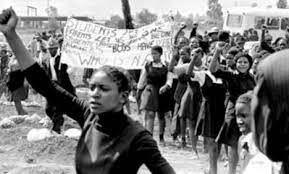
South Africa’s African National Congress (ANC) is hosting a summit of former African liberation movements this week in Kempton Park.
To directly receive articles from Tendai Ruben Mbofana, please join his WhatsApp Channel on: https://whatsapp.com/channel/0029VaqprWCIyPtRnKpkHe08
As I read through their press statement, one phrase struck me immediately: “Defending the gains.”
It stopped me in my tracks.
What gains? And for whom?
These are not rhetorical questions — they demand sincere answers.
Because, from where I stand, as someone born and raised in Zimbabwe — represented at this summit by the ruling ZANU-PF — it is difficult to identify any tangible “gains” for the majority of ordinary citizens.
If anything, the post-independence period has brought only worsening poverty, repression, and hopelessness to millions, while a connected elite thrives.
In Zimbabwe, fewer than 1% of the population live in obscene luxury, having accumulated wealth through proximity to power.
This elite benefits from shady government contracts, smuggling of gold and other precious minerals, and illicit financial flows.
The country loses an estimated US$3 billion annually through these corrupt activities.
According to Transparency International’s 2024 Corruption Perception Index, Zimbabwe is ranked the most corrupt country in southern Africa, with a scandalous score of just 21 out of 100.
In contrast, over 80% of Zimbabweans live in poverty.
This is a painful irony for a country whose liberation struggle was supposed to bring about social and economic justice.
In fact, such levels of mass suffering were never witnessed under colonial rule.
Public health institutions in Zimbabwe have become death traps.
Hospitals are severely understaffed, underfunded, and poorly equipped.
Thousands die needlessly due to the lack of essential resources — from cancer treatment machines, to maternity beds, to basic medications.
It is heartbreaking that Zimbabwean women are still giving birth on floors, and children are dying from treatable conditions, simply because there is no medicine or equipment.
This is not the freedom we were promised.
Our children face an equally dire fate.
Education, which was meant to be the foundation of the country’s development, has deteriorated into a shell of what it once was.
In rural areas, where over 60% of Zimbabweans live, schools are dilapidated, overcrowded, and lack even the most basic learning materials.
In many cases, children learn under trees.
For those lucky enough to make it through school and pass their exams, the reward is unemployment.
Zimbabwe’s economy has collapsed due to decades of economic mismanagement, corruption, and the politicization of national institutions.
Industry has been decimated, and commerce choked, leaving millions of young people to scramble for survival in the informal sector.
Many have fled the country in search of a better life abroad.
It is estimated that over four million Zimbabweans now live in the diaspora — in South Africa, the UK, Botswana, Australia, and elsewhere.
This exodus is not driven by wanderlust but by desperation.
It is no surprise to find university graduates enrolling in nurse aide courses simply to qualify for caregiver jobs in the United Kingdom.
This is not development.
This is not freedom.
This is a nation bleeding its own children because those in power have abandoned the values of the liberation struggle.
The economic hardship is not limited to the youth.
Pensioners who dedicated decades of their lives to public service are expected to survive on as little as US$50 a month.
War veterans — the very people who fought in the liberation struggle — are also languishing, with many earning under US$300 monthly.
Meanwhile, those at the helm of government award themselves endless perks, fleets of luxury cars, and vast estates.
The land reform programme, which was once the rallying cry of the struggle, has benefited only the politically connected.
The majority of Zimbabweans still live on the same arid communal lands assigned to them during colonial rule, wholly dependent on state food aid and seasonal handouts of agricultural inputs.
In contrast, ministers and senior officials occupy prime, fertile land and enjoy preferential access to state subsidies and lucrative farming contracts.
If any citizen dares raise their voice against these injustices, they are met with swift and brutal repression.
Who can forget the hundreds killed during the early 2000s for merely supporting the opposition?
Or those who vanished without a trace — such as journalist and activist Itai Dzamara, who disappeared after peacefully calling for then-President Robert Mugabe to resign.
Under Emmerson Mnangagwa, the state continues to persecute dissenters with impunity. Journalists like Blessed Mhlanga, Faith Zaba, and Hopewell Chin’ono have been harassed, arrested, and detained on flimsy charges.
Opposition leaders like Job Sikhala and Jacob Ngarivhume have spent months, even years, in pre-trial detention, repeatedly denied bail, only for higher courts to eventually throw out the charges.
This is not freedom.
This is tyranny under a liberation banner.
Elections in Zimbabwe are routinely rigged.
State institutions such as the Zimbabwe Electoral Commission (ZEC), the public broadcaster, and law enforcement are shamelessly partisan in favour of ZANU-PF.
Opposition parties face endless legal and physical persecution.
Traditional leaders, constitutionally barred from politics, are coerced into campaigning for the ruling party and threatening villagers into voting accordingly.
Under such conditions, what meaning does “liberation” have for the ordinary Zimbabwean?
So again I ask: whom exactly did these liberation movements liberate?
Because from where we sit, we are not free.
We are suffering.
We are afraid.
We are disillusioned.
The so-called liberators have turned into a ruling class more ruthless, more corrupt, and more oppressive than the colonial regimes they replaced.
As ANC hosts this summit at the plush Radisson Blu Hotel in Kempton Park, the leaders of these liberation movements will eat and drink in comfort, far removed from the misery of the people they claim to represent.
They should take a hard look in the mirror and honestly examine their true motives for joining the liberation struggle.
Did they genuinely fight for the freedom and dignity of their people, or was the struggle merely a violent pathway to power — a means to enrich themselves at the expense of the very masses in whose name they claimed to fight?
When they were in the bush, in exile, or imprisoned, who were they really making sacrifices for — the nation, or their own future dominance?
And if they were to evaluate themselves today, can they truly say they have honoured the promises they made during the struggle?
Can they, in good conscience, claim to have delivered on the hopes and dreams of the millions who believed in them?
Are they truly at peace with what they have become?
In fact, are there any real “gains” to defend?
This summit must not become another self-congratulatory gathering of political elites who have lost touch with their people.
Nor should it serve as a platform for tired excuses, shifting blame, or resurrecting old scapegoats and imaginary ghosts to justify decades of failure.
The time for hiding behind a finger has long passed.
What the people need now is honest introspection, accountability, and a genuine commitment to building the just and dignified future they were promised.
It should be a moment of deep introspection, soul-searching, and honesty.
Because the greatest betrayal is not by the coloniser — it is by the liberator who, once in power, becomes worse than the oppressor he replaced.
The time for excuses is over.
The people are watching. And history will judge.
 TENDAI RUBEN MBOFANA - THE UN-OPPRESSED MIND!